
Lateral lunge
A lateral lunge, or side lunge, is a wide step out to the side: you bend the knee of the stepping leg and keep the other leg straight. Most of the work is in the thigh and buttock of the bent leg, with the inner thigh muscles helping to control the movement. Physios often use it in groin and hip rehab.
How to do the lateral lunge
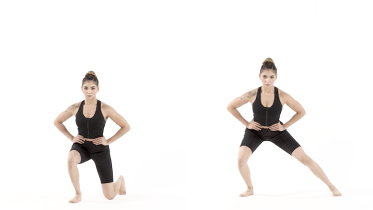
- Stand tall with your feet close together. In the video the arms reach forward or the hands clasp in front of the chest as you lunge, which helps with balance. Hands on the waist also works.
- Take a wide step out to the side with one leg. Keep both feet pointing forward, or turned out just slightly.
- As the foot lands, push your hips back and bend that knee. The other leg stays straight.
- Keep both feet flat on the floor and your chest lifted. The bent knee stays lined up over the ankle and the middle of the foot.
- Push off the bent leg to bring your feet back together, then lunge to the other side. The video alternates sides with each rep.
What you should feel
The bent leg works, mostly in the buttock and thigh. On the straight leg you should feel a stretch along the inner thigh.
Common mistakes
- The bent knee drifting inward instead of tracking over the foot.
- The heel of the bent leg lifting off the floor.
- Rounding the back to get lower.
- Stepping wider than you can control.
How often
Many programs start with 2 to 3 sets of 8 to 12 on each side, at a depth that feels controlled. Your physio will tell you how wide and how low to go.
Stop and check with your physio if
- Sharp or pulling pain in the groin or inner thigh.
- Sharp pain in the knee or hip, or the knee feels unstable.
From the clinic
Step width and depth are the two things to play with. If your groin has been sore, start with a short step and a shallow bend. Go wider and lower once that feels steady, not before.
Most leg exercises move you forward and back. This one moves you sideways, so it tends to come in later in rehab for people going back to a sport with lots of quick changes of direction.
Reviewed by the PocketPhysio by VirtueLife expert physiotherapy team. Last reviewed 2026-09-25.
This page is general education, not a diagnosis or a personal treatment plan. If you have pain, an injury or a health condition, see a physiotherapist or doctor before starting new exercises.
.png)