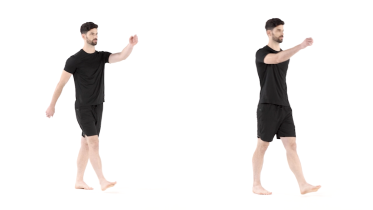
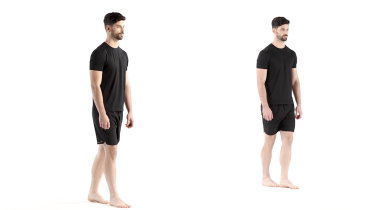
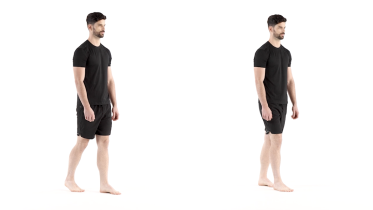
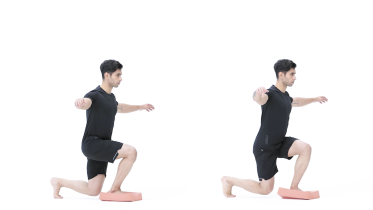
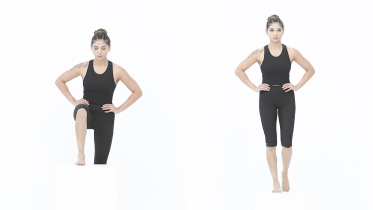
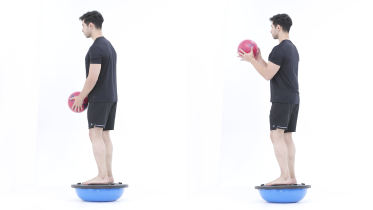
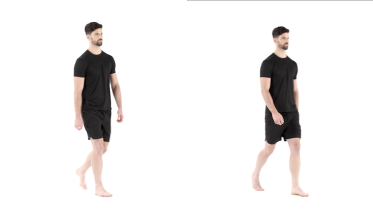
Grapevine drill
The grapevine is a sideways stepping pattern. You step out to the side, and the trailing foot crosses in front of the leading foot on one step and behind it on the next. After a few steps you change direction and come back. It trains footwork and coordination, and your balance as the weight moves from leg to leg. You will see it in agility training and later-stage leg rehab, and as a warm-up before sport.
How to do the grapevine drill
- Stand tall with your feet about hip width apart on a clear, non-slip floor, with room to travel several steps to either side. Your arms hang loose at your sides.
- Step one foot out to the side. Then bring the other foot across in front of it and put it down on the far side.
- Step the first foot out to the side again, and this time bring the other foot across behind it.
- Keep repeating the pattern (side, cross in front, side, cross behind) in the same direction. Your chest and toes face forward the whole time, and your eyes look ahead.
- After a few steps, travel back the other way. Learn it slowly first, then pick up to a brisk pace, as in the video, once the pattern feels automatic.
What you should feel
Light work around the hips and in the calves, with your breathing picking up at a brisk pace. Most of the effort is in your concentration. It should feel quick but controlled, never so rushed that you clip your own feet.
Common mistakes
- Watching your feet instead of looking ahead.
- Turning your whole body sideways to face the direction you are traveling.
- Crossing the feet so close together that they catch or clip each other.
- Speeding up before the pattern is clean, so the steps turn into a shuffle.
How often
Many programs start with 2 to 4 rounds of 20 to 30 seconds, traveling both ways, with a short rest in between. Your physio will adjust this.
Stop and check with your physio if
- You feel dizzy, lightheaded, faint or sick, or the room seems to spin. Hold your support, sit down and get medical advice the same day before you practice again. If you faint, it does not settle within a few minutes of sitting still, your vision suddenly blurs or goes double, or you cannot stand or walk steadily, call emergency services.
- You trip on your own feet or feel close to falling.
- Sharp pain in the hip, groin, knee or ankle, or an ankle that feels like it could roll.
- Chest pain or pressure, dizziness or feeling faint, a racing or irregular heartbeat, or being far more out of breath than the effort should cause.
From the clinic
The man in the video works in open space at a brisk pace, and that is the harder version. Start at walking pace alongside a kitchen counter, so a hand can trail along it and catch you if the crossing step goes wrong. Move rugs, cables and furniture out of the way. Wear flat shoes that fit well and grip the floor, not socks, tights or bare feet. If you have osteoporosis or have fallen in the past year, practice only when someone else is at home. Plain side stepping, with no crossing, is the easier place to begin.
If you have had a hip replacement or other hip surgery, get the go-ahead from your surgeon or physio before you try the grapevine. Crossing one leg in front of or behind the other takes that leg across the middle of your body, and many surgeons ask you to avoid that for the first months after some operations.
If chest pain, pressure or tightness does not ease quickly when you rest, spreads to your arm, neck, jaw, stomach or back, or comes with sweating, feeling sick, feeling light-headed or being short of breath, call emergency services straight away, as this can be a heart attack. If it eases quickly and none of these happen, get medical advice the same day, and do not exercise again until you have been checked.
Written and checked by the PocketPhysio editorial team. Last updated 2026-09-26.
This page is general education, not a diagnosis or a personal treatment plan. If you have pain, an injury or a health condition, see a physiotherapist or doctor before starting new exercises.