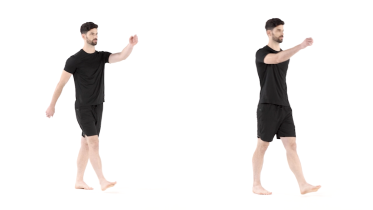
Backward tandem walking
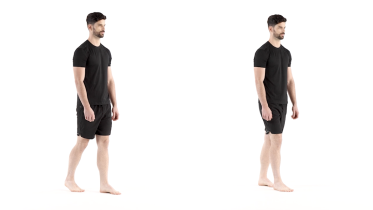
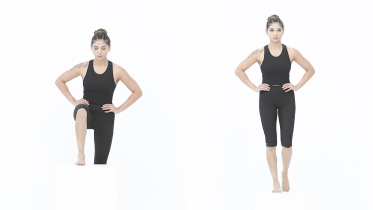
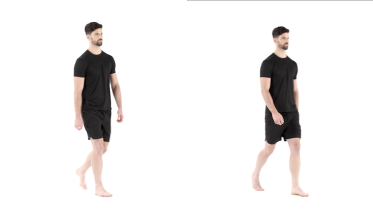
Backward tandem walking means walking backward along a straight line, placing each foot directly behind the other so the toes of the moving foot touch the heel of the standing one. The narrow base, and not being able to see where you step, make it a hard balance exercise. It often comes later in a balance program, once walking heel to toe forward feels steady.
How to do the backward tandem walking
- Pick a clear stretch of floor beside a kitchen counter or a wall you can touch, and check that nothing is behind you.
- Stand up straight with your arms relaxed by your sides. Picture a straight line on the floor, or stick down a strip of tape.
- Lift your front foot and place it directly behind the other one, so its toes touch the heel of your standing foot.
- Repeat with the other foot, stepping slowly backward along the line.
- Keep your feet in the middle of the line and your posture tall. Try not to stoop or keep staring down at your feet.
What you should feel
Your ankles, hips and trunk making lots of small corrections to keep you steady. Some wobble is normal. It means your balance is being worked.
Common mistakes
- Stepping off to the side of the line to widen your base.
- Leaving a gap between the toes of one foot and the heel of the other.
- Stooping forward or looking down at your feet the whole time.
- Rushing the steps instead of placing each foot with control.
How often
Many programs use 2 to 3 lengths of about 10 to 20 steps, once or twice a day, with a rest between lengths. Your physio will adjust this and may want you steady at forward tandem walking first.
Stop and check with your physio if
- You feel dizzy, lightheaded, faint or sick, or the room seems to spin. Hold your support, sit down and get medical advice the same day before you practice again. If you faint, it does not settle within a few minutes of sitting still, your vision suddenly blurs or goes double, or you cannot stand or walk steadily, call emergency services.
- You lose your balance and need to grab your support more than once or twice in a length.
- Pain in the hip, knee or ankle makes you change the way you step.
From the clinic
Set up where you can catch yourself. Walk alongside a kitchen counter, or down a hallway where a hand can reach the wall, and keep that support within reach the whole time. Walking backward is harder to control because you cannot see where you step. If you have fallen in the past year or feel unsteady, only practice with someone standing beside you, and check with your physio before you start.
Clear rugs and cables out of the way, and use a floor that does not slip. Wear flat shoes that fit well and grip the floor, not socks, tights or bare feet.
A sudden loss of balance is different. Call emergency services straight away for any sign of a stroke, even if it goes away: sudden dizziness with unsteadiness or falling over, a face that droops on one side, an arm you cannot lift or keep up, slurred or muddled speech, weakness or numbness on one side of your body or face, sudden blurred vision, double vision or loss of sight, or a sudden severe headache.
If heel to toe backward is too hard for now, start with tandem walking forward. Once that feels steady, backward is the next step. If you have had a hip replacement, get the go-ahead from your surgeon or physio before you try backward tandem walking. Some operations limit this kind of work for the first months, so the timing depends on your surgery.
Written and checked by the PocketPhysio editorial team. Last updated 2026-09-28.
This page is general education, not a diagnosis or a personal treatment plan. If you have pain, an injury or a health condition, see a physiotherapist or doctor before starting new exercises.