Balance pad lunge
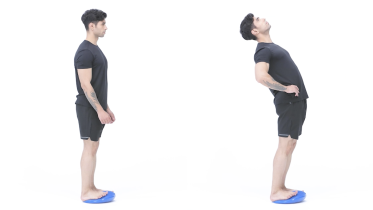
A balance pad lunge is a forward lunge where your front foot lands on a soft foam pad. The pad gives a little under the foot, so the front leg has to control the lunge and keep you steady at the same time. It is a harder version of an ordinary lunge on the floor. Physios often bring it in toward the end of rehab for the knee, ankle or hip.
How to do the balance pad lunge
- Place a foam balance pad on a non-slip floor about one long stride in front of you, with a wall or counter beside you.
- Stand tall, then take a big step forward and put the working foot flat in the middle of the pad.
- Bend both knees to lower straight down, bringing the back knee toward the floor. Aim for roughly a right angle at both knees if that feels comfortable, and keep the front kneecap pointing over the middle of the foot.
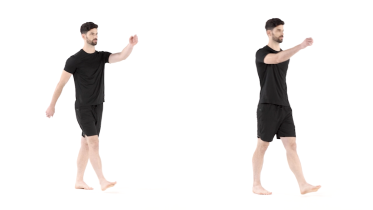
- In the video he lifts his arms out to about shoulder height as he lowers, one reaching forward and one out to the side, which helps with balance. You can do the same or keep your hands by your sides.
- Hold the low position for a moment, then push through the front foot and step back to where you started.
- Repeat with the same leg for the set, then change sides if both legs are in your program.
What you should feel
Work in the front of the thigh and the buttock of the front leg, plus plenty of small wobbles at that ankle as the pad shifts.
Common mistakes
- Taking too short a step, so you tip forward over the pad.
- Letting the front knee fall inward on the way down.
- Dropping the back knee hard onto the floor.
- Landing on the edge of the pad instead of the middle.
How often
Programs often start with 1 to 3 sets of 6 to 10 lunges on each leg, once a day or every other day. Your physio will adjust this.
Stop and check with your physio if
- The front knee buckles or hurts sharply.
- Your ankle rolls over on the pad.
- You feel dizzy or so unsteady that you might fall. If you faint while exercising, call emergency services, even if you feel fine again quickly.
From the clinic
Get comfortable with a forward lunge on a firm floor before you bring in the pad. The pad adds wobble at the exact moment the front knee is bent and carrying your weight, which is where control tends to slip. Go only part of the way down at first. Lunge deeper once the front knee stays lined up over the foot.
He lunges in open space in the video, but at home set the pad beside a counter or wall you can touch if you wobble, and make sure the pad cannot slide on the floor. If you have had a fall in the past year, feel unsteady walking, or take medicine that makes you dizzy, keep a hand on the support and ask your physio whether this is the right stage for you. The back knee does not need to touch the floor, so stop short if kneeling is sore.
Written and checked by the PocketPhysio editorial team. Last updated 2026-09-26.
This page is general education, not a diagnosis or a personal treatment plan. If you have pain, an injury or a health condition, see a physiotherapist or doctor before starting new exercises.