Arm swing walking
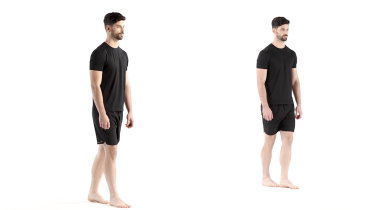
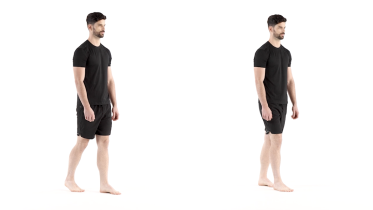
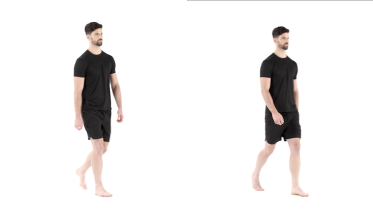
This walking exercise is your ordinary walk at your usual pace, with one change: you swing your arms more than you normally would. Each arm swings forward with the opposite leg, as in normal walking, only bigger. Physios sometimes use this cue in walking practice when someone's arm swing has become small or stiff. Your speed stays where it is. Only the arms change.
How to do the arm swing walking
- Choose a clear, well-lit stretch of floor or path, ideally with a wall, rail or counter along one side. Wear flat shoes that fit well and grip the floor, not socks, tights or bare feet.
- Stand tall and set off at your usual, comfortable pace, looking ahead rather than at your feet.
- Let each arm swing forward as the opposite leg steps forward. Then make the swing bigger than usual, with the front hand coming up to around chest or shoulder height and the back hand going behind your hip.
- Keep the swing relaxed, with soft elbows and loose hands. Your shoulders stay down, and your steps keep their usual length and speed.
- At the end of your space, turn round with a few small steps in a half circle rather than pivoting on one foot, then walk back.
What you should feel
Light work at the front and back of your shoulders, and a gentle twist through your trunk with each step. Walking should feel as easy as usual, with the arms simply doing more.
Common mistakes
- Swinging the arm on the same side as the stepping leg.
- Swinging so hard that the arms pull you off balance or hurry your steps.
- Hunching or lifting your shoulders toward your ears.
- Watching your arms or feet instead of looking where you are going.
How often
Many programs start with a few minutes, or a few lengths of a room or hallway, once or twice a day, then carry the bigger arm swing into everyday walks as it becomes natural. Your physio will adjust this.
Stop and check with your physio if
- You feel dizzy, lightheaded, faint or sick, or the room seems to spin. Stop, sit down and get medical advice the same day before you exercise again. If you faint, it does not settle within a few minutes of sitting still, your vision suddenly blurs or goes double, or you cannot stand or walk steadily, call emergency services.
- You trip, stumble or feel unsteady enough that you might fall.
- Pain in your shoulder as you swing the arm, or pain in a hip, knee or foot that changes the way you walk.
From the clinic
The voice guide keeps this simple: walk as you normally do, and make the arm swing more noticeable. The man in the video walks barefoot across an open space, and his front hand swings up to around shoulder height. At home, walk where a wall, rail or counter is close by, and clear rugs, cables and pets from the path. If you use a cane, keep using it and let the free arm do the bigger swing. With a walker your hands stay on it, so ask your physio whether this exercise suits you yet.
If you have fallen in the past year, feel unsteady on your feet, or take a medicine that can make you drowsy or lightheaded, walk with another adult beside you at first, and ask your doctor or physio whether a falls check would help. If you have a condition that affects how you move, such as Parkinson's disease, follow the walking plan your physio sets for you.
If you want to build pace and fitness, brisk walking explains how to warm up and judge your effort. If your steps have become short, walking with longer steps works on stride length in a similar way.
A sudden loss of balance is different. Call emergency services straight away for any sign of a stroke, even if it goes away: sudden dizziness with unsteadiness or falling over, a face that droops on one side, an arm you cannot lift or keep up, slurred or muddled speech, weakness or numbness on one side of your body or face, sudden blurred vision, double vision or loss of sight, or a sudden severe headache.
Written and checked by the PocketPhysio editorial team. Last updated 2026-09-28.
This page is general education, not a diagnosis or a personal treatment plan. If you have pain, an injury or a health condition, see a physiotherapist or doctor before starting new exercises.