
Split squat
The split squat is like a lunge where your feet never move. From a long, staggered stance you lower your back knee toward the floor and stand up again. Your front leg carries most of the load. You usually meet it later in knee, hip or ankle rehab.
How to do the split squat
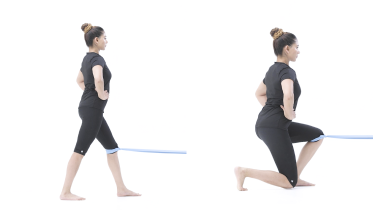
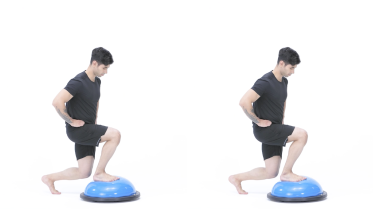
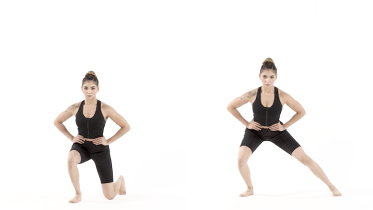
- Stand tall and take a long step forward with one foot (the video starts with the left foot in front). Keep your feet about hip width apart side to side, and let your back heel lift so you rest on the ball of that foot.
- Let your arms hang by your sides, or clasp your hands in front of your chest as shown in the video.
- Keep your upper body straight and bend both knees, lowering slowly straight down, as if you were in an elevator. Go only as low as you can control. The video shows a part-way squat; the full version goes down until your back knee almost touches the floor.
- Keep your front heel flat, your front knee in line with your second toe and your chest upright.
- Push through your whole front foot to stand back up. Your feet stay where they are between reps.
- Do all your reps on that side, then swap feet. The video only shows the left leg in front.
What you should feel
The front thigh and buttock of the forward leg. Some people also notice a stretch at the front of the hip on the back leg.
Common mistakes
- Letting the front knee drop inward toward the other leg.
- Setting the feet up one behind the other in a single line. That makes balance much harder. Keep them hip width apart.
- Leaning the body far forward or letting the front heel come up.
- Rushing the way down so the back knee bumps the floor.
How often
Many programs use 2 to 3 sets of 8 to 12 on each leg, a few times a week, often starting with a shorter range. Your physio will set the numbers for you.
Stop and check with your physio if
- You feel sharp pain in the knee, hip or groin, or the knee gives way.
- Knee pain builds with each rep, or is clearly worse the next morning.
From the clinic
For most people the balance is harder than the strength at first. Rest one hand on a wall or the back of a sturdy chair, and only go as low as you can control. A quarter of the way down is a perfectly good place to start.
Sore front knee on the way down? Shorten the range. Do not push through it. Once the full range is easy, programs often add a light weight in each hand.
Reviewed by the PocketPhysio by VirtueLife expert physiotherapy team. Last reviewed 2026-09-25.
This page is general education, not a diagnosis or a personal treatment plan. If you have pain, an injury or a health condition, see a physiotherapist or doctor before starting new exercises.
.png)