Isometric clamshell
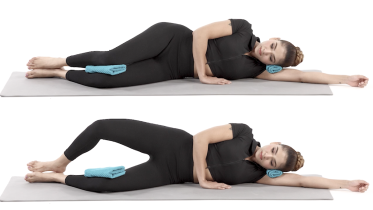
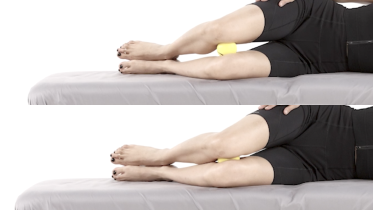
An isometric clamshell is a clamshell without the movement. You lie on your side with your knees bent and tighten the muscles at the side and back of your top hip (gluteus medius) as if you were about to lift the top knee, but the knee stays where it is. Because nothing moves, it is often used early on, when lifting the knee is painful or hard to control.
How to do the isometric clamshell
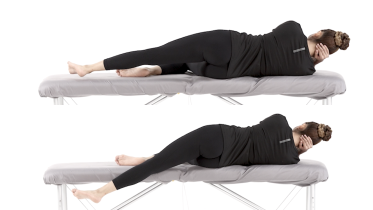
- Lie on your side on a mat or a firm bed with a pillow under your head. Bend your hips a little and your knees to about a right angle, with your knees and feet stacked on top of each other.
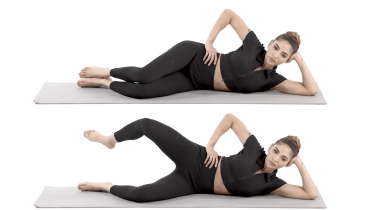
- Fold your top arm in front of your chest, as in the video, or rest that hand on the floor in front of you. Keep your top hip directly above the bottom one.
- Tighten the muscles at the side of your top hip as if you were starting to lift the top knee away from the bottom one. The knee stays resting where it is.
- Hold that squeeze steadily for the time your program sets, and keep breathing normally.
- Relax completely for a few seconds, then repeat. Finish your set, then turn onto your other side and work the other hip.
What you should feel
A firm, deep effort at the side and back of the top hip while nothing visibly moves. With a hand on the side of your hip, just below the bony rim of the pelvis, you can feel the muscle harden as you squeeze.
Common mistakes
- Letting the top knee actually lift, which turns it into a regular clamshell.
- Rolling the top hip backward as you squeeze.
- Holding your breath through the hold.
- Clenching your shoulders, jaw or whole body instead of just the hip.
How often
Many programs start with holds of 5 to 10 seconds, repeated 5 to 10 times on each side, once or twice a day, at a moderate effort rather than an all-out squeeze. Your physio will adjust this.
Stop and check with your physio if
- Sharp or pinching pain in the hip, groin or buttock.
- Pain, numbness or tingling that travels down your leg.
- The outside of your hip aches more with each hold, or feels sorer the next day.
From the clinic
Nothing visibly moves in the video, and yours should look the same. Start with a gentle squeeze and make it firmer over a few sessions as long as it stays comfortable. If the outside of one hip is sore, lie on your other side so you are not pressing on it, and put a pillow between your knees. The pillow stops the top knee dropping across your body, which squeezes the tendons at the side of the hip. If lying on either side hurts, check with your physio before you carry on.
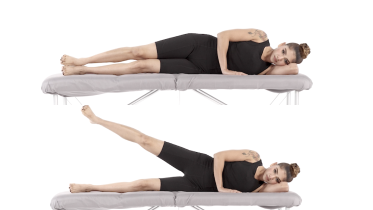
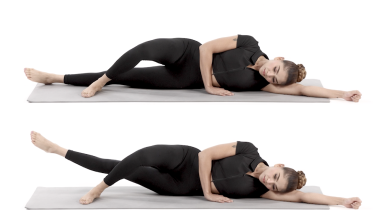
When the holds feel easy, the usual next step is the moving clamshell, and after that side lying hip abduction. If you have had a hip replacement or other hip surgery, get the go-ahead from your surgeon or physio before you try the isometric clamshell. Some operations limit this kind of work for the first months, so the timing depends on your surgery. Lying on your side and turning the leg outward are both limited after some operations, and your surgical team will tell you which side you can lie on and whether you need a pillow between your knees.
Written and checked by the PocketPhysio editorial team. Last updated 2026-09-26.
This page is general education, not a diagnosis or a personal treatment plan. If you have pain, an injury or a health condition, see a physiotherapist or doctor before starting new exercises.