Seated triceps extension
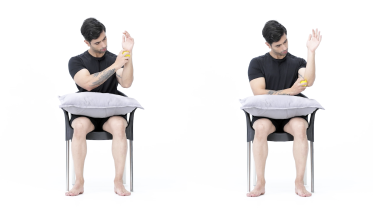
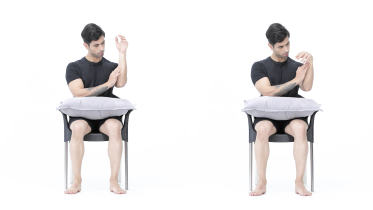
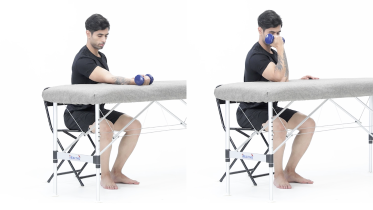
A seated triceps extension is a self-resisted exercise for the muscle at the back of your upper arm (triceps). You sit on a chair with the working elbow bent and your other hand holding that forearm, then try to straighten the elbow while the other hand pushes back so the arm stays still. You set the effort yourself, so it needs no equipment and suits the early stages of elbow and arm rehab.
How to do the seated triceps extension
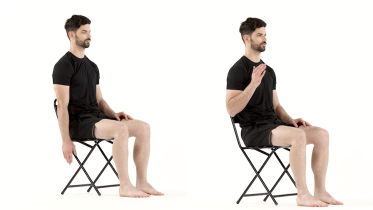
- Sit upright on a chair with your back supported and both feet flat on the floor.
- Keep the upper arm of the side you are working close to your body and bend that elbow a little past a right angle, so your fist comes up in front of your chest, as in the video.
- Take hold of the working forearm just above the wrist with your other hand, so that hand sits on the side of the forearm facing away from you.
- Try to straighten the elbow, pushing the forearm forward and down into your other hand. Push back just as hard with that hand so the arm does not move.
- Keep breathing as you hold the push for a few seconds, then ease off slowly, rest a moment and repeat.
What you should feel
Steady effort in the back of the upper arm. The resisting arm works as well, because it is doing the holding.
Common mistakes
- Letting one hand overpower the other, so the arm moves instead of staying still.
- Leaning your body or lifting the elbow away from your side to push harder.
- Holding your breath or tensing your neck and shoulders.
- Going to your hardest push from the very first repetition.
How often
Many programs use 5 to 10 holds of about 5 seconds, once or twice a day, starting at a moderate effort. Your physio will adjust this.
Stop and check with your physio if
- Sharp pain at the elbow, the wrist or the back of the upper arm.
- Tingling, pins and needles or numbness in your hand, most often in the ring and little fingers (from the nerve behind the elbow, the ulnar nerve) or in the thumb, index and middle fingers (the median nerve).
- Pins and needles in your arm or hand that do not go away after you stop, or part of your arm or hand goes numb. Get medical advice the same day. If one side of your face or body suddenly goes numb or weak, or your speech becomes slurred or muddled, call emergency services, even if it goes away.
From the clinic
Your own hand is the weight here, so you decide how hard it gets. Begin at roughly half your effort and build up only when the elbow feels fine that day and the next morning. If you have high blood pressure, breathe steadily through every hold and never hold your breath. Once this is easy, your physio may ask you to repeat the push with the elbow a little straighter or a little more bent.
Let the working hand sit in a loose fist. Squeezing it tight also works the forearm muscles that attach at the outer and inner elbow, and with tennis elbow or golfer's elbow that can flare the pain. If the resisting grip hurts your wrist, move that hand up toward the middle of the forearm. After a broken or dislocated elbow, or elbow surgery such as a tendon repair, follow your surgeon's or physio's plan, and start this exercise only when they have cleared you. This kind of push against resistance is often held back for several weeks after a break at the point of the elbow (olecranon) or a repair of the triceps tendon.
If you have just hurt your arm and have severe pain, cannot move the elbow or heard a snap, do not exercise it. Go to an urgent care center or emergency department the same day. If the arm looks a different shape or sits at an odd angle, a bone is showing, or your arm or hand tingles, feels numb or turns cold, pale or blue, go to an emergency department straight away or call emergency services, and do not drive yourself.
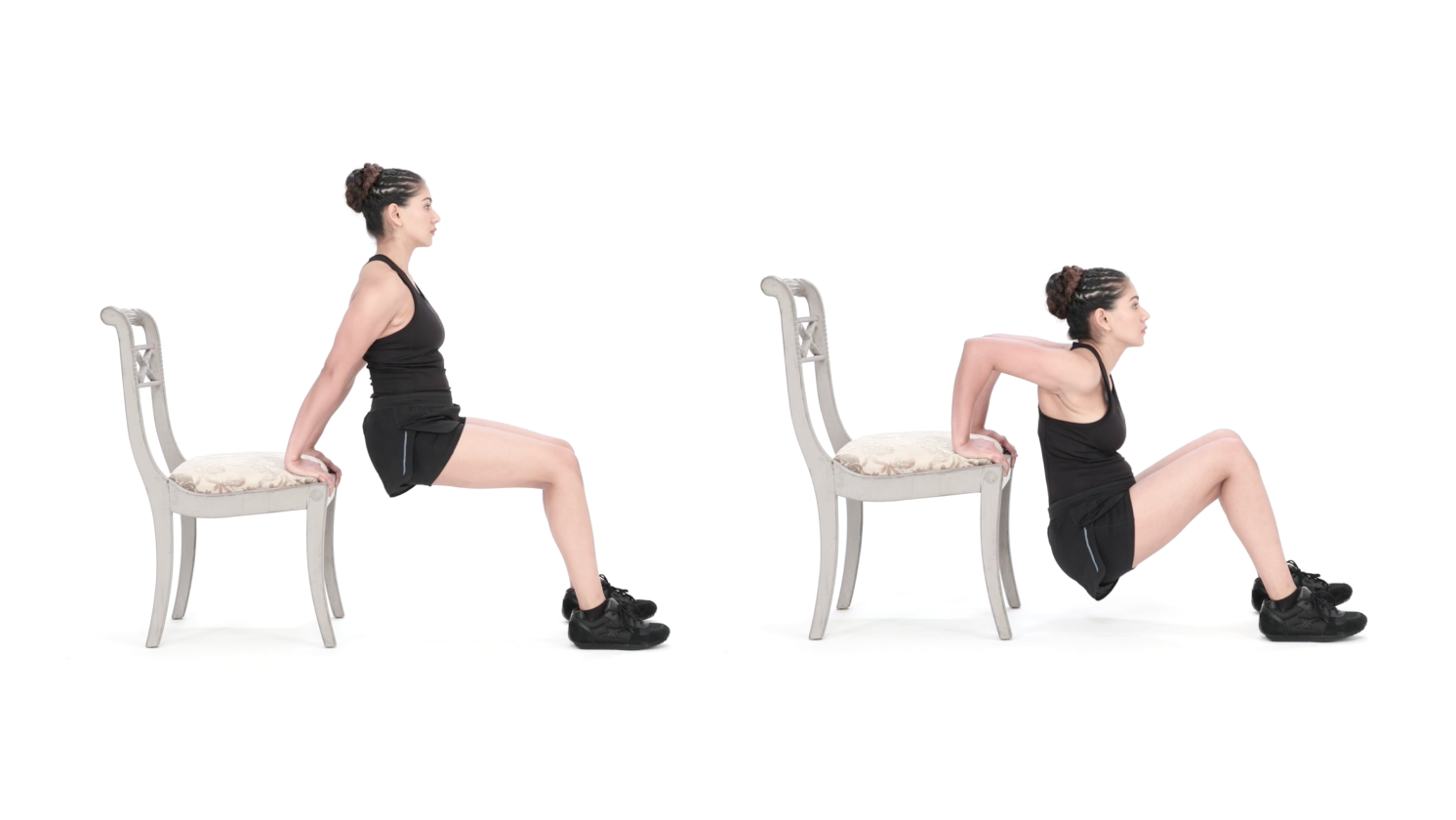
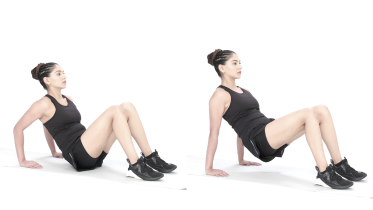
The shoulder stays by your side here, so the load on it is small. That makes this a gentler choice than triceps dips on a chair, which take the arm behind the body under your full weight.
Written and checked by the PocketPhysio editorial team. Last updated 2026-09-28.
This page is general education, not a diagnosis or a personal treatment plan. If you have pain, an injury or a health condition, see a physiotherapist or doctor before starting new exercises.