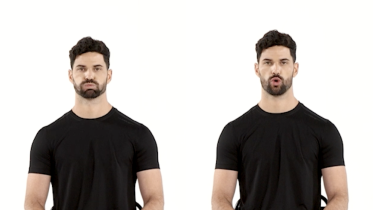
Resisted jaw opening
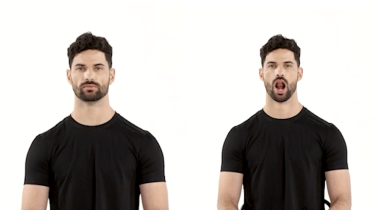
Resisted jaw opening strengthens the muscles that open your mouth. Sitting upright, you rest a loose fist under your chin, then open your mouth slowly while the fist pushes gently back, hold briefly and close again. The work falls on the muscles under the chin and in front of the ears (digastric and lateral pterygoid, among others). Physios and dentists sometimes give it for jaw problems (temporomandibular disorder, or TMD) once gentle opening is comfortable, and the resistance should stay light.
How to do the resisted jaw opening
- Sit upright on a chair with your feet on the floor and your head level.
- Make a loose fist with one hand and rest it under your chin, elbow bent and close to your body, as in the video.
- Open your mouth slowly while the fist pushes gently up against your chin, so the jaw works against light resistance. Open only part way, as far as stays comfortable.
- Hold the open position for a few seconds, still pressing down lightly into the fist, and keep breathing.
- Ease off the pressure and close your mouth slowly, letting your teeth rest apart. Lower the hand between repetitions if your arm tires.
What you should feel
Work under your chin and in front of your ears. The effort should be light and steady, with no pain, catching or locking.
Common mistakes
- Pushing hard with the fist, so the jaw has to strain to open.
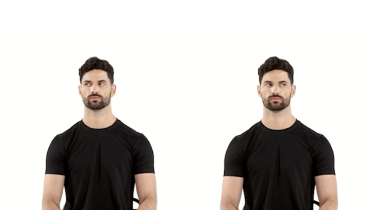
- Tipping the head back to open the mouth instead of dropping the jaw.
- Letting the jaw drift to one side as it opens.
- Snapping the mouth shut after the hold.
How often
Many programs use 5 to 10 openings, each held for 3 to 5 seconds against light pressure, once or twice a day. Your physio will adjust this.
Stop and check with your physio if
- Pain in your jaw, face or ear that builds with each opening, or your jaw starts to catch, click painfully or lock so it will not open fully. Stop. If it stays stuck, or the pain stops you eating or drinking, get medical advice the same day from your doctor or dentist.
- Your mouth gets stuck open and will not close, or your jaw feels out of place and your teeth no longer meet as they did. Go to an emergency department straight away, supporting your jaw gently with your hand, and do not drive yourself. Call emergency services if you also find it hard to breathe.
- Things look double, your vision suddenly blurs or goes, your speech slurs or becomes muddled, swallowing becomes hard, your face or lips go numb, one side of your face droops or one side of your body goes weak or numb, you suddenly become so dizzy or unsteady that you fall or cannot stand or walk, your legs suddenly give way but you do not black out (a drop attack), or you get a sudden severe headache. Stop and call emergency services, even if it goes away.
- Jaw, neck, shoulder or arm pain that comes with chest pain or tightness, sweating, feeling sick, feeling light-headed or being short of breath, or that comes on when you exert yourself, feel stressed or go out in the cold and does not ease within a few minutes of rest. Call emergency services straight away, as this can be a heart attack. If it eases quickly with rest and none of these happen, get medical advice the same day, and do not exercise again until you have been checked.
From the clinic
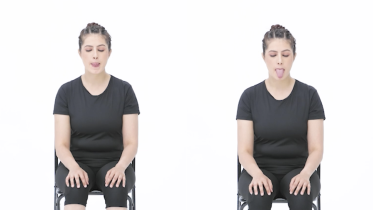
The voice guide describes pressing the jaw down against the fist and holding. In the video the mouth also opens part way against the fist and stays open for a few seconds before closing, so the steps follow the video. Either way, the fist gives only light resistance: enough to feel the jaw working, never enough to make it strain or shake. Start this only once plain opening, such as jaw opening with the tongue on the roof of the mouth or the mouth opening exercise, is comfortable.
If your jaw has ever got stuck open, check with your dentist or physio before you start. After jaw surgery or a broken jaw, check with your surgeon before you start, and follow their plan. Jaw pain that comes with effort and goes with rest can be a sign of angina, a heart problem, rather than TMD. New, frequent headaches with pain or tenderness at your temples or on your scalp, or, if you are 50 or over, new jaw aching that comes on as you chew or talk and eases when you stop, need medical advice the same day, as they can be signs of inflamed arteries in the head (giant cell arteritis). If your vision changes, call emergency services.
After a stroke, or with a facial nerve problem such as Bell's palsy, ask your stroke team, swallowing therapist or facial therapist whether jaw work against resistance suits you. If one side of your face is already weak from Bell's palsy or an earlier stroke, and a doctor has checked it, that known droop is not a new sign. New drooping on the other side, weakness that suddenly gets worse, and every other sign in the stop list still mean calling emergency services, even if they go away.
The TMJ disorder program sets out the self-care that comes first and how jaw exercises are built up over time.
Written and checked by the PocketPhysio editorial team. Last updated 2026-09-28.
This page is general education, not a diagnosis or a personal treatment plan. If you have pain, an injury or a health condition, see a physiotherapist or doctor before starting new exercises.