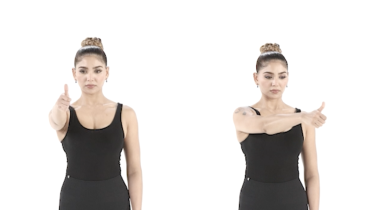
Side to side eye movements
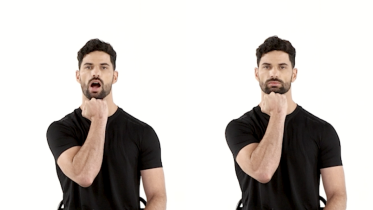
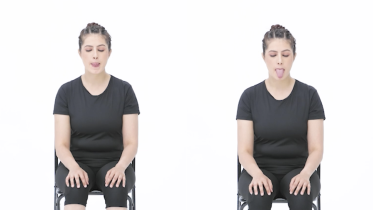
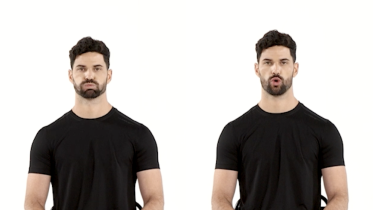
Side to side eye movements are done sitting in a chair: your head stays still while your eyes look across to one side, then the other, again and again. In the video a man sits with his hands on his knees and only his eyes move. Physios use it as a habituation exercise, where you gently repeat a movement that brings on mild dizziness. The voice guide suggests building up the time first and the speed later.
How to do the side to side eye movements
- Sit well back in a steady chair with your feet flat on the floor and your hands resting on your knees.
- Look straight ahead and keep your head and neck still for the whole exercise.
- Move only your eyes to look across to one side, as far as is comfortable, then across to the other side.
- Keep going from side to side at a slow, even pace for the time your physio has set.
- Finish by resting your gaze on one fixed point straight ahead and letting any dizziness settle before you get up.
What you should feel
Your eyes working, and possibly mild dizziness, a heavy head or a little queasiness that fades soon after you stop.
Common mistakes
- Letting your head turn with your eyes.
- Speeding up before you can manage the full time slowly.
- Tensing your jaw or shoulders, or holding your breath.
- Standing up the moment you finish.
How often
Many habituation programs start with about 30 to 60 seconds, 2 to 3 times a day, adding time before speed as the voice guide suggests. Your physio will adjust this.
Stop and check with your physio if
- The dizziness becomes severe or stronger than your physio said to expect, you are being sick, or you feel faint. Stop, sit or lie still and get medical advice the same day before you do these exercises again. If you faint, it is no better after 10 minutes of keeping still, you suddenly lose hearing in one or both ears, or you are far more unsteady on your feet than usual, call emergency services.
- Things look double, your vision suddenly blurs or goes, your speech slurs or becomes muddled, swallowing becomes hard, your face or lips go numb, one side of your face droops or one side of your body goes weak or numb, you suddenly become so dizzy or unsteady that you fall or cannot stand or walk, your legs suddenly give way but you do not black out (a drop attack), or you get a sudden severe headache. Stop and call emergency services, even if it goes away.
- Eye pain, or a headache that keeps building while you do it.
From the clinic
Start these exercises only after a doctor or vestibular physio has found the cause of your dizziness. New dizziness, or dizziness that has changed, needs checking first.
Habituation exercises bring on mild dizziness on purpose. It should fade within a few minutes once you stop. Your physio will tell you how strong a reaction is fine for you. If it hangs around for more than about 10 minutes, ease off next time and mention it to your physio. Dizziness that turns severe means stop and check the stop signs on this page.
Use a chair with a backrest and no wheels. Some physios stick two notes on the wall a short distance apart, so your eyes have a clear place to land on each side. Get up slowly at the end. If you feel at all wobbly, keep a hand on something steady for your first few steps.
On its own, moving only your eyes does not train the reflex that keeps your vision steady while your head moves, so physios pair it with other exercises in a program.
Once your physio is happy with the time and speed, related exercises include seated head nods, where the head moves instead of the eyes, and figure 8 eye tracking, which is done standing.
Written and checked by the PocketPhysio editorial team. Last updated 2026-09-26.
This page is general education, not a diagnosis or a personal treatment plan. If you have pain, an injury or a health condition, see a physiotherapist or doctor before starting new exercises.