
Vestibular hypofunction: exercises for inner ear balance problems
Warning signs, and when to get help
What is vestibular hypofunction, and what does it feel like?
Each inner ear holds a balance organ as well as a hearing organ. Hypofunction means that organ, or the nerve carrying its signal, is sending less than it should. On one side it is called unilateral, which is the common case; on both sides it is bilateral, which is less common and more disabling.
Two symptoms give it away. Head movement becomes unpleasant, and the view jumps or smears while you turn, because the reflex that holds your eyes still on a target has lost half its input. And standing and walking take conscious effort, because your brain is now running on vision and the feeling in your feet rather than on all three inputs. People describe feeling off balance rather than spinning, being unsteady in the dark or on uneven ground, and being worn out by mid afternoon.
The usual causes are an attack of vestibular neuritis or labyrinthitis that has left something behind, Meniere's disease over years, an acoustic neuroma or its treatment, certain antibiotics that are toxic to the inner ear, and age. The Barany Society has given age-related loss its own name, presbyvestibulopathy, and published criteria for it (Agrawal 2019). Our page on what is causing the vertigo sorts those causes out; this page is about treating one of them.
One routing line and then nothing more on it. Hypofunction can follow an operation on the inner ear or the balance nerve, such as surgery for a vestibular schwannoma or a labyrinthectomy, and if that is you the program from your surgical team and their physio is the one to follow rather than this page.
When is sudden vertigo not this condition?
A first sudden attack of severe vertigo is examined, not exercised, and the reason is that a stroke in the back of the brain can present as exactly that.
The evidence usually quoted for this is a study of 101 people who arrived at an academic hospital with an acute vestibular syndrome and had at least one stroke risk factor. Seventy-six turned out to have a central cause, of which 69 were ischemic strokes, and a three-step bedside eye examination picked up every stroke in the group, with early MRI diffusion-weighted imaging falsely negative in 12 percent of cases, all of them within 48 hours of the symptoms starting (Kattah 2009). Read the entry conditions before you read the numbers: everyone in it was referred with an acute vestibular syndrome and already carried a stroke risk factor, so the proportion with a stroke tells you about that group and not about everybody who feels dizzy.
Two practical things come out of it. The examination that separates the two is a clinician's, done at the bedside in the first hours, which is why a sudden first attack belongs in front of someone that day rather than in a program. And a normal early scan does not settle it, which is a reason to take the examination seriously rather than to ask for imaging. The stroke emergency line at the top of the warning list on this page is the one to act on, even if the symptoms have gone away again.
What the guideline recommends, all ten statements
The document behind this page is the American Physical Therapy Association's updated clinical practice guideline on vestibular rehabilitation for peripheral vestibular hypofunction (Hall 2022). Most pages on this subject mention it. Here is the whole of it, in the shape it was published in, so you can see which parts are solid and which are not.
| Statement | What it says, in short | Evidence quality | Strength |
|---|---|---|---|
| 1 | Offer vestibular physical therapy for acute or subacute loss on one side | I | Strong |
| 2 | Offer it for chronic loss on one side | I | Strong |
| 3 | Offer it to adults with loss on both sides | I | Strong |
| 4 | Do not offer saccade or smooth-pursuit exercises as the gaze stability exercise | I | Strong |
| 5 | Targeted exercise techniques may be used for specific impairments and goals | II | Moderate |
| 6a | Balance exercise dose, which differs by case | II for chronic loss on one side and for the acute case, III to IV for loss on both sides | Weak for chronic loss on one side, expert opinion for the acute case and for loss on both sides |
| 6b | Gaze stabilization dose, which differs by case | II, and III for loss on both sides | Weak |
| 7 | Offer supervised vestibular physical therapy | I | Strong |
| 8 | Reasons for stopping therapy, including goals met or progress plateaued | II | Moderate |
| 9 | Look for factors that could change the outcome | I to II | Moderate to strong |
| 10 | Offer it with the intention of improving quality of life | I | Strong |
Six of the eleven rows above are strong, and that is the good news on this page. Note where the strength sits, though. The recommendations to offer the therapy at all are strong. The recommendations about how much of it to do are weak or expert opinion. And the recommendation that it be supervised is one of the strong ones, which is why this page will not hand you a program to start by yourself.
The guideline also says, outside its numbered statements, that therapy should be offered to people with signs or symptoms of hypofunction, especially those over 50, where signs means unsteadiness, near-falls or falls, and symptoms means dizziness, disequilibrium, motion sensitivity or the world appearing to move.
How much, and for how long
Three cases, three doses, and the population attached to each one matters more than the number.
For acute or subacute loss on one side, the guideline's gaze stabilization dose is three times a day for a total of at least 12 minutes daily, at weak strength. For balance exercise in that same acute case it makes no dose recommendation at all and records expert opinion instead, which is an honest gap rather than an oversight.
For chronic loss on one side, gaze stabilization is split across three to five sessions a day, adding up to 20 minutes or more in total each day, and continued for 4 to 6 weeks. Static and dynamic balance exercise sits alongside it, 20 minutes a day as the floor, over a period of at least 4 to 6 weeks. Both are weak.
For loss on both sides, it is gaze stabilization three to five times a day for a total of 20 to 40 minutes daily for about 5 to 7 weeks, and balance exercise for 6 to 9 weeks. The gaze figure for this case rests on the weakest evidence of the three gaze figures, and the balance figure is weaker still: the guideline grades it III to IV and calls it expert opinion rather than a weak recommendation.
Two warnings about using those numbers. The acute figure and the chronic figure are not interchangeable, and giving an acute reader the chronic dose is giving them somebody else's prescription. And in the guideline all three sit beside weekly clinic visits rather than instead of them.
How to use this program
Start these exercises only after a doctor or vestibular physio has found the cause of your dizziness. New dizziness, or dizziness that has changed, needs checking first.
The three stages below follow the guideline's own three cases rather than ranking the exercises by difficulty. If a clinician has told you which case you are, start there. If nobody has, this page is for reading and for asking better questions at your appointment, not for starting.
If you are reading this for a child or a teenager, nothing here was written for one. Take their dizziness and unsteadiness to their own doctor, who can decide whether a pediatric vestibular assessment is the next step, and do not start the exercises on this page in the meantime.
If your dizziness followed an operation on your ear, your balance nerve or the base of your skull, follow the program your surgical team and their physio gave you rather than this one, and take any new symptom back to them. They know what was done to the bone, the nerve and the lining around the brain, and how far on you are. This page does not, so it gives you no dose.
Mild dizziness during the gaze and habituation exercises is the point of them, and it should fade within a few minutes of stopping. If it takes more than about 10 minutes to settle, go slower next time and tell your physio. The stop signs are in the warning list and in the common questions, both of which sit at the foot of this page, and the link under the summary at the top takes you straight to the warning list.
If you have fallen in the past year, feel unsteady, use a walking aid or take medicines that can make you dizzy, do the standing work with a hand on a counter or a sturdy chair throughout, practice only when another adult is at home, and treat taking your hand off as a change to make with your physio rather than on your own. The same goes for moving onto the foam pad. The ball toss and the turning on the spot are the two that cannot be done with a hand on the support, so for you those two wait for your physio rather than being done unsupported. Balance and falls prevention covers the falls side of this, including what a falls assessment involves.
The exercise program
The exercises below carry their own stop signs and precautions. Open the line under an exercise and read them before you try it.
Stage 1: Acute and subacute loss on one side, lying or sitting
What a clinician typically starts in the first weeks after a sudden one-sided loss, once the cause has been found. The first two are done on your back, which removes balance from the job and leaves the eye and head reflex working on its own. Nodding in sitting, and the eye movement drill, bring the symptom on in small controlled doses until the brain stops reacting to it, which is called habituation. Eye-only work belongs with the head-moving exercises and never in place of them, for the reason action statement 4 gives. The dose attached to this case is gaze stabilization three times a day totaling at least 12 minutes, at weak strength, and the guideline makes no dose recommendation for balance exercise this early. Read that 12 minutes as the daily total added up across these exercises rather than as something asked of each one. Each exercise stays at the time its own page gives, which early on is half a minute to a minute or two at a go, and a session of three or four of them gets you there. Four minutes of continuous head turning in the first weeks after a sudden loss is how people end up too sick to do it again tomorrow.
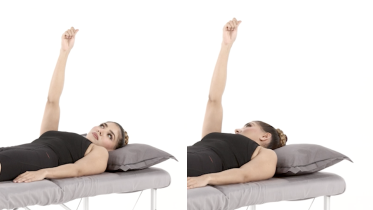 Lying gaze stabilization with head turns
Stop signs and precautions for the lying gaze stabilization with head turns
Before you start
- If your neck pain started after a recent car accident or fall, get it checked by a doctor or physio before you begin. Keep still and call emergency services if the pain came straight after a high-speed crash, a car that rolled over, being thrown from a vehicle, being hit by a vehicle while walking or cycling, a motorbike or quad bike accident, a horse riding accident, a diving injury or a fall from a height or down several stairs, or if you have numbness, tingling or weakness in an arm or leg. If you hit your head and were knocked out, cannot remember what happened, have had a headache ever since, are being sick, or take medicine that thins your blood other than aspirin on its own, go to an emergency department, and do not drive yourself. If you have a condition that stiffens the spine, such as ankylosing spondylitis, new neck pain after even a minor fall, knock or jolt is an emergency: keep still and call emergency services if it started straight after the injury, or go to an emergency department straight away, without driving yourself, if it started later. See a doctor the same day, before any exercise, if you are 65 or over, have low bone density (osteoporosis) or have taken steroid tablets for a long time, if your neck pain is severe, if you cannot turn your head halfway toward each shoulder, or if it hurts when you press on the bony middle of the back of your neck. Having none of these does not rule out an injury.
- If your dizziness started after a car accident or a fall and nobody has checked your neck since, get your neck checked before you start these exercises, even if your neck does not hurt.
- Start these exercises only after a doctor or vestibular physio has found the cause of your dizziness. New dizziness, or dizziness that has changed, needs checking first.
- After neck surgery or a broken bone in the neck, check with your surgeon or physio before you start. With a known neck condition, check with your doctor or physio before you start, and keep the turns small. If you are pregnant and past the first three months, check with your physio before exercising flat on your back.
When to stop and get help
- The dizziness becomes severe or stronger than your physio said to expect, you are being sick, or you feel faint. Stop, sit or lie still and get medical advice the same day before you do these exercises again. If you faint, it is no better after 10 minutes of keeping still, you suddenly lose hearing in one or both ears, or you are far more unsteady on your feet than usual, call emergency services.
- Things look double, your vision suddenly blurs or goes, your speech slurs or becomes muddled, swallowing becomes hard, your face or lips go numb, one side of your face droops or one side of your body goes weak or numb, you suddenly become so dizzy or unsteady that you fall or cannot stand or walk, your legs suddenly give way but you do not black out (a drop attack), or you get a sudden severe headache. Stop and call emergency services, even if it goes away.
- Neck pain comes on as you turn, or pain, numbness or tingling spreads into an arm.
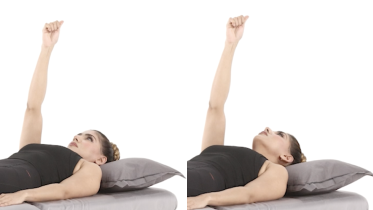 Lying gaze stabilization with head nods
Stop signs and precautions for the lying gaze stabilization with head nods
Before you start
- If your neck pain started after a recent car accident or fall, get it checked by a doctor or physio before you begin. Keep still and call emergency services if the pain came straight after a high-speed crash, a car that rolled over, being thrown from a vehicle, being hit by a vehicle while walking or cycling, a motorbike or quad bike accident, a horse riding accident, a diving injury or a fall from a height or down several stairs, or if you have numbness, tingling or weakness in an arm or leg. If you hit your head and were knocked out, cannot remember what happened, have had a headache ever since, are being sick, or take medicine that thins your blood other than aspirin on its own, go to an emergency department, and do not drive yourself. If you have a condition that stiffens the spine, such as ankylosing spondylitis, new neck pain after even a minor fall, knock or jolt is an emergency: keep still and call emergency services if it started straight after the injury, or go to an emergency department straight away, without driving yourself, if it started later. See a doctor the same day, before any exercise, if you are 65 or over, have low bone density (osteoporosis) or have taken steroid tablets for a long time, if your neck pain is severe, if you cannot turn your head halfway toward each shoulder, or if it hurts when you press on the bony middle of the back of your neck. Having none of these does not rule out an injury.
- If your dizziness started after a car accident or a fall and nobody has checked your neck since, get your neck checked before you start these exercises, even if your neck does not hurt.
- Start these exercises only after a doctor or vestibular physio has found the cause of your dizziness. New dizziness, or dizziness that has changed, needs checking first.
- After neck surgery or a broken bone in the neck, check with your surgeon or physio before you start. With a known neck condition, check with your doctor or physio before you start, and keep the nods small. If you are pregnant and past the first three months, check with your physio before exercising flat on your back.
When to stop and get help
- The dizziness becomes severe or stronger than your physio said to expect, you are being sick, or you feel faint. Stop, sit or lie still and get medical advice the same day before you do these exercises again. If you faint, it is no better after 10 minutes of keeping still, you suddenly lose hearing in one or both ears, or you are far more unsteady on your feet than usual, call emergency services.
- Things look double, your vision suddenly blurs or goes, your speech slurs or becomes muddled, swallowing becomes hard, your face or lips go numb, one side of your face droops or one side of your body goes weak or numb, you suddenly become so dizzy or unsteady that you fall or cannot stand or walk, your legs suddenly give way but you do not black out (a drop attack), or you get a sudden severe headache. Stop and call emergency services, even if it goes away.
- Pain builds in your neck as you nod, or pain, numbness or tingling travels into an arm or hand.
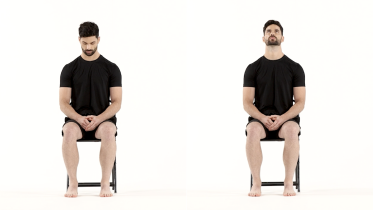 Seated head nods
Stop signs and precautions for the seated head nods
Before you start
- If your neck pain started after a recent car accident or fall, get it checked by a doctor or physio before you begin. Keep still and call emergency services if the pain came straight after a high-speed crash, a car that rolled over, being thrown from a vehicle, being hit by a vehicle while walking or cycling, a motorbike or quad bike accident, a horse riding accident, a diving injury or a fall from a height or down several stairs, or if you have numbness, tingling or weakness in an arm or leg. If you hit your head and were knocked out, cannot remember what happened, have had a headache ever since, are being sick, or take medicine that thins your blood other than aspirin on its own, go to an emergency department, and do not drive yourself. If you have a condition that stiffens the spine, such as ankylosing spondylitis, new neck pain after even a minor fall, knock or jolt is an emergency: keep still and call emergency services if it started straight after the injury, or go to an emergency department straight away, without driving yourself, if it started later. See a doctor the same day, before any exercise, if you are 65 or over, have low bone density (osteoporosis) or have taken steroid tablets for a long time, if your neck pain is severe, if you cannot turn your head halfway toward each shoulder, or if it hurts when you press on the bony middle of the back of your neck. Having none of these does not rule out an injury.
- If your dizziness started after a car accident or a fall and nobody has checked your neck since, get your neck checked before you start these exercises, even if your neck does not hurt.
- Start these exercises only after a doctor or vestibular physio has found the cause of your dizziness. New dizziness, or dizziness that has changed, needs checking first.
- If you have had neck surgery or have a neck condition, check with your doctor or physio before you start, and nod only through a small, comfortable range.
When to stop and get help
- The dizziness becomes severe or stronger than your physio said to expect, you are being sick, or you feel faint. Stop, sit or lie still and get medical advice the same day before you do these exercises again. If you faint, it is no better after 10 minutes of keeping still, you suddenly lose hearing in one or both ears, or you are far more unsteady on your feet than usual, call emergency services.
- Things look double, your vision suddenly blurs or goes, your speech slurs or becomes muddled, swallowing becomes hard, your face or lips go numb, one side of your face droops or one side of your body goes weak or numb, you suddenly become so dizzy or unsteady that you fall or cannot stand or walk, your legs suddenly give way but you do not black out (a drop attack), or you get a sudden severe headache. Stop and call emergency services, even if it goes away.
- Sharp or growing neck pain, or pain, pins and needles or numbness that runs down an arm.
- An electric shock feeling runs down your back or into your arms or legs as your head bends forward. Stop and get medical advice the same day.
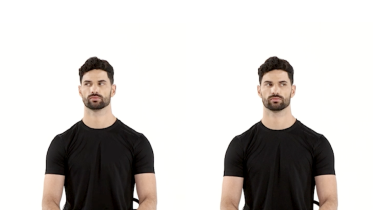 Side to side eye movements
Stop signs and precautions for the side to side eye movements
Before you start
- Start these exercises only after a doctor or vestibular physio has found the cause of your dizziness. New dizziness, or dizziness that has changed, needs checking first.
When to stop and get help
- The dizziness becomes severe or stronger than your physio said to expect, you are being sick, or you feel faint. Stop, sit or lie still and get medical advice the same day before you do these exercises again. If you faint, it is no better after 10 minutes of keeping still, you suddenly lose hearing in one or both ears, or you are far more unsteady on your feet than usual, call emergency services.
- Things look double, your vision suddenly blurs or goes, your speech slurs or becomes muddled, swallowing becomes hard, your face or lips go numb, one side of your face droops or one side of your body goes weak or numb, you suddenly become so dizzy or unsteady that you fall or cannot stand or walk, your legs suddenly give way but you do not black out (a drop attack), or you get a sudden severe headache. Stop and call emergency services, even if it goes away.
- Eye pain, or a headache that keeps building while you do it.
Stage 2: Chronic loss on one side, standing with support
For dizziness and unsteadiness that have lasted months, and for the acute case once stage 1 has become easy and settles fast. The stage 1 gaze work carries on underneath this, as your clinician sets it. Everything here is done within arm's reach of a kitchen counter or a heavy chair, with a hand on it wherever the exercise leaves a hand free. One of them does not. The ball toss holds the ball in both hands, so there the support stands beside you to grab rather than to hold, and if you are unsteady enough to need a hand on something the whole time, that one waits until your physio has watched you do it or has set you a seated version. The figure 8 uses one arm, so your other hand stays on the counter. The two tracking drills ask the eyes to follow something that is moving while the body stays upright, and they are additions to the head-moving work rather than substitutes for it. The dose for this case is gaze stabilization three to five times a day totaling at least 20 minutes, plus static and dynamic balance work of at least 20 minutes a day, both for 4 to 6 weeks and both at weak strength. Both totals are added up across the exercises in a day rather than asked of each one, and the balance one is a mix of static and dynamic work, so the standing holds here will not reach 20 minutes by themselves: your clinician adds walking and turning practice to get there.
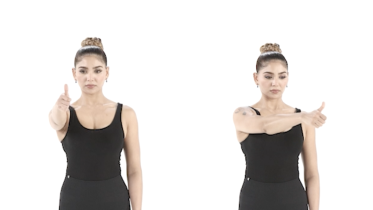 Figure 8 eye tracking
Stop signs and precautions for the figure 8 eye tracking
Before you start
- Start these exercises only after a doctor or vestibular physio has found the cause of your dizziness. New dizziness, or dizziness that has changed, needs checking first.
When to stop and get help
- The dizziness becomes severe or stronger than your physio said to expect, you are being sick, or you feel faint. Stop, sit or lie still and get medical advice the same day before you do these exercises again. If you faint, it is no better after 10 minutes of keeping still, you suddenly lose hearing in one or both ears, or you are far more unsteady on your feet than usual, call emergency services.
- Things look double, your vision suddenly blurs or goes, your speech slurs or becomes muddled, swallowing becomes hard, your face or lips go numb, one side of your face droops or one side of your body goes weak or numb, you suddenly become so dizzy or unsteady that you fall or cannot stand or walk, your legs suddenly give way but you do not black out (a drop attack), or you get a sudden severe headache. Stop and call emergency services, even if it goes away.
- You sway or lose your balance and need the counter to stay upright.
- Your eyes start to hurt, or a headache gets worse as you go.
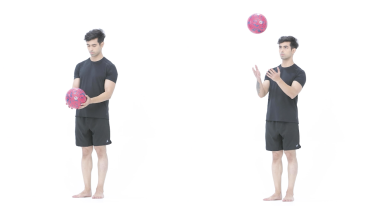 Ball toss eye tracking
Stop signs and precautions for the ball toss eye tracking
Before you start
- Start these exercises only after a doctor or vestibular physio has found the cause of your dizziness. New dizziness, or dizziness that has changed, needs checking first.
When to stop and get help
- The dizziness becomes severe or stronger than your physio said to expect, you are being sick, or you feel faint. Stop, sit or lie still and get medical advice the same day before you do these exercises again. If you faint, it is no better after 10 minutes of keeping still, you suddenly lose hearing in one or both ears, or you are far more unsteady on your feet than usual, call emergency services.
- Things look double, your vision suddenly blurs or goes, your speech slurs or becomes muddled, swallowing becomes hard, your face or lips go numb, one side of your face droops or one side of your body goes weak or numb, you suddenly become so dizzy or unsteady that you fall or cannot stand or walk, your legs suddenly give way but you do not black out (a drop attack), or you get a sudden severe headache. Stop and call emergency services, even if it goes away.
- You lose your balance and have to grab the support or take a step to stay upright.
- A headache or neck pain that builds as you go.
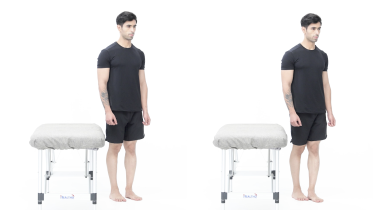 Semi-tandem stance
Stop signs and precautions for the semi-tandem stance
Before you start
- If you have had a hip replacement or other hip surgery, get the go-ahead from your surgeon or physio before you try semi-tandem stance. Some operations limit this kind of work for the first months, so the timing depends on your surgery.
- Clear the floor of rugs, cables and clutter before you start. Wear flat shoes that fit well and grip the floor, not socks, tights or bare feet.
- If you have fallen in the past year, feel unsteady on your feet, or take medicines that make you dizzy, keep a hand on the support throughout, practice only when someone else is at home, and ask your doctor or physio about a falls check.
When to stop and get help
- You feel dizzy, lightheaded, faint or sick, or the room seems to spin. Hold your support, sit down and get medical advice the same day before you practice again. If you faint, it does not settle within a few minutes of sitting still, your vision suddenly blurs or goes double, or you cannot stand or walk steadily, call emergency services.
- You tip out of position and have to grab the support hard to stop yourself falling.
- New pain in your feet, ankles or knees while you stand.
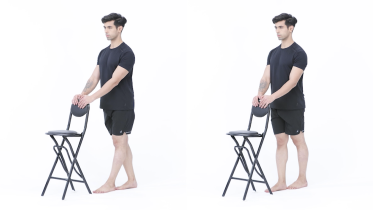 Tandem stance
Stop signs and precautions for the tandem stance
Before you start
- If you have had a hip replacement, get the go-ahead from your surgeon or physio before you try tandem stance. Some operations limit this kind of work for the first months, so the timing depends on your surgery.
When to stop and get help
- You feel dizzy, lightheaded, faint or sick, or the room seems to spin. Hold your support, sit down and get medical advice the same day before you practice again. If you faint, it does not settle within a few minutes of sitting still, your vision suddenly blurs or goes double, or you cannot stand or walk steadily, call emergency services.
- You lose your balance and have to grab the chair hard to stay up.
- New pain in the ankle, knee or hip.
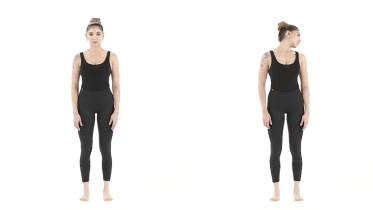 Standing turn to look behind
Stop signs and precautions for the standing turn to look behind
Before you start
- If you have had a hip replacement, get the go-ahead from your surgeon or physio before you try this exercise. Letting your hips turn while your feet stay planted twists the hip joint, and many surgeons ask you to avoid that for the first months after some operations.
When to stop and get help
- You feel dizzy, lightheaded, faint or sick, or the room seems to spin. Hold your support, sit down and get medical advice the same day before you practice again. If you faint, it does not settle within a few minutes of sitting still, your vision suddenly blurs or goes double, or you cannot stand or walk steadily, call emergency services.
- Sharp neck pain, or tingling, numbness or pain that travels into an arm.
- You lose your balance and need the support to stay upright.
- Things look double, your vision suddenly blurs or goes, your speech slurs or becomes muddled, swallowing becomes hard, your face or lips go numb, one side of your face droops or one side of your body goes weak or numb, you suddenly become so dizzy or unsteady that you fall or cannot stand or walk, your legs suddenly give way but you do not black out (a drop attack), or you get a sudden severe headache. Stop and call emergency services, even if it goes away.
Stage 3: Loss on both sides, and the harder work on one side
Loss on both sides is a separate case in the guideline, with a longer course and a larger daily total, and it is where supervision counts most because there is no good side to borrow from. A one-sided case also arrives here once stage 2 is steady with no more than a fingertip on the support. The hardest gaze drill sends thumb and head in opposite directions at once, the foam pad removes some of what your feet are telling you, and the walking and turning work puts all of it into getting about a house. For loss on both sides the figures are gaze stabilization three to five times a day totaling 20 to 40 minutes for about 5 to 7 weeks, at weak strength, with balance work for 6 to 9 weeks, which the guideline records as expert opinion rather than as a weak recommendation. That 20 to 40 minutes is again the daily total across the exercises, not the length of any one of them: the hardest gaze drill starts at half a minute to a minute, and the foam pad work in sets of 30 seconds to a minute, so the total is reached by adding up short goes through the day. Something solid stays within reach the whole time, and somebody else is in the house. Turning on the spot is the one here that cannot be done holding anything, because you step the whole way round, so keep the counter within one step of you, and if you are someone who needs a hand on a support throughout, leave that one until your physio has watched you do it. The hardest gaze drill uses one arm, so your other hand stays on the counter for it.
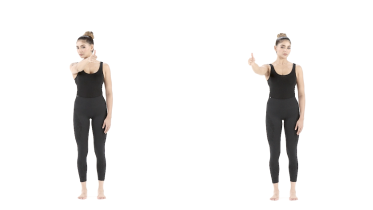 Gaze stabilization x2
Stop signs and precautions for the gaze stabilization x2
Before you start
- If your neck pain started after a recent car accident or fall, get it checked by a doctor or physio before you begin. Keep still and call emergency services if the pain came straight after a high-speed crash, a car that rolled over, being thrown from a vehicle, being hit by a vehicle while walking or cycling, a motorbike or quad bike accident, a horse riding accident, a diving injury or a fall from a height or down several stairs, or if you have numbness, tingling or weakness in an arm or leg. If you hit your head and were knocked out, cannot remember what happened, have had a headache ever since, are being sick, or take medicine that thins your blood other than aspirin on its own, go to an emergency department, and do not drive yourself. If you have a condition that stiffens the spine, such as ankylosing spondylitis, new neck pain after even a minor fall, knock or jolt is an emergency: keep still and call emergency services if it started straight after the injury, or go to an emergency department straight away, without driving yourself, if it started later. See a doctor the same day, before any exercise, if you are 65 or over, have low bone density (osteoporosis) or have taken steroid tablets for a long time, if your neck pain is severe, if you cannot turn your head halfway toward each shoulder, or if it hurts when you press on the bony middle of the back of your neck. Having none of these does not rule out an injury.
- If your dizziness started after a car accident or a fall and nobody has checked your neck since, get your neck checked before you start these exercises, even if your neck does not hurt.
- Start these exercises only after a doctor or vestibular physio has found the cause of your dizziness. New dizziness, or dizziness that has changed, needs checking first.
- After neck surgery or a broken bone in the neck, check with your surgeon or physio before you start. With any other known neck condition, check with your doctor or physio before you start, and keep the head turns small.
When to stop and get help
- The dizziness becomes severe or stronger than your physio said to expect, you are being sick, or you feel faint. Stop, sit or lie still and get medical advice the same day before you do these exercises again. If you faint, it is no better after 10 minutes of keeping still, you suddenly lose hearing in one or both ears, or you are far more unsteady on your feet than usual, call emergency services.
- Things look double, your vision suddenly blurs or goes, your speech slurs or becomes muddled, swallowing becomes hard, your face or lips go numb, one side of your face droops or one side of your body goes weak or numb, you suddenly become so dizzy or unsteady that you fall or cannot stand or walk, your legs suddenly give way but you do not black out (a drop attack), or you get a sudden severe headache. Stop and call emergency services, even if it goes away.
- The head turns bring on neck pain, or numbness, tingling or pain spreading down an arm.
- You wobble so much that you have to hold the counter or chair to stay on your feet.
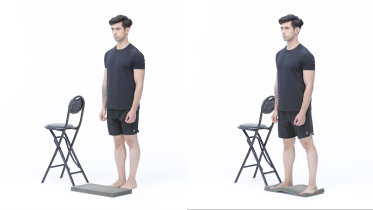 Standing balance on a foam pad
Stop signs and precautions for the standing balance on a foam pad
When to stop and get help
- You feel dizzy, lightheaded, faint or sick, or the room seems to spin. Hold your support, sit down and get medical advice the same day before you practice again. If you faint, it does not settle within a few minutes of sitting still, your vision suddenly blurs or goes double, or you cannot stand or walk steadily, call emergency services.
- You start to fall and need the support to stop yourself.
- Sharp pain in an ankle or knee, or an ankle that gives way.
- Your feet feel newly numb or tingly, or your balance has been slipping over recent weeks. Get medical advice within a few days, and leave out eyes-closed work until you have been checked. If the numbness or tingling spreads quickly up your legs or into your hands, get medical advice the same day. If your legs also feel stiff, heavy or weak, walking suddenly becomes hard, you have trouble breathing or swallowing, or you have trouble controlling your bladder or bowels, call emergency services.
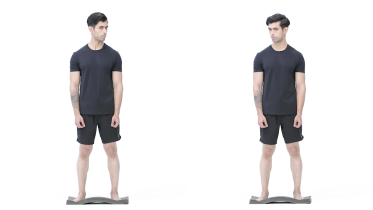 Foam pad balance with head turns
Stop signs and precautions for the foam pad balance with head turns
Before you start
- If your neck pain started after a recent car accident or fall, get it checked by a doctor or physio before you begin. Keep still and call emergency services if the pain came straight after a high-speed crash, a car that rolled over, being thrown from a vehicle, being hit by a vehicle while walking or cycling, a motorbike or quad bike accident, a horse riding accident, a diving injury or a fall from a height or down several stairs, or if you have numbness, tingling or weakness in an arm or leg. If you hit your head and were knocked out, cannot remember what happened, have had a headache ever since, are being sick, or take medicine that thins your blood other than aspirin on its own, go to an emergency department, and do not drive yourself. If you have a condition that stiffens the spine, such as ankylosing spondylitis, new neck pain after even a minor fall, knock or jolt is an emergency: keep still and call emergency services if it started straight after the injury, or go to an emergency department straight away, without driving yourself, if it started later. See a doctor the same day, before any exercise, if you are 65 or over, have low bone density (osteoporosis) or have taken steroid tablets for a long time, if your neck pain is severe, if you cannot turn your head halfway toward each shoulder, or if it hurts when you press on the bony middle of the back of your neck. Having none of these does not rule out an injury.
- If your dizziness started after a car accident or a fall and nobody has checked your neck since, get your neck checked before you start these exercises, even if your neck does not hurt.
- Start these exercises only after a doctor or vestibular physio has found the cause of your dizziness. New dizziness, or dizziness that has changed, needs checking first.
- After neck surgery or a broken bone in the neck, check with your surgeon or physio before you start. With any other known neck condition, check with your doctor or physio before you start, and keep the head turns small.
When to stop and get help
- The dizziness becomes severe or stronger than your physio said to expect, you are being sick, or you feel faint. Stop, sit or lie still and get medical advice the same day before you do these exercises again. If you faint, it is no better after 10 minutes of keeping still, you suddenly lose hearing in one or both ears, or you are far more unsteady on your feet than usual, call emergency services.
- Things look double, your vision suddenly blurs or goes, your speech slurs or becomes muddled, swallowing becomes hard, your face or lips go numb, one side of your face droops or one side of your body goes weak or numb, you suddenly become so dizzy or unsteady that you fall or cannot stand or walk, your legs suddenly give way but you do not black out (a drop attack), or you get a sudden severe headache. Stop and call emergency services, even if it goes away.
- You lose your balance and have to grab the support or step off the pad.
- Neck pain, pain or tingling that runs into an arm, or an ankle that gives way.
- Your feet feel newly numb or tingly, or your balance has been slipping over recent weeks. Get medical advice within a few days, and leave out eyes-closed work until you have been checked. If the numbness or tingling spreads quickly up your legs or into your hands, get medical advice the same day. If your legs also feel stiff, heavy or weak, walking suddenly becomes hard, you have trouble breathing or swallowing, or you have trouble controlling your bladder or bowels, call emergency services.
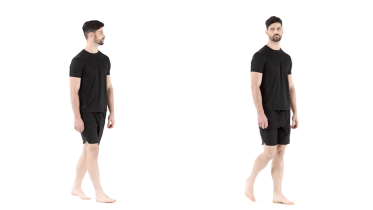 Walking with head turns
Stop signs and precautions for the walking with head turns
Before you start
- Practice along a corridor wall or kitchen counter, close enough that one hand could reach it straight away. If you have fallen in the past year, feel unsteady on your feet, or take medicines that make you dizzy, keep a hand on the wall or counter the whole way, practice only when someone else is at home, and ask your doctor or physio about a falls check.
- If your neck pain started after a recent car accident or fall, get it checked by a doctor or physio before you begin. Keep still and call emergency services if the pain came straight after a high-speed crash, a car that rolled over, being thrown from a vehicle, being hit by a vehicle while walking or cycling, a motorbike or quad bike accident, a horse riding accident, a diving injury or a fall from a height or down several stairs, or if you have numbness, tingling or weakness in an arm or leg. If you hit your head and were knocked out, cannot remember what happened, have had a headache ever since, are being sick, or take medicine that thins your blood other than aspirin on its own, go to an emergency department, and do not drive yourself. If you have a condition that stiffens the spine, such as ankylosing spondylitis, new neck pain after even a minor fall, knock or jolt is an emergency: keep still and call emergency services if it started straight after the injury, or go to an emergency department straight away, without driving yourself, if it started later. See a doctor the same day, before any exercise, if you are 65 or over, have low bone density (osteoporosis) or have taken steroid tablets for a long time, if your neck pain is severe, if you cannot turn your head halfway toward each shoulder, or if it hurts when you press on the bony middle of the back of your neck. Having none of these does not rule out an injury.
- If your dizziness started after a car accident or a fall and nobody has checked your neck since, get your neck checked before you start these exercises, even if your neck does not hurt.
- If you have an inner ear problem, get dizzy when you move your head or are being treated for vertigo, check with your doctor or physio before you start.
- After neck surgery or a broken bone in the neck, check with your surgeon or physio before you start.
When to stop and get help
- You feel dizzy, lightheaded, faint or sick, or the room seems to spin. Hold your support, sit down and get medical advice the same day before you practice again. If you faint, it does not settle within a few minutes of sitting still, your vision suddenly blurs or goes double, or you cannot stand or walk steadily, call emergency services.
- You stumble or veer off course and cannot recover without holding on.
- Turning your head brings on neck pain, or pain or tingling that spreads into an arm.
- Things look double, your vision suddenly blurs or goes, your speech slurs or becomes muddled, swallowing becomes hard, your face or lips go numb, one side of your face droops or one side of your body goes weak or numb, you suddenly become so dizzy or unsteady that you fall or cannot stand or walk, your legs suddenly give way but you do not black out (a drop attack), or you get a sudden severe headache. Stop and call emergency services, even if it goes away.
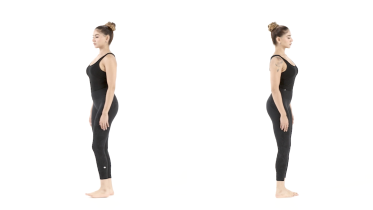 Turning on the spot
Stop signs and precautions for the turning on the spot
Before you start
- If you have had a hip replacement, get the go-ahead from your surgeon or physio before you try turning on the spot. Twisting the body over a planted foot turns the hip inward or outward, and many surgeons ask you to avoid that for the first months after some operations. Small steps, lifting the feet each time, keep that twist to a minimum.
When to stop and get help
- You feel dizzy, lightheaded, faint or sick, or the room seems to spin. Hold your support, sit down and get medical advice the same day before you practice again. If you faint, it does not settle within a few minutes of sitting still, your vision suddenly blurs or goes double, or you cannot stand or walk steadily, call emergency services.
- You trip over your own feet or have to grab the counter to stay up.
- New pain in a hip, knee or ankle as you step round.
What else helps while you wait
Waiting lists for vestibular physiotherapy are real, and there are things the NHS says you can do in the meantime that are not the exercises above.
Get outside for a walk as early as you can manage one, and when you do, hold your gaze on one point ahead of you instead of letting your eyes wander around. The NHS suggests having someone with you to steady you until you feel confident, which is worth taking up for the first few walks. Do not drive, cycle, use tools or operate machinery while you feel dizzy, and do not drink alcohol, which the NHS says can make the symptoms worse. The NHS also notes that antihistamines or anti-sickness medicines are for the first 3 days at most, because taking them for longer can slow your recovery down, and that is a conversation with the person who prescribed them rather than a decision to make yourself.
Two symptoms during that wait change the plan rather than being part of it: sudden hearing loss in one ear needs same-day advice, and any sign of a stroke means emergency services. Both are in the warning list at the foot of this page.
When to see a physio or doctor
If you have been dizzy or unsteady for weeks and nobody has examined you, that is the appointment to make, and it comes before any exercise. Ask for a vestibular assessment specifically, because this is a subspecialty within physiotherapy and audiology rather than something every clinic does.
Go back sooner if your symptoms are getting worse rather than slowly better, if you have started falling or nearly falling, if the exercises you were given leave you dizzy for hours instead of minutes, or if a new symptom turns up that was not there at the first appointment. Dizziness in combination with a stiff or painful neck needs its own look, and neck pain carries the warnings for that. If you have had a stroke, stroke rehab is the page for balance work afterward.
Nothing on this page is personal advice, and the warning list at the foot of this page takes priority over the program. Red flags in physiotherapy explains how the urgency tiers work.
For physiotherapists
This page is built on the ten action statements rather than on a summary of them, with the strength of each one visible, because the distinction between a strong recommendation to treat and a weak recommendation on dose is the thing patients most often arrive having not been told.
Three notes on sourcing. The grade letters above were read as words in the guideline's running text, not inferred from its verbs. The bilateral vestibulopathy criteria paper carries a 2023 erratum that we have not read, so it is cited here for scope only and no criterion or threshold from it appears on the page. And the 10 minute settling guide comes from our own house wording for vestibular pages, aligned with dizziness and BPPV, rather than from the guideline, which gives no numeric stop rule.
A fourth note, on the warning list. The guideline is a treatment document and does not carry acute triage, so the head injury, fall, fracture and post-operative lines in the list below come from elsewhere: NICE NG232 and the NHS head injury page for the head knock set, NHS and NICE NG249 for the fall and fracture set, and the pressure and sound triggered line from the Barany Society criteria for superior canal dehiscence, which is in the list because a third mobile window is not treated with the exercises on this page. The post-operative line is there because a leak of cerebrospinal fluid is a recognized complication of surgery for a vestibular schwannoma, at 3.7 percent of 993 patients in a national surgical database, and over half of those needed a second operation (Gelfand 2020). None of that is a reason to send a post-operative reader anywhere except back to their surgical team, which is what the page does.
Warning signs
Get emergency help now
- Emergency: call emergency services straight away for any sign of a stroke, even if it goes away: sudden dizziness with unsteadiness or falling over, a face that droops on one side, an arm you cannot lift or keep up, slurred or muddled speech, weakness or numbness on one side of your body or face, sudden blurred vision, double vision or loss of sight, trouble swallowing, a sudden severe headache, or a sudden fall where your legs give way but you do not black out (a drop attack).
- Emergency: vertigo or dizziness together with new hearing loss, double vision or loss of vision, trouble speaking, or weakness, numbness or tingling in an arm or leg. Call emergency services or go to an emergency department straight away.
- Emergency: dizziness with a new, severe headache, or a sudden, severe headache that feels unlike anything you have had before. Call emergency services straight away.
- Emergency: a new headache or neck pain, or both, that does not feel like ordinary neck pain. If this is your first bout, judge it by how it behaves rather than by how it compares. Either of the next two is enough on its own. One, it came on suddenly, in a single moment, even if it is not severe and even if it has eased since. Sudden onset counts on its own. Two, nothing you do changes it much: no position or rest makes a real difference, and after the first day or two it has not started to settle. It counts even if you have none of the other emergency signs above, and it matters more if it started after a neck injury or strain, even a minor one, a bout of heavy coughing, or having your neck manipulated. Go to an emergency department straight away, or call emergency services if you cannot get there safely, and do not drive yourself. Do not start these exercises, and do not have any hands-on treatment to your neck, until your neck has been checked. A tear in an artery in the neck can start as pain alone, often on one side, with nothing else to find. If it came on gradually rather than in a single moment, and you can find a position that eases it, follow the same day warning sign for this below instead. Pain that started in one moment stays with this emergency line even if a position now eases it.
- Emergency: a racing, pounding, fluttering or irregular heartbeat that does not settle when you rest, or that comes with dizziness, feeling faint or fainting, chest pain or shortness of breath. Call emergency services straight away. If it has already stopped, get medical advice the same day.
- If chest pain, pressure or tightness does not ease quickly when you rest, spreads to your arm, neck, jaw, stomach or back, or comes with sweating, feeling sick, feeling light-headed or being short of breath, call emergency services straight away, as this can be a heart attack. If it eases quickly and none of these happen, get medical advice the same day, and do not exercise again until you have been checked.
- Emergency: after a knock to the head, being very drowsy or finding it hard to keep your eyes open, confusion, a fit (seizure), new weakness or numbness anywhere in your body, new trouble understanding, speaking, walking or keeping your balance, new problems seeing or hearing, clear fluid coming from your ears or nose, bleeding from your ears or bruising behind them, a black eye when your eye was not hit, a dent in your head or a wound with something stuck in it, or a change in behavior. Call emergency services straight away. These can be signs of an injury to the brain.
- Emergency: a knock to the head in a high-energy accident, even if you feel completely well. That means a fall from a height of more than 1 meter (about 3 feet) or more than 5 stairs, a crash at high speed, a car that rolled over, being thrown from a vehicle, being hit by a vehicle while walking or cycling, a bike crash, an accident on a quad bike or similar motorized vehicle, a fall from a horse, a diving accident, or any other heavy, fast impact to the head. Call emergency services straight away, without waiting to see how you feel. A high-energy head injury is a reason for emergency assessment on its own, with no symptoms needed.
- Emergency: after a knock to the head, you were knocked out, even for a moment, you cannot remember what happened just before or after, you have had a headache ever since, or you are being sick (vomiting). The same applies, even if you feel fine, if you take medicine that thins your blood, other than aspirin on its own, have a bleeding or clotting condition, have had brain surgery in the past, or had been drinking alcohol or taking drugs when it happened. Go to an emergency department straight away, and do not drive yourself.
- Emergency: after a knock to the head, swelling, a deep cut or severe pain at the exact spot that was hit. Call emergency services or go to an emergency department straight away, and do not drive yourself. These can be signs of a broken skull.
- Emergency: severe neck pain after a knock to the head, whatever the fall or the knock was like. Keep still and call emergency services, and do not let anyone move you until someone trained has checked your neck. If the neck pain only starts later and nobody has checked your neck since, go to an emergency department straight away, and do not drive yourself.
- Emergency: you have just fallen and cannot get up, or you think you may have hurt your head, neck, back or hip. Stay where you are, keep warm and call emergency services, or get someone to call for you. Nobody should try to lift you off the floor, and nobody should pull you up by the arms: being hauled upright can move a broken bone that has not slipped yet and can make an injured neck or back worse. Someone helping should call for help, keep you warm and stay with you. If you got up and walked without trouble and only notice pain later, without any of the emergency signs in this list, use the same-day lines in it instead.
- Emergency: you fell and cannot remember the fall or how it happened. Go to an emergency department straight away, and do not drive yourself. You may have blacked out or hit your head without knowing it.
- Emergency: you have had a fall or an injury and now have severe hip pain, or you cannot walk or put weight on the leg. Call emergency services or go to an emergency department. This can be a sign of a broken hip (hip fracture).
- Emergency: after a fall or a knock, a wrist, hand or arm that has changed shape or sits at an odd angle, that goes numb, tingles or has pins and needles, that turns pale, blue or cold, that has a bone showing through the skin, or that has a cut bleeding heavily. Go to an emergency department straight away, or call emergency services, and do not drive yourself. Do not try to straighten the arm or push the bone back yourself.
- Emergency: new neck or back pain after a fall, a knock or a jolt, even a minor one such as a trip or a sudden stop in a car, if you have a condition that stiffens the spine, such as ankylosing spondylitis. Call emergency services or go to an emergency department straight away, do not drive yourself, and tell the staff about your spine condition, so they keep your neck and back in their usual position. A stiff spine can break after a small injury, and the break is easy to miss at first. If the pain started straight after the injury, or you also have numbness, tingling or weakness in your arms or legs, keep still and call emergency services.
- Emergency: you have had a hip replacement and have sudden severe pain in your hip or groin, sometimes with a clunk or pop, and you cannot move the leg or put weight on it, or the leg suddenly looks shorter or turned in or out. Do not try to walk on it or push it back into place. Keep still and call emergency services or go to an emergency department, and do not drive yourself. Your new hip may have come out of its socket (dislocated), and a medical team needs to put it back.
- Emergency: a stiff neck with a fever, a severe headache that is getting worse, pain when you look at bright lights, confusion, or a rash that does not fade when you press a glass on it. Call emergency services. These can be signs of meningitis.
Get help today
- Same day: a new headache or neck pain, or both, that does not feel like ordinary neck pain, that came on gradually rather than in a single moment, that started after a neck injury or strain, even a minor one, a bout of heavy coughing, or having your neck manipulated, but that does ease when you change position or rest. Get checked the same day before you start these exercises or have any hands-on treatment to your neck. If nothing you do changes it much any more, or it has not started to settle after a day or two, or it did come on in a single moment, follow the emergency warning sign for this above.
- Same day: you blacked out or fainted, even for a moment. Get medical advice the same day. Call emergency services instead if the person is not breathing, cannot be woken within 1 minute, has not fully recovered or has trouble speaking or moving, has chest pain or a pounding, fluttering or irregular heartbeat, fainted while exercising or lying down, is shaking or jerking, or was badly hurt.
- Same day: sudden new dizziness, or feeling faint or unsteady, without any of the stroke signs above. Stop, sit down and get medical advice the same day. If you faint, it does not settle within a few minutes of sitting still, or you cannot stand or walk steadily, call emergency services.
- Same day: dizziness or spinning that has been there all the time for a day or more, rather than coming in short spells when you move your head, without any of the emergency signs above. Get medical advice the same day. If you cannot stand or walk steadily, call emergency services.
- Same day: sudden hearing loss in one or both ears, or hearing that has got worse over a few days, without dizziness or any of the emergency signs above. Get medical advice the same day, as it may need treating quickly.
- Same day: vertigo with being sick or feeling very sick, a very high temperature, or feeling hot, cold or shivery, without any of the emergency signs above. Get medical advice the same day.
- Same day: you feel dizzy after a knock to the head, without any of the emergency signs above. Get medical advice the same day.
- Same day: after a fall, you are in pain, have hurt yourself or feel unwell, or you were on the floor for an hour or more, without any of the emergency signs above. Get medical advice the same day, even if you managed to get up.
- Same day: new hip or groin pain after a fall, even a small one, if you are older, have low bone density (osteoporosis) or have taken steroid tablets for a long time, even if you can still walk. Get medical advice the same day, and say that you fell and that your bones are thin. Until it has been checked, stop the exercises and keep as much weight off that leg as you can, using your stick, frame or crutches if you have them and asking someone for help to move about, because a crack in the hip that has not slipped yet can slip when you walk on it, and a hip that has slipped usually needs a bigger operation than one that has not. A broken hip is not always obvious at first, and a first X-ray does not always show it, so if you have been checked and sent home and you still cannot walk on that leg, or the pain is getting worse, go back and say so.
- Same day: after a fall or a knock, a wrist, hand or arm that is very painful, that you cannot use because of the pain, that is badly swollen or bruised, or that is very stiff or hard to move, with no change of shape, no numbness or tingling, no pale, blue or cold skin, no bone showing and no cut that is bleeding heavily. Get it checked the same day at an urgent care center or an emergency department, and do not exercise that arm until it has been seen. A fall onto an outstretched hand often breaks a bone near the wrist, and an X-ray is the only way to be sure.
- Same day: neck pain after a car accident or a fall, even a minor one, if you are 65 or older, have low bone density (osteoporosis) or have taken steroid tablets for a long time. Get your neck checked by a doctor the same day, for example at an emergency department, before you start these exercises. At 65 or older, doctors usually want an X-ray or scan of the neck after an accident.
- Back pain that comes on suddenly after lifting, bending, a cough or a sneeze, even without a fall, if you have low bone density (osteoporosis). Get medical advice the same day. This can be a sign of a broken bone in the spine (vertebral fracture). Stop the exercises until you have been checked, and keep away from lifting, bending forward and twisting in the meantime, because those load a broken vertebra whether you are exercising or not.
- Same day: after an operation on your ear, your inner ear, your balance nerve or the base of your skull, clear or watery fluid dripping from your nose or your ear, or a wound that is red, hot, swollen, leaking or starting to come apart. Contact your surgical team the same day, or get urgent medical advice if you cannot reach them, and do not do these exercises until they have seen you. Fluid like that can be the fluid from around the brain, which needs their assessment rather than a physiotherapist's, and while it is leaking it is a route for infection. If you also have a severe headache, a stiff neck, a fever, confusion or bright light hurting your eyes, follow the meningitis warning sign above and call emergency services.
- Same day: an electric shock feeling runs down your back or into your arms or legs as your head bends forward. Stop and get medical advice the same day.
Book an appointment
- Within a few days: short spells of spinning when you lie down, roll over in bed or look up, or dizziness that keeps coming back, without any of the signs above. See your GP or a physio within a few days so the cause can be confirmed and treated.
- Within a few days: dizziness or a spinning feeling that is set off by coughing, sneezing, blowing your nose, straining, lifting something heavy or a loud noise, rather than by moving your head. See your doctor, or ask to be referred to an ear, nose and throat specialist, within a few days, and do not start these exercises in the meantime. A gap or a leak between the inner ear and the skull behaves differently from a weak balance organ, it is diagnosed with a scan and ear tests rather than from symptoms alone, and the exercises on this page are not the treatment for it. Get medical advice the same day instead if it started after a knock to the head or an operation on your ear, or if your hearing has changed with it.
- Within a few days: you have had a fall, even if you were not hurt, or you keep tripping, stumbling or feeling that your legs might give way. Book an appointment with your doctor within a few days and ask about a falls assessment. Tell them about every fall, even the ones where you were not hurt.
Common questions
What is vestibular hypofunction?
It is a weak or absent signal from the balance organ of the inner ear, on one side or on both. The balance organ sits next to the hearing organ and tells your brain how your head is moving. When its signal drops, two things go wrong: your eyes no longer hold still on what you are looking at while your head moves, so print and faces smear or jump, and your brain loses one of the three sources it uses to know where you are in space, so standing and walking take more effort. It is a diagnosis made by a clinician from your history and an examination, sometimes with inner ear testing, and it is not something you can confirm from a web page.
Why am I dizzy when I turn my head?
Because the reflex that steadies your vision during head movement runs on the signal that has dropped. Normally your inner ear tells your eyes to move by exactly as much as your head moved, in the opposite direction, so the view stays still. With hypofunction on one side, turns toward the weak side come up short and the image slips, which is felt as dizziness, blurring or a swimmy feeling the moment you turn. That is the specific fault the gaze stabilization exercises train, and it is also why they are meant to bring on mild symptoms.
Why do I feel off balance but not spinning?
Spinning in short bursts when you move your head is usually a different problem, loose crystals in the inner ear, and it has its own treatment, which is a repositioning maneuver rather than exercise (see dizziness and BPPV). Hypofunction more often feels like unsteadiness, a sense of being on a boat, head movements being unpleasant, and tiredness by the afternoon from the effort of staying upright. Plenty of people have had both, one after the other. Which one you have changes the treatment completely, which is the reason for being examined before anything starts.
Am I meant to feel dizzy doing the exercises?
A little, and only on the gaze and habituation items. Those two are supposed to stir the symptom up a bit, since a system that is never challenged has no reason to adapt, and what you feel should drain away within a few minutes of finishing. The balance holds, the turning and the walking are not meant to make you dizzy at all, so say something if they do. If the dizziness becomes severe or stronger than your physio said to expect, you are being sick, or you feel faint, stop, sit or lie still and get medical advice the same day before you do these exercises again. If you faint, it is no better after 10 minutes of keeping still, you suddenly lose hearing in one or both ears, or you are far more unsteady on your feet than usual, call emergency services.
How much should I be doing?
The published doses differ by case and none of them is a strong recommendation: the gaze figures are all weak, and the balance figures are weak for a chronic one-sided loss and expert opinion for the other two cases. So the number your own clinician sets beats any of them. For a sudden one-sided loss the guideline's figure is gaze stabilization three times a day totaling at least 12 minutes; for a one-sided loss that has become chronic it is three to five times a day totaling at least 20 minutes, with at least 20 minutes of balance work, for 4 to 6 weeks; for a loss on both sides it is three to five times a day totaling 20 to 40 minutes, for about 5 to 7 weeks, with balance work for 6 to 9 weeks (Hall 2022). In the same document those home doses sit alongside weekly clinic visits rather than replacing them.
How long does it take to get better?
For the common acute causes, the NHS says your balance usually comes back over 2 to 6 weeks, although it can take longer. For a one-sided loss that has already lasted months, the guideline's own course lengths of 4 to 6 weeks of daily work give you the order of magnitude, and progress is usually judged by what you can do rather than by how dizzy you feel on a given day. Loss on both sides is slower and the aim shifts toward strategies and safety as much as recovery. A Cochrane review of vestibular rehabilitation for one-sided loss found moderate to strong evidence that it is a safe and effective treatment, and moderate evidence that it resolves symptoms and improves function in the medium term (McDonnell 2015).
Is it both ears?
It can be, and the answer changes the treatment. Loss on both sides is less common, it is often missed because there is no spinning to point at, and it tends to show up as unsteadiness in the dark, trouble on uneven ground and a world that moves when you walk. The Barany Society has published diagnostic criteria for it, which is a clinician's tool rather than a checklist to use on yourself (Strupp 2017). The guideline treats it as its own case with its own dose, and it is the case where exercising without supervision makes least sense.
Why was I told not to do eye exercises on their own?
Because the guideline is specific about it. Its action statement 4 says clinicians should not offer saccade or smooth-pursuit exercises, meaning eye movements with the head still, as the gaze stability exercise for people with hypofunction, and that is one of its strong recommendations (Hall 2022). The eye-only exercises are not banned and they have their uses, which is why side to side eye movements and the two eye tracking exercises are in the program here. The rule is that they sit alongside the exercises where your head moves and never in place of them, because the head movement is what asks the damaged system to adapt.
References
- Hall CD, Herdman SJ, Whitney SL, Anson ER, Carender WJ, Hoppes CW, Cass SP, Christy JB, Cohen HS, Fife TD, Furman JM, Shepard NT, Clendaniel RA, Dishman JD, Goebel JA, Meldrum D, Ryan C, Wallace RL, Woodward NJ. Vestibular rehabilitation for peripheral vestibular hypofunction: an updated clinical practice guideline from the Academy of Neurologic Physical Therapy of the American Physical Therapy Association. Journal of Neurologic Physical Therapy. 2022;46(2):118-177. https://doi.org/10.1097/NPT.0000000000000382
- McDonnell MN, Hillier SL. Vestibular rehabilitation for unilateral peripheral vestibular dysfunction. Cochrane Database of Systematic Reviews. 2015;1(1):CD005397. https://doi.org/10.1002/14651858.CD005397.pub4
- Kattah JC, Talkad AV, Wang DZ, Hsieh YH, Newman-Toker DE. HINTS to diagnose stroke in the acute vestibular syndrome: three-step bedside oculomotor examination more sensitive than early MRI diffusion-weighted imaging. Stroke. 2009;40(11):3504-3510. https://doi.org/10.1161/STROKEAHA.109.551234
- Strupp M, Bisdorff A, Furman J, Hornibrook J, Jahn K, Maire R, Newman-Toker D, Magnusson M. Acute unilateral vestibulopathy/vestibular neuritis: diagnostic criteria. Journal of Vestibular Research. 2022;32(5):389-406. https://doi.org/10.3233/VES-220201
- Strupp M, Kim JS, Murofushi T, Straumann D, Jen JC, Rosengren SM, Della Santina CC, Kingma H. Bilateral vestibulopathy: diagnostic criteria. Consensus document of the Classification Committee of the Barany Society. Journal of Vestibular Research. 2017;27(4):177-189. https://doi.org/10.3233/VES-170619. Cited here for the existence and scope of the criteria only. An erratum was published at Journal of Vestibular Research. 2023;33(1):87, doi:10.3233/VES-229002, which we have not read, so no criterion or threshold from this paper is quoted on this page.
- Agrawal Y, Van de Berg R, Wuyts F, Walther L, Magnusson M, Oh E, Sharpe M, Strupp M. Presbyvestibulopathy: diagnostic criteria. Consensus document of the Classification Committee of the Barany Society. Journal of Vestibular Research. 2019;29(4):161-170. https://doi.org/10.3233/VES-190672
- NHS. Labyrinthitis and vestibular neuritis. Page last reviewed 6 August 2026. https://www.nhs.uk/conditions/labyrinthitis/
- Ward BK, van de Berg R, van Rompaey V, Bisdorff A, Hullar TE, Welgampola MS, Carey JP. Superior semicircular canal dehiscence syndrome: diagnostic criteria consensus document of the committee for the classification of vestibular disorders of the Barany Society. Journal of Vestibular Research. 2021;31(3):131-141. https://doi.org/10.3233/VES-200004. Cited here for its symptom criteria, which include sound-induced and pressure-induced vertigo, and for the fact that the diagnosis needs imaging and ear testing as well as symptoms.
- Gelfand Y, Longo M, Berezin N, Nakhla JP, De la Garza-Ramos R, Agarwal V. Risk factors for 30-day non-neurological morbidity and cerebrospinal fluid leak in patients undergoing surgery for vestibular schwannoma. Journal of Neurological Surgery Part B: Skull Base. 2020;81(5):546-552. https://doi.org/10.1055/s-0039-1692478
- National Institute for Health and Care Excellence. Head injury: assessment and early management. NICE guideline NG232. 2023. https://www.nice.org.uk/guidance/ng232
- NHS. Head injury and concussion. Page last reviewed 29 May 2025. https://www.nhs.uk/conditions/head-injury-and-concussion/
- NHS. Broken arm or wrist. Page last reviewed 2 October 2026. https://www.nhs.uk/conditions/broken-arm-or-wrist/
- NHS. Complications of a hip replacement. Page last reviewed 6 March 2024. https://www.nhs.uk/tests-and-treatments/hip-replacement/complications-of-a-hip-replacement/
- NHS. Meningitis. Page last reviewed 12 June 2026. https://www.nhs.uk/conditions/meningitis/
- National Institute for Health and Care Excellence. Falls: assessment and prevention in older people and in people 50 and over at higher risk. NICE guideline NG249. 2025. https://www.nice.org.uk/guidance/ng249
Written and checked by the PocketPhysio editorial team. Last updated 2026-11-06.
This page is general education, not a diagnosis or a personal treatment plan. See a physiotherapist or doctor for advice about your own situation.