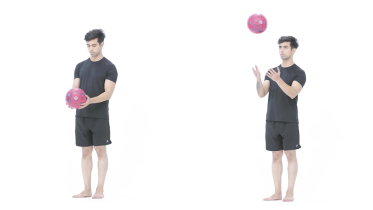
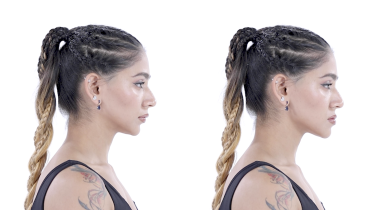
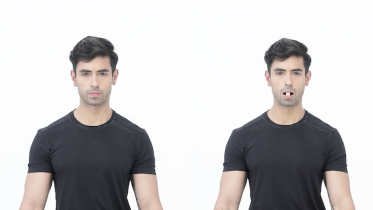
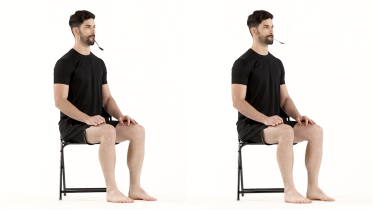
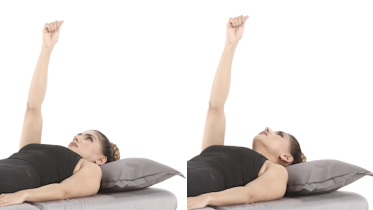
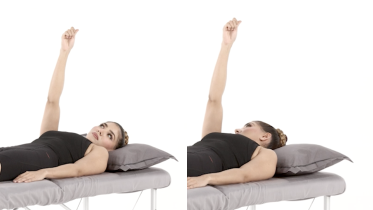
Figure 8 eye tracking
Figure 8 eye tracking means standing still with your head steady while your eyes follow your thumb as it draws a large figure 8 in the air. Your eyes do all the work of keeping the thumb in view, a skill physios call smooth pursuit. It is part of many vestibular rehab programs. Standing adds a mild balance challenge. In the video she holds one arm out with the thumb up and sweeps it across her body and out to the side while her head stays still.
How to do the figure 8 eye tracking
- Stand with a kitchen counter or sturdy chair close beside you, feet about hip width apart, and look straight ahead.
- Hold one arm out in front of you at about chest to shoulder height, thumb pointing up, and fix your eyes on the thumbnail.
- Keeping your head still, slowly move your arm to draw a large figure 8 in the air. Only your eyes follow the thumb.
- Keep the thumb in clear view all the way round. If your eyes lose it or it blurs, make the movement slower or smaller. Blur or double vision that carries on after your thumb stops moving is a stop sign, not part of the exercise.
- Carry on for the time your physio has set, then lower your arm, look at a fixed point ahead and let any dizziness settle.
What you should feel
Steady concentration from your eyes and perhaps mild, short-lived dizziness. Your shoulder may tire from holding the arm up.
Common mistakes
- Turning your head to follow the thumb instead of moving only your eyes.
- Moving the thumb faster than your eyes can keep up with.
- Locking your knees or holding your breath.
- Practicing with nothing to hold on to nearby.
How often
Many programs begin with 30 seconds to a minute, 2 to 3 times a day, building the time first and then the speed of the thumb. Your physio will adjust this.
Stop and check with your physio if
- The dizziness becomes severe or stronger than your physio said to expect, you are being sick, or you feel faint. Stop, sit or lie still and get medical advice the same day before you do these exercises again. If you faint, it is no better after 10 minutes of keeping still, you suddenly lose hearing in one or both ears, or you are far more unsteady on your feet than usual, call emergency services.
- Things look double, your vision suddenly blurs or goes, your speech slurs or becomes muddled, swallowing becomes hard, your face or lips go numb, one side of your face droops or one side of your body goes weak or numb, you suddenly become so dizzy or unsteady that you fall or cannot stand or walk, your legs suddenly give way but you do not black out (a drop attack), or you get a sudden severe headache. Stop and call emergency services, even if it goes away.
- You sway or lose your balance and need the counter to stay upright.
- Your eyes start to hurt, or a headache gets worse as you go.
From the clinic
Start these exercises only after a doctor or vestibular physio has found the cause of your dizziness. New dizziness, or dizziness that has changed, needs checking first.
Following a moving target can make you a bit dizzy or woozy. It should stay mild and pass within a few minutes of stopping, and your physio will set how much is fine. If it takes more than about 10 minutes to settle, go slower next time and tell your physio. If it becomes severe, stop and look at the stop signs on this page.
Stand next to a kitchen counter, close enough to put a hand on it without moving your feet, on a clear floor. Wear flat shoes that fit well and grip the floor, not socks, tights or bare feet. If you have fallen in the past 12 months, feel unsteady or use a walking aid, do this sitting in a steady chair instead, or have another adult stand close by, and mention it to your physio, who may suggest a falls check.
Following a moving target with your eyes does not train the reflex that steadies your vision when your head moves, so physios use it as one part of a wider program. Your physio may later ask you to stand with your feet closer together or trace other shapes. Side to side eye movements is a seated eye exercise without a moving target, and walking with head turns brings head movement and walking into the mix.
Written and checked by the PocketPhysio editorial team. Last updated 2026-09-26.
This page is general education, not a diagnosis or a personal treatment plan. If you have pain, an injury or a health condition, see a physiotherapist or doctor before starting new exercises.