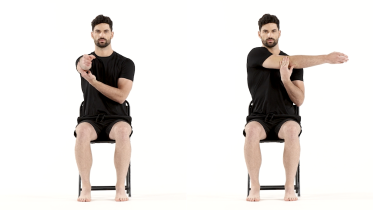
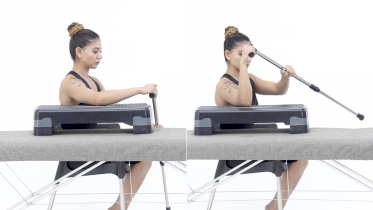
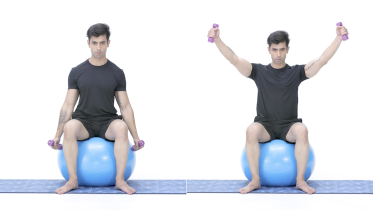
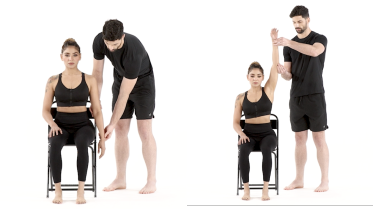
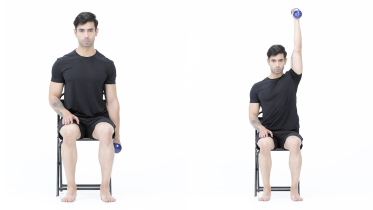
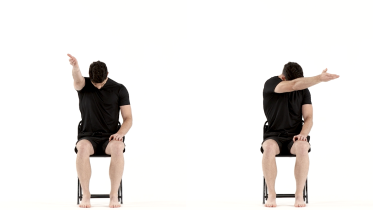
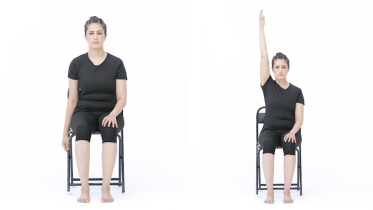
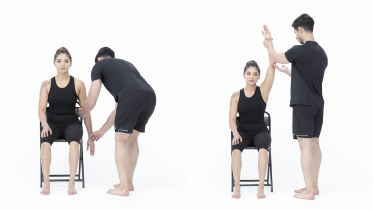
Seated lat stretch on a table
The seated lat stretch works on the broad muscle down the side of your back that pulls the arm down toward your body (latissimus dorsi). Sitting in front of a table, you rest your hands on it, slide them forward and let your head drop between your arms until you feel a stretch under the armpits and along the sides of your back. The table carries the weight of your arms, so your shoulders can stay relaxed.
How to do the seated lat stretch on a table
- Sit on a sturdy chair facing a table, close enough to rest your hands on it, with your feet flat on the floor.
- Place both hands on the table in front of you, palms down and about shoulder width apart.
- Slowly slide your hands forward along the table, leaning your body forward from the hips as they go.
- Let your head drop gently between your arms and keep reaching until you feel a stretch under your armpits and down the sides of your back. The arms and shoulders stay loose.
- Hold the stretch while you breathe slowly. Then sit up slowly with your hands still on the table, bringing your head up last, and slide your hands back to rest on your thighs.
What you should feel
A stretch under both armpits and down the sides of your back, often reaching between the shoulder blades too. Your neck should feel relaxed, not strained.
Common mistakes
- Tensing the shoulders up toward the ears as the hands slide forward. The voice guide stresses that the arms stay floppy.
- Pressing down hard through the hands instead of letting the table carry the arms.
- Sitting too far back, so you have to slump to reach the table.
- Coming up quickly, head first.
How often
A typical plan is a 20 to 30 second hold, done 2 to 4 times, once or twice a day. Your physio will adjust this.
Stop and check with your physio if
- A sharp pain or pinch in the shoulder or neck, or pins and needles or numbness in your arms or hands.
- Pins and needles in your arm or hand that do not go away after you stop, or part of your arm or hand goes numb. Get medical advice the same day. If one side of your face or body suddenly goes numb or weak, or your speech becomes slurred or muddled, call emergency services, even if it goes away.
- You feel dizzy or lightheaded as you bend forward or sit back up. Stop, stay seated and let it pass. If it keeps happening, get medical advice the same day before you try again, and call emergency services if it does not settle within a few minutes of sitting still. If you faint while exercising, call emergency services, even if you feel fine again quickly.
- An electric shock feeling runs down your back or into your arms or legs as your head bends forward. Stop and get medical advice the same day.
From the clinic
The video uses a plain table and a folding chair. Choose a chair that will not slide or tip as you lean, and keep your feet flat so they share some of your weight. The voice guide notes you can also do this standing, with your hands on a higher surface such as a kitchen counter. To stretch one side at a time, try the side stretch over a ball.
Your upper back rounds forward as you lean, so with low bone density (osteoporosis) or a past fracture in the spine, lean mainly from the hips, keep the stretch gentle and check with your physio how far to go.
If you have had a hip replacement, get the go-ahead from your surgeon or physio before you try the seated lat stretch on a table. Leaning forward from the hips while you sit bends the hip past a right angle, and many surgeons ask you to avoid that for the first months after some operations.
After shoulder surgery, including a rotator cuff repair, or after a shoulder fracture or dislocation, follow your surgeon's or physio's plan, and do only the movements and range they have cleared. Many plans allow only passive movement at first, where the arm is moved for you and its muscles stay relaxed. Sliding the hands forward lifts the arms toward overhead, which some shoulder operations and a broken collarbone limit for the first weeks.
Written and checked by the PocketPhysio editorial team. Last updated 2026-09-28.
This page is general education, not a diagnosis or a personal treatment plan. If you have pain, an injury or a health condition, see a physiotherapist or doctor before starting new exercises.