Seated neck extension
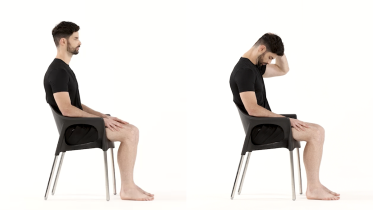
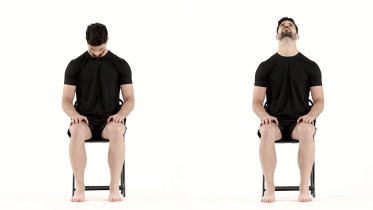
Seated neck extension is a range of motion exercise where you sit tall and slowly tip your head back to look up at the ceiling, then bring it back to level (active cervical extension). Only your head and neck move, and your body stays still against the chair. Physios often give it for a stiff neck, and it suits people who spend long hours looking down at a desk or screen.
How to do the seated neck extension
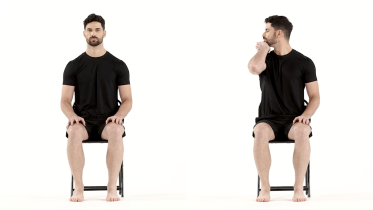
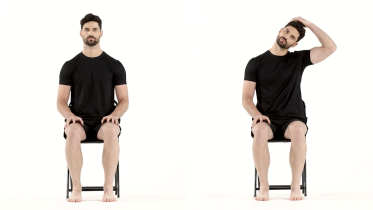
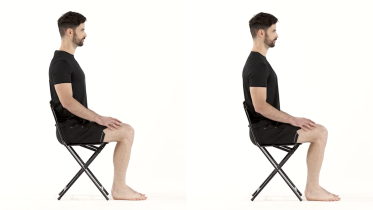
- Sit upright in a chair with your back against the backrest, your feet flat and your hands resting on your thighs.
- Look straight ahead with your chin level and your shoulders relaxed.
- Slowly tip your head back and lift your eyes to the ceiling. Your back stays against the chair, so only your head and neck move.
- Stop at the first mild stretch along the front of your neck, or sooner if the movement feels uncomfortable.
- Bring your head back to level just as slowly, relax for a moment, then repeat.
What you should feel
Movement at the back of the neck and a gentle stretch along the front of the neck and throat as you look up. There should be no pinching at the back of the neck.
Common mistakes
- Leaning your chest and upper back back with your head, so the neck does less of the moving.
- Dropping the head back quickly, or letting it hang at the top.
- Clenching your jaw or holding your breath as you look up.
- Pushing on into a pinch at the back of the neck to see further.
How often
Many programs start with 5 to 10 slow repetitions, pausing for 2 to 5 seconds at the top as in the video, a few times a day. Your physio will adjust this.
Stop and check with your physio if
- You feel dizzy, faint or unsteady. Stop and get medical advice the same day. If you faint, it does not settle within a few minutes of sitting still, or you cannot stand or walk steadily, call emergency services.
- Things look double, your vision suddenly blurs or goes, your speech slurs or becomes muddled, swallowing becomes hard, your face or lips go numb, one side of your face droops or one side of your body goes weak or numb, you suddenly become so dizzy or unsteady that you fall or cannot stand or walk, your legs suddenly give way but you do not black out (a drop attack), or you get a sudden severe headache. Stop and call emergency services, even if it goes away.
- Looking up brings on pain, tingling or numbness in your arm or hand, or a sharp pinch at the back of your neck.
From the clinic
There is no load here, just movement. Once it feels easy, seated neck extension strengthening adds a light exercise band. The chair back is a handy guide: if your shoulders start to peel away from it, you have gone past what your neck can do on its own. To move forward and back in one set, try neck flexion and extension, or the neck range of motion exercises for all four directions.
Tipping the head back can bring on dizziness or arm symptoms in some people, so keep it small and slow. If a neck movement makes you dizzy, stop, sit still until it settles, and get medical advice the same day before you try again. Looking up also briefly narrows the space around the nerves and the spinal cord in the neck. Ask your physio before you begin if you have rheumatoid arthritis or Down syndrome, have been told the top of your neck is unstable, or know there is pressure on the spinal cord in your neck. After neck surgery or a broken bone in the neck, check with your surgeon or physio before you start.
If your neck pain started after a recent car accident or fall, get it checked by a doctor or physio before you begin. Keep still and call emergency services if the pain came straight after a high-speed crash, a car that rolled over, being thrown from a vehicle, being hit by a vehicle while walking or cycling, a motorbike or quad bike accident, a horse riding accident, a diving injury or a fall from a height or down several stairs, or if you have numbness, tingling or weakness in an arm or leg. If you hit your head and were knocked out, cannot remember what happened, have had a headache ever since, are being sick, or take medicine that thins your blood other than aspirin on its own, go to an emergency department, and do not drive yourself.
If you have a condition that stiffens the spine, such as ankylosing spondylitis, new neck pain after even a minor fall, knock or jolt is an emergency: keep still and call emergency services if it started straight after the injury, or go to an emergency department straight away, without driving yourself, if it started later. See a doctor the same day, before any exercise, if you are 65 or over, have low bone density (osteoporosis) or have taken steroid tablets for a long time, if your neck pain is severe, if you cannot turn your head halfway toward each shoulder, or if it hurts when you press on the bony middle of the back of your neck. Having none of these does not rule out an injury.
Written and checked by the PocketPhysio editorial team. Last updated 2026-09-28.
This page is general education, not a diagnosis or a personal treatment plan. If you have pain, an injury or a health condition, see a physiotherapist or doctor before starting new exercises.