Buzz saw plank
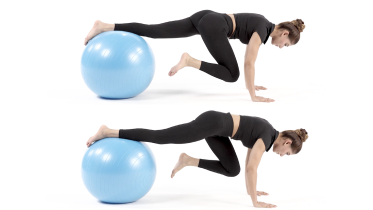
A buzz saw plank is a forearm plank that moves. You hold a straight line from head to heels on your forearms and toes, then use your elbows as a hinge to rock your whole body back a short way and forward again, like the stroke of a saw. When your body shifts back, your arms end up further in front of you, and your stomach has to work harder to stop your lower back from sagging. It is a step up from holding a still plank.
How to do the buzz saw plank
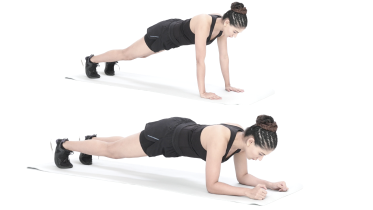
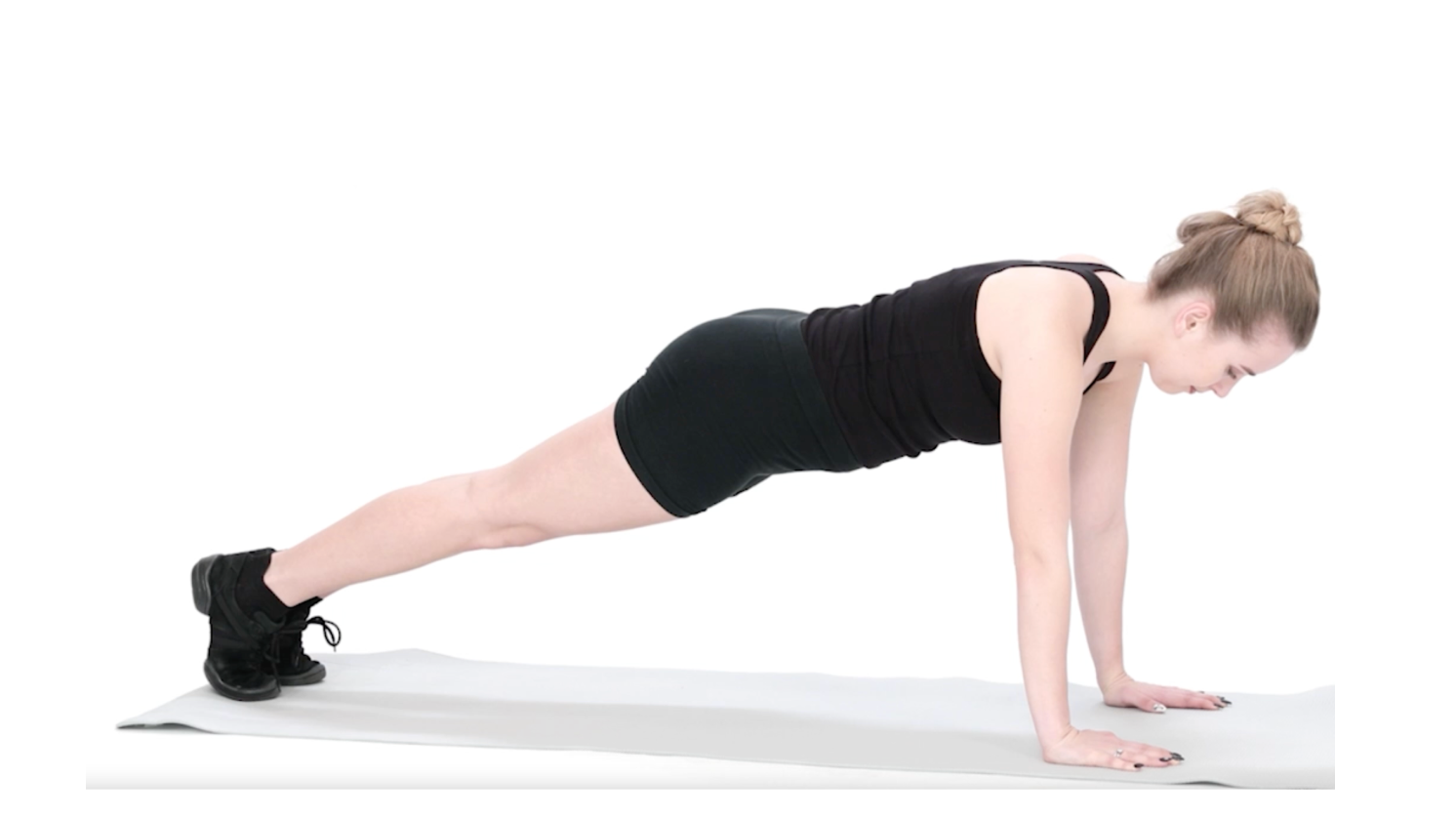
- Start in a forearm plank on a mat, with your elbows under your shoulders, forearms flat and pointing forward, and your legs straight behind you on your toes.
- Tighten your stomach and squeeze your buttocks so your head, back and heels make one straight line.
- Press your forearms into the mat and hinge at the elbows to move your whole body back a short way, until your shoulders are a little behind your elbows. Your feet stay where they are and your heels move back over your toes.
- Pull yourself forward again, past the start, until your shoulders sit a little in front of your elbows.
- Keep rocking slowly back and forward with your hips level. Lower your knees to the mat when you need a rest.
What you should feel
Hard, steady work across your stomach, and it gets harder as your body moves back. Your shoulders and the muscles around your shoulder blades control the rock.
Common mistakes
- Letting the hips drop as the body moves back, which puts the strain into the lower back.
- Lifting the bottom up high to make the rock easier.
- Rocking further than you can control.
- Letting the head hang or the chin poke forward.
- Holding your breath as the movement gets harder.
How often
Many programs start with 2 to 3 sets of 6 to 10 slow rocks, or rounds of 20 to 30 seconds, with a rest between sets, 2 or 3 days a week. Your physio will adjust this.
Stop and check with your physio if
- Lower back pain that builds as you rock, or pain spreading into a leg.
- Pain in a shoulder or elbow, or a feeling that a shoulder could slip out.
- Pain, pins and needles or numbness spreading down your arm or into your hand.
- Pins and needles in your arm or hand that do not go away after you stop, or part of your arm or hand goes numb. Get medical advice the same day. If one side of your face or body suddenly goes numb or weak, or your speech becomes slurred or muddled, call emergency services, even if it goes away.
- Chest pain or pressure, dizziness or feeling faint, a racing or irregular heartbeat, or being far more out of breath than the effort should cause.
- The shoulder feels as if it has slipped out of place, looks a different shape or suddenly locks so you cannot move the arm, or your hand turns cold, pale or blue. Go to an emergency department straight away, without driving yourself, and do not try to put the shoulder back in yourself.
From the clinic
The voice guide sets this up with sliders under both feet, so the feet glide as the body moves. The video has no sliders. The feet stay on the mat and roll over the toes as the body rocks, and that is the simpler way to do it at home. Keep the rock small at first and add range only while your back stays level.
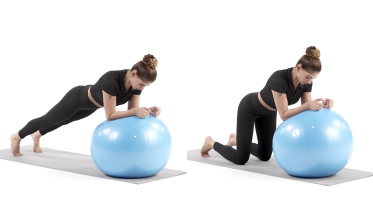
If you cannot yet hold a still plank with your back level, build that first. Once the rock feels controlled, the stability ball rollout is another way to load the stomach with the arms reaching forward.
Each time you shift back, more of your weight moves into your shoulders, with the arms angled further in front of you. If you have had shoulder surgery or a dislocation, or a shoulder keeps hurting, ask your physio before you add the rock. A folded towel under your elbows helps if the mat feels hard.
Moving back makes the lever longer, so the stomach wall has more to hold. If you are pregnant, have a hernia or have had stomach surgery, ask your physio or doctor before you try this. If you have recently given birth, including by cesarean section, or you have a gap down the middle of your stomach muscles (diastasis recti), ask your physio, midwife or doctor first. Stop and tell your physio if a ridge or bulge shows along the middle of your stomach.
If you have high blood pressure, breathe steadily through every repetition and never hold your breath. With a heart condition or high blood pressure, check with your doctor before you start. If chest pain, pressure or tightness does not ease quickly when you rest, spreads to your arm, neck, jaw, stomach or back, or comes with sweating, feeling sick, feeling light-headed or being short of breath, call emergency services straight away, as this can be a heart attack. If it eases quickly and none of these happen, get medical advice the same day, and do not exercise again until you have been checked. If you faint while exercising, call emergency services, even if you feel fine again quickly.
Written and checked by the PocketPhysio editorial team. Last updated 2026-09-28.
This page is general education, not a diagnosis or a personal treatment plan. If you have pain, an injury or a health condition, see a physiotherapist or doctor before starting new exercises.