Downward dog
Downward dog is a stretch and strength position that comes from yoga. From your hands and knees, you lift your hips up and back so your body makes an upside-down V, arms and legs straight, with your weight on your palms and feet. It stretches the back of your thighs and your calves while your shoulders and arms hold you up.
How to do the downward dog
- Start on your hands and knees on a mat, hands about shoulder width apart and under or slightly ahead of your shoulders. Tuck your toes under.
- Spread your fingers and press your palms firmly into the floor.
- Lift your knees off the floor and push your hips up and back as high as they will go, straightening your arms and legs.
- Let your head hang relaxed between your arms so your body forms an upside-down V. Your heels reach toward the floor, but they can stay lifted.
- Hold for a breath or two, then bend your knees and lower them back to the floor. Repeat.
What you should feel
A stretch along the back of your thighs and calves, sometimes under the arms as well. Your shoulders and arms work to hold you up.
Common mistakes
- Rounding the back to force the heels down. Bend the knees a little instead so the back stays long.
- Letting the shoulders creep up around the ears.
- Setting the hands and feet so close together that the V gets cramped.
- Holding your breath.
How often
Many programs use 5 to 10 slow repetitions, holding each for a few breaths, or 2 to 3 longer holds of 20 to 30 seconds. Your physio will adjust this.
Stop and check with your physio if
- Dizziness, a headache, or a feeling of pressure in your head or eyes. If you faint while exercising, call emergency services, even if you feel fine again quickly.
- Sharp pain in a wrist or shoulder.
- Pain, numbness or tingling that runs down the back of a leg.
From the clinic
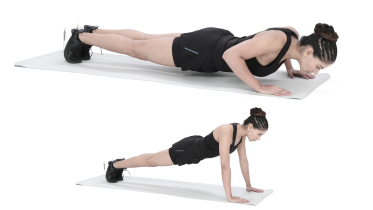
The voice guide starts from a push-up position. The video starts on hands and knees, which is easier to get into, so these steps follow the video. Heels that stay off the floor are fine, and so are slightly bent knees if your hamstrings are tight. The calf stretch and the supine hamstring stretch reach the same areas with no weight on your arms.
In this position your head sits lower than your heart. If you have high blood pressure, glaucoma, recent eye surgery or a history of dizziness, check with your doctor or physio first, keep breathing and come up slowly. Sore wrists often cope better resting on the fists or on sturdy dumbbells, which keep the wrists straight. After shoulder surgery, or with ongoing shoulder pain, ask your physio before you try it.
If you have had a hip replacement, get the go-ahead from your surgeon or physio before you try downward dog. Downward dog bends the hips well past a right angle, and many surgeons ask you to avoid that for the first months after some operations.
Written and checked by the PocketPhysio editorial team. Last updated 2026-09-26.
This page is general education, not a diagnosis or a personal treatment plan. If you have pain, an injury or a health condition, see a physiotherapist or doctor before starting new exercises.