Hammer curl
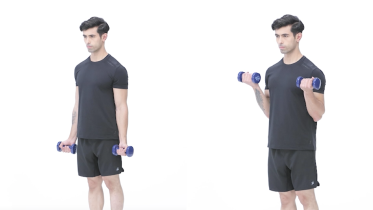
A hammer curl is a dumbbell curl done with your palms facing in and thumbs pointing forward, the way you would hold a hammer. You stand with a weight in each hand, bend both elbows to bring the weights up toward your shoulders, then lower them until your arms are straight. Keeping the forearm in this middle position (mid-pronated) brings in more of the muscle along the thumb side of the forearm (brachioradialis). The biceps and the deep elbow bender under it (brachialis) still work, as they do in any curl.
How to do the hammer curl
- Stand with your feet shoulder width apart and a dumbbell in each hand. Let your arms hang by your sides with your palms facing your thighs.
- Tuck your elbows in against your sides. Stand tall and keep your hips and shoulders still for the whole movement.
- Breathe out as you bend both elbows together and curl the weights up toward your shoulders. Your palms keep facing each other the whole way.
- Breathe in as you lower the weights slowly until your arms are straight again.
- Repeat, moving only at the elbows.
What you should feel
Work in the front of your upper arm and along the top of your forearm on the thumb side. Your grip works as well.
Common mistakes
- Turning the palms up during the lift, which changes it into an ordinary biceps curl.
- Rocking the hips forward or leaning back to heave the weights up.
- Shrugging the shoulders or letting the elbows swing forward.
- Letting the weights drop quickly on the way down.
How often
Many programs start with light dumbbells and 2 to 3 sets of 8 to 12 repetitions, 2 to 3 days a week. Your physio will adjust this and help you pick a sensible weight.
Stop and check with your physio if
- Sharp pain at the elbow, along the forearm or at the front of the shoulder.
- A sudden pop or snap at the front of your elbow, sudden sharp pain there, or the muscle at the front of your upper arm bunches up or changes shape. Stop and go to an urgent care center or emergency department the same day, even if you can still bend the elbow, as this can be a torn biceps tendon.
- Pain, numbness or tingling that travels down into the hand.
- Pins and needles in your arm or hand that do not go away after you stop, or part of your arm or hand goes numb. Get medical advice the same day. If one side of your face or body suddenly goes numb or weak, or your speech becomes slurred or muddled, call emergency services, even if it goes away.
From the clinic
Gripping a dumbbell works the forearm muscles that attach at the outside of the elbow. If you have pain there (tennis elbow), start with a very light weight and check with your physio first. After a biceps tendon repair or elbow surgery, curls against resistance usually wait until your surgeon's protocol allows them.
You can curl one arm at a time, or sit on a chair if standing tires you. Breathe through every repetition rather than holding your breath. That matters even more with high blood pressure. For the palm-up version, see the biceps curl.
After a broken or dislocated elbow, or elbow surgery such as a tendon repair, follow your surgeon's or physio's plan, and start this exercise only when they have cleared you. If you have just hurt your arm and have severe pain, cannot move the elbow or heard a snap, do not exercise it. Go to an urgent care center or emergency department the same day. If the arm looks a different shape or sits at an odd angle, a bone is showing, or your arm or hand tingles, feels numb or turns cold, pale or blue, go to an emergency department straight away or call emergency services, and do not drive yourself.
Written and checked by the PocketPhysio editorial team. Last updated 2026-09-28.
This page is general education, not a diagnosis or a personal treatment plan. If you have pain, an injury or a health condition, see a physiotherapist or doctor before starting new exercises.