Jumping jacks
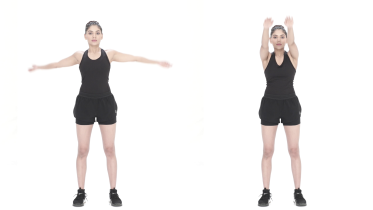
Jumping jacks are a whole body cardio exercise done on the spot. You jump your feet out wide while swinging your arms up overhead, then jump back to feet together and arms down, in a steady rhythm. They raise your heart rate quickly, which is why they often appear in warm-ups and home workouts. Every repetition is a small jump, so they are higher impact than they look.
How to do the jumping jacks
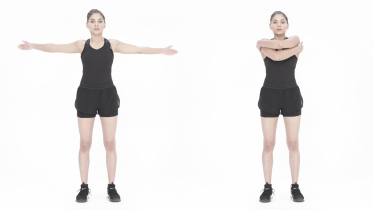
- Stand tall with your feet together and your arms by your sides. Wear supportive shoes and use a floor that is not slippery.
- Bend your knees slightly and jump, landing with your feet a little wider than your shoulders.
- At the same time, swing your arms out to the sides and up over your head.
- Jump back to feet together as your arms come back down to your sides.
- Land softly on the balls of your feet with your knees slightly bent, and keep going in a steady rhythm. Keep breathing throughout.
What you should feel
Your heart rate and breathing go up within a short time. Your calves, the sides of your hips and your shoulders work to keep the rhythm going.
Common mistakes
- Landing stiff-legged or flat and heavy, instead of softly with bent knees.
- Knees falling inward when the feet land wide.
- Arms only reaching halfway up, or flapping without control.
- Going faster than you can land well.
How often
Many programs start with 2 to 3 rounds of 20 to 30 seconds, or 10 to 20 jumps, with a rest in between. Your physio will adjust this for you.
Stop and check with your physio if
- Chest pain or pressure, dizziness or feeling faint, a racing or irregular heartbeat, or being far more out of breath than the effort should cause.
- Pain in the ankle, knee or hip that sharpens or keeps building.
- Leaking urine, or a feeling of heaviness or dragging in the pelvis.
- A sudden pop or snap at the back of your ankle or heel, a feeling that someone kicked you there, or sudden pain there after which you cannot push off or rise onto your toes on that leg. Stop, take the weight off that leg carefully and go to an urgent care center or emergency department the same day, even if you can still walk, as this can be a torn Achilles tendon.
From the clinic
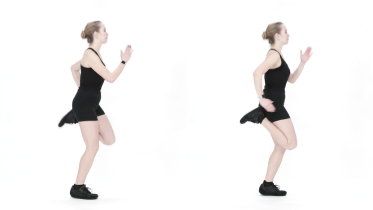
For a low impact version, step one foot out to the side as your arms go up, bring it back, then step out with the other foot. You keep the rhythm and the arm movement without the jump. Marching on the spot is gentler still.
Jumping adds load through the pelvic floor, the joints and the bones. If you leak urine when you jump, cough or sneeze, have osteoporosis, or have a recent ankle, knee or hip injury, use the stepping version and check with your physio before you jump.
If you have had a hip or knee replacement, get the go-ahead from your surgeon before you try jumping jacks. Many surgeons advise against jumping and hopping after a joint replacement for good, not just for the first months, because each landing sends high impact through the new joint. If you are pregnant or have recently had a baby, check with your doctor, midwife or physio before doing jumping jacks. With high blood pressure or a heart condition, check with your doctor first, because the pace raises your heart rate quickly.
If chest pain, pressure or tightness does not ease quickly when you rest, spreads to your arm, neck, jaw, stomach or back, or comes with sweating, feeling sick, feeling light-headed or being short of breath, call emergency services straight away, as this can be a heart attack. If it eases quickly and none of these happen, get medical advice the same day, and do not exercise again until you have been checked. If you faint while exercising, call emergency services, even if you feel fine again quickly.
Written and checked by the PocketPhysio editorial team. Last updated 2026-09-28.
This page is general education, not a diagnosis or a personal treatment plan. If you have pain, an injury or a health condition, see a physiotherapist or doctor before starting new exercises.