Jumping lunges
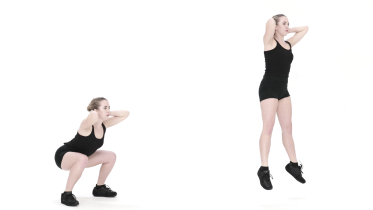
A jumping lunge starts in a lunge. You jump straight up, switch legs in the air and land softly in a lunge with the other foot in front. Each rep works the thigh and buttock muscles hard, first to push you off the floor and then to catch you on landing. It is a high impact exercise that usually comes late in knee, hip or sports rehab, once ordinary lunges feel easy and pain free.
How to do the jumping lunges
- Wear supportive shoes on a floor that is not slippery, with space all around you. Step one foot forward into a lunge (the voice guide starts with the left) and bend both knees until the back knee hovers just above the floor.
- Keep your upper body upright and your stomach muscles gently tight. The front knee sits over the ankle, in line with your second toe.
- Push hard through both feet and jump straight up so both feet leave the floor. Swing your arms as if running, with the arm opposite your front leg coming forward.
- While you are in the air, switch legs: the front foot goes back and the back foot comes forward.
- Land softly with the other leg in front, the front foot flat and the back heel up, and sink straight down into a lunge, letting your knees bend to take the landing. The back knee stops just above the floor, as in the video. Pause to steady yourself if you need to, then jump again, switching legs each time.
What you should feel
Hard work in the thighs and buttocks of both legs, with your calves helping at take-off. Your breathing and heart rate will climb quickly.
Common mistakes
- Landing with straight legs or a loud thud, instead of quietly with bent knees.
- The front knee collapsing inward on landing.
- Leaning the upper body forward over the front thigh.
- Letting the back knee crash down onto the floor.
- Carrying on when tired. End the set once your landings get sloppy.
How often
Many programs start with 2 to 3 sets of 6 to 10 jumps in total, switching legs on each jump, with plenty of rest between sets, on 2 or 3 days a week. Your physio will adjust this.
Stop and check with your physio if
- Chest pain or pressure, dizziness or feeling faint, a racing or irregular heartbeat, or being far more out of breath than the effort should cause.
- Sharp pain in a knee, ankle or hip, or your knee buckles on landing.
- You leak urine, or feel heaviness or a dragging sensation in your pelvis.
- A sudden pop or snap at the back of your ankle or heel, a feeling that someone kicked you there, or sudden pain there after which you cannot push off or rise onto your toes on that leg. Stop, take the weight off that leg carefully and go to an urgent care center or emergency department the same day, even if you can still walk, as this can be a torn Achilles tendon.
From the clinic
Build up through the forward lunge, the split squat and jump squats first, because here you land in a split stance with little time to find your balance. Moving between lunges with a small hop instead of a full jump is a fair halfway stage. Keep a wall or sturdy counter within reach for your first sessions, and clear anything you could land on. If you have fallen in the past year or feel unsteady on your feet, leave this one until your physio says you are ready.
Each landing sends force through your knees, hips, spine and pelvic floor. If you leak urine when you cough, sneeze or exercise, have osteoporosis, or are coming back from a knee, ankle or hip injury, check with your physio before you start. If you are pregnant, ask your midwife or physio first. After having a baby, postnatal guidance usually leaves jumping until at least 3 months after the birth, once a pelvic floor check shows you are ready.
If you have had a hip or knee replacement, get the go-ahead from your surgeon before you try jumping lunges. Many surgeons advise against jumping and hopping after a joint replacement for good, not just for the first months, because each landing sends high impact through the new joint.
With a heart condition or high blood pressure, check with your doctor before you start. If chest pain, pressure or tightness does not ease quickly when you rest, spreads to your arm, neck, jaw, stomach or back, or comes with sweating, feeling sick, feeling light-headed or being short of breath, call emergency services straight away, as this can be a heart attack. If it eases quickly and none of these happen, get medical advice the same day, and do not exercise again until you have been checked. If you faint while exercising, call emergency services, even if you feel fine again quickly.
Written and checked by the PocketPhysio editorial team. Last updated 2026-09-28.
This page is general education, not a diagnosis or a personal treatment plan. If you have pain, an injury or a health condition, see a physiotherapist or doctor before starting new exercises.