Posture correction
Posture correction is a short reset you can do in a chair: sit up tall, roll your shoulders back and down, draw your chin gently back and lightly tighten your stomach muscles. It takes a few seconds and needs no equipment, so it fits into a work break or a long spell at a screen. Think of it as a check-in you come back to during the day, not a position to hold rigidly.
How to do the posture correction
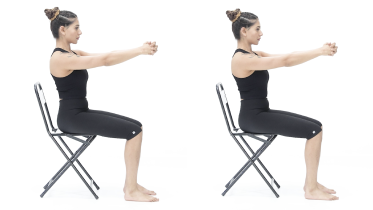
- Sit toward the front of a firm chair, away from the backrest, with your feet flat and about hip width apart and your hands resting on your thighs.
- Lengthen upward so your weight is over your sitting bones and your lower back keeps its small natural hollow.
- Roll your shoulders up and back, then let them drop down and rest there, loose rather than squeezed together.
- Slide your chin gently straight back, level with the floor, until your ears line up over your shoulders. Keep your eyes level.
- Lightly tighten your lower stomach muscles, at about a quarter of your full effort, and keep breathing normally. Stay for a few breaths, then relax.
What you should feel
Taller and a little more open across the chest, with mild work between your shoulder blades and at the front of your neck. It should not feel stiff or strained.
Common mistakes
- Arching the lower back and pushing the chest out to look tall.
- Pinching the shoulder blades hard together and holding them.
- Tipping the head down instead of sliding the chin straight back.
- Tightening the stomach so hard that you hold your breath.
How often
Many people do this reset 5 to 10 times through the day, staying in it for 5 to 10 slow breaths each time, and then move freely again. Your physio will adjust this.
Stop and check with your physio if
- Sharp pain in your neck or back as you sit up or tuck your chin, or pain, pins and needles or numbness spreading into an arm or leg.
- You feel dizzy, faint or unsteady. Stop and get medical advice the same day. If you faint, it does not settle within a few minutes of sitting still, or you cannot stand or walk steadily, call emergency services.
- Things look double, your vision suddenly blurs or goes, your speech slurs or becomes muddled, swallowing becomes hard, your face or lips go numb, one side of your face droops or one side of your body goes weak or numb, you suddenly become so dizzy or unsteady that you fall or cannot stand or walk, your legs suddenly give way but you do not black out (a drop attack), or you get a sudden severe headache. Stop and call emergency services, even if it goes away.
From the clinic
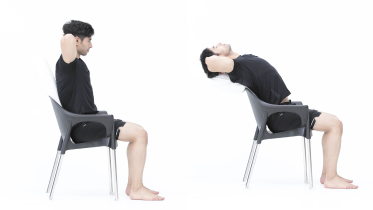
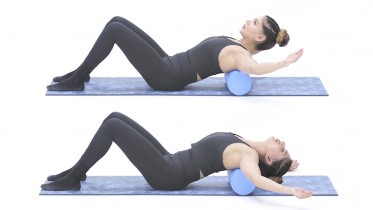
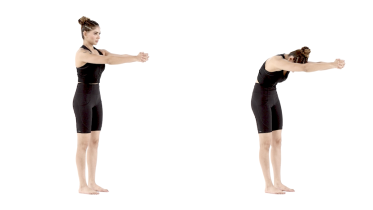
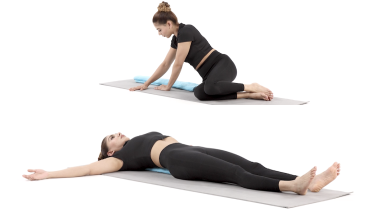
The video shows the seated version from the side, and the movements are small. The voice guide says it works standing too. Correct standing posture covers that in more detail, and correct sitting posture does the same for the chair. If the chin part feels awkward, practice the chin tuck on its own first.
Posture has no single correct shape, and sitting still for a long spell in any position tends to leave people stiff. Use this as a reset a few times a day, then get up and move about. After neck surgery or a broken bone in the neck, check with your surgeon or physio before you start.
Written and checked by the PocketPhysio editorial team. Last updated 2026-09-28.
This page is general education, not a diagnosis or a personal treatment plan. If you have pain, an injury or a health condition, see a physiotherapist or doctor before starting new exercises.