Bird dog crunch
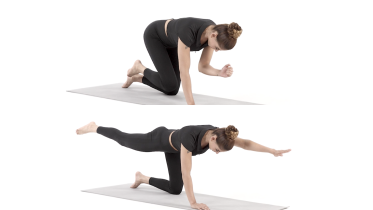
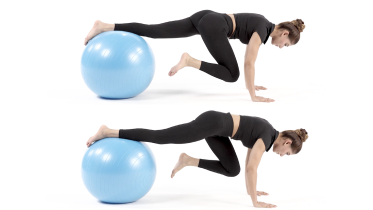
The bird dog crunch starts like a bird dog: from hands and knees you reach one arm forward and the opposite leg back. Then you curl them in under your body, rounding your back so the elbow and knee meet, and reach out again. The stomach and the back take turns working, and it asks for more control than the basic bird dog.
How to do the bird dog crunch
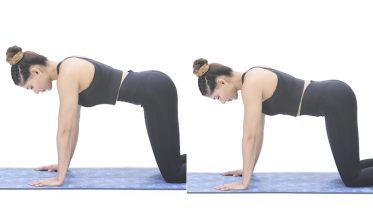
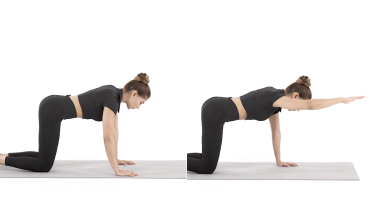
- Start on your hands and knees, hands under your shoulders and knees under your hips, with your back flat.
- Gently tighten your stomach and lift your pelvic floor a little. Keep breathing.
- Reach one arm forward and the opposite leg straight back, for example your left arm and right leg, until both are level with your body. Keep your hips square to the floor.
- Pause there for a few seconds, then bend the elbow and knee and draw them in under your body until they touch or come close, letting your back round up toward the ceiling as they meet.
- Reach the arm and leg back out into the long position with control, and let your back return to flat.
- Do your reps on one side, then switch to the other arm and leg.
What you should feel
Your stomach working as you curl in, and your back and buttock working as you reach out. The shoulder you lean on works to keep you steady.
Common mistakes
- Swinging through the movement. Go slowly enough that you could stop anywhere in the movement.
- Letting the hips twist toward the lifted leg as you reach out.
- Lifting the leg above the height of your body, which arches the lower back.
- Holding your breath. Many people find it easier to breathe out as they curl in.
How often
A common start is 1 to 2 sets of 6 to 10 slow reps on each side. Your physio will adjust this.
Stop and check with your physio if
- Back pain that builds as you go, or is worse afterward and does not settle.
- Pain spreading into your leg, or numbness or tingling.
- Pain in your knees or wrists from kneeling and leaning on your hands.
From the clinic
The bird dog is the simpler version and the one to learn first. There, the aim is to hold the reach with a still, flat back, and the tuck is optional. In the crunch, the curl is part of every rep: your back moves from flat to rounded and back again, and you aim to touch the elbow to the knee. Stay with the basic bird dog until you can hold the reach steadily on both sides.
The curl bends your spine forward over and over. If you have osteoporosis or have had a spinal fracture, keep to the basic bird dog without the curl unless your physio says the curl is fine for you. The same goes if your back pain gets worse when you bend forward. After back surgery, get the go-ahead from your surgeon or physio before you add the curl.
The curl also works the stomach wall. If you are pregnant, have recently given birth, have had abdominal surgery or have a hernia, ask your physio or doctor before you try this version.
If you have had a hip replacement, get the go-ahead from your surgeon or physio before you try the bird dog crunch. Drawing the knee in toward your elbow bends the hip well past a right angle, and many surgeons ask you to avoid that for the first months after some operations.
Written and checked by the PocketPhysio editorial team. Last updated 2026-09-26.
This page is general education, not a diagnosis or a personal treatment plan. If you have pain, an injury or a health condition, see a physiotherapist or doctor before starting new exercises.