Kneeling rotational ball throw
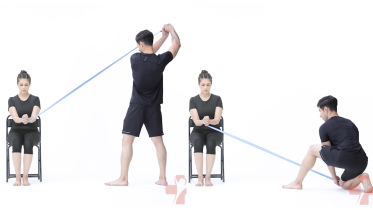
The kneeling rotational ball throw is a power exercise for the trunk. Kneeling upright with a medicine ball in both hands, you turn your chest to take the ball to one side, then unwind quickly and throw it forward against a solid wall so it comes back to you. Your waist and hips make the turn, and your shoulders add the push at the end. Kneeling takes most of the push from your legs away, so the turn has to come from your hips and trunk.
How to do the kneeling rotational ball throw
- Kneel upright on a padded mat facing a solid wall, a little more than an arm's length away, holding a light medicine ball in both hands at waist height.
- Brace your stomach gently and keep your spine long, with your hips stacked over your knees.
- Sit your hips back a little and turn your chest to one side, taking the ball back beside your hip.
- Drive your hips forward to upright kneeling as you turn back to the front, and throw the ball firmly at the wall at about chest height, arms reaching straight out.
- Catch the ball as it bounces back, reset, and repeat. Do all your throws from one side, then change sides.
What you should feel
Quick, strong effort around your waist and hips, with your shoulders and arms finishing the throw. Your lower back should feel steady, not strained.
Common mistakes
- Twisting from the lower back alone instead of turning through the hips and upper back.
- Rounding forward or arching back as you throw.
- Choosing a ball so heavy that the throw becomes slow and effortful.
- Letting your hips sag back toward your heels after the throw.
How often
Many programs start with 2 to 3 sets of 5 to 8 throws on each side, with a full rest between sets, 2 or 3 days a week. Your physio will adjust this.
Stop and check with your physio if
- Low back pain that is sharp during a throw, or pain, pins and needles or numbness that travels into your buttock or leg.
- Shoulder pain as you throw or catch, or knee pain from kneeling that extra padding does not ease.
- Chest pain or pressure, dizziness or feeling faint, a racing or irregular heartbeat, or being far more out of breath than the effort should cause.
From the clinic
The voice guide throws the ball against a wall and catches it on the rebound. The video shows the turn and the throw from kneeling, with no wall in view and to one side only, so work both sides. Use a solid wall with nothing breakable nearby. A light ball, for example 1 to 3 kg (about 2 to 7 lb), is plenty while you learn the movement, and a ball that bounces back hard is harder to catch.
Before you add speed, you should be able to turn your trunk slowly and without pain, for example with the seated ball twist. Put a folded towel or cushion under your knees if kneeling is uncomfortable.
With thin bones (osteoporosis) or a past fracture in your spine, fast twisting with a weight while you lean forward is a movement many physios ask you to avoid, so check with your physio before you try it. If you have had surgery on your spine, chest or heart in recent months, get the go-ahead from your surgical team or physio first. Ask first as well if you have a hernia, or back pain that twisting brings on. If you are pregnant, check with your midwife or physio before you start. If you have recently given birth, including by cesarean section, or you have a gap down the middle of your stomach muscles (diastasis recti), ask your physio, midwife or doctor first.
If you have had a hip replacement, get the go-ahead from your surgeon or physio before you try the kneeling rotational ball throw. Some operations limit this kind of work for the first months, so the timing depends on your surgery. After a knee fracture or knee surgery, including a knee replacement, follow your surgeon's or physio's plan, and start this exercise only when they have cleared you.
With a heart condition or high blood pressure, check with your doctor before you start. If you have high blood pressure, breathe steadily through every repetition and never hold your breath. If chest pain, pressure or tightness does not ease quickly when you rest, spreads to your arm, neck, jaw, stomach or back, or comes with sweating, feeling sick, feeling light-headed or being short of breath, call emergency services straight away, as this can be a heart attack. If it eases quickly and none of these happen, get medical advice the same day, and do not exercise again until you have been checked. If you faint while exercising, call emergency services, even if you feel fine again quickly.
Written and checked by the PocketPhysio editorial team. Last updated 2026-09-28.
This page is general education, not a diagnosis or a personal treatment plan. If you have pain, an injury or a health condition, see a physiotherapist or doctor before starting new exercises.