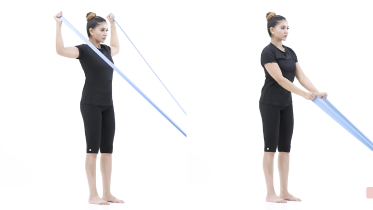
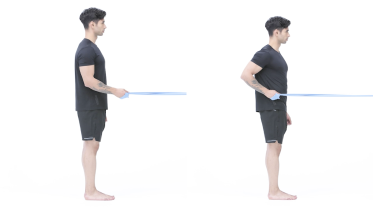
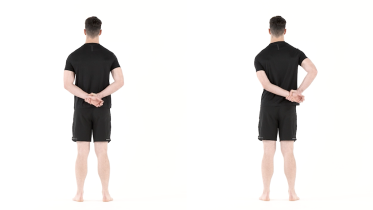
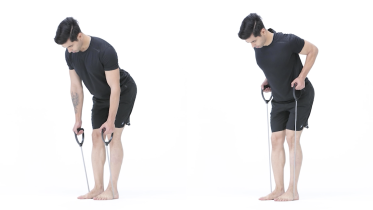
Lateral raise
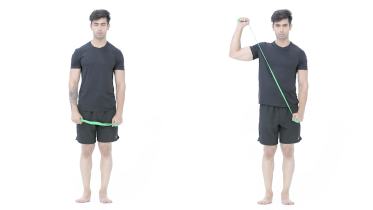
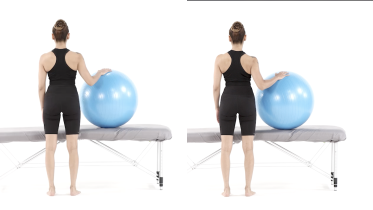
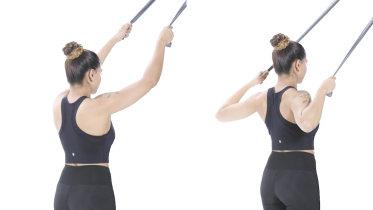
A lateral raise works the muscle on the outside of your shoulder (middle deltoid). You stand with a light dumbbell in each hand, lift both arms out to the sides with the elbows straight until your hands reach shoulder height, then lower them slowly. It is a common shoulder strengthening exercise once the arm can lift sideways without pain.
How to do the lateral raise
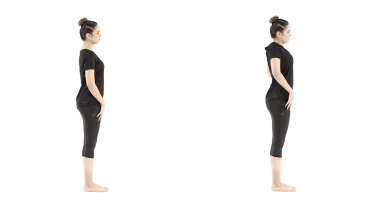
- Stand tall with your feet about hip width apart. Hold a light dumbbell in each hand, arms by your sides.
- Tighten your stomach a little and let your shoulders settle down and away from your ears.
- Lift both arms out to the sides with the elbows straight, until your hands reach shoulder height. Your palms face the floor at the top.
- Lower the weights slowly back to your sides, keeping the arms straight.
What you should feel
Work on the outside of both shoulders, getting stronger toward the top of the lift. Your neck should stay fairly relaxed.
Common mistakes
- Swinging the weights up, or leaning back to help them rise.
- Lifting higher than shoulder height, or shrugging toward your ears.
- Dropping the weights quickly on the way down.
- Choosing a weight too heavy to lift with straight arms and a still body.
How often
Many programs use 2 to 3 sets of 8 to 15 slow repetitions with a light weight, 2 to 3 times a week. Your physio will adjust this for you.
Stop and check with your physio if
- A sharp pain or a painful catch in the shoulder as the arms rise.
- Pain, tingling or numbness spreads down the arm.
- Pins and needles in your arm or hand that do not go away after you stop, or part of your arm or hand goes numb. Get medical advice the same day. If one side of your face or body suddenly goes numb or weak, or your speech becomes slurred or muddled, call emergency services, even if it goes away.
- The shoulder is still aching more than usual a few minutes after the set, or is worse the next morning.
From the clinic
The voice guide mentions kettlebells, but the video shows dumbbells, and this page follows the video. Start lighter than you think you need. A small water bottle in each hand is enough for many people at first, and you can lift one arm at a time if one shoulder is sore.
If the shoulder hurts partway up and eases again higher up or on the way down, lift only to just below the sore point and tell your physio. That pattern is common with irritated tendons at the top of the shoulder, and pushing through it usually makes it worse. After shoulder surgery, lifting weights out to the side usually waits until your surgeon's protocol allows it. Shoulder abduction with a band works the same movement with a band, and shoulder abduction with a stick is the assisted version for a shoulder that cannot yet lift sideways on its own.
Written and checked by the PocketPhysio editorial team. Last updated 2026-09-28.
This page is general education, not a diagnosis or a personal treatment plan. If you have pain, an injury or a health condition, see a physiotherapist or doctor before starting new exercises.