Mountain climbers
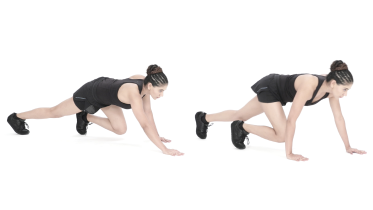
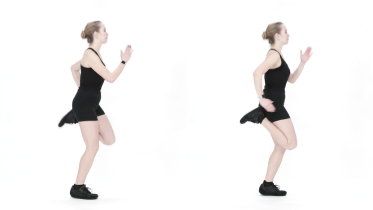
Mountain climbers start in a high plank, on your hands and toes with straight arms. You bring one knee toward your chest, put it back, and switch legs, like running in place on the floor. Your stomach and shoulders keep the plank steady while the legs move. Go faster and it raises your heart rate too.
How to do the mountain climbers
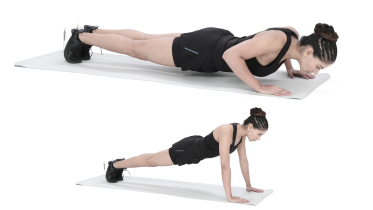
- Start in a high plank: hands on the floor under your shoulders, arms straight, legs stretched out behind you on your toes.
- Brace your stomach so your shoulders, hips and feet form a straight line.
- Bring one knee in toward your chest, keeping your hips level.
- Put that foot back where it started.
- Repeat with the other leg, and keep alternating at a pace where your back and hips stay steady. Keep breathing throughout.
What you should feel
Work in your stomach and the front of your hips, with your shoulders and arms holding you up. Your breathing and heart rate will go up, more so at a faster pace.
Common mistakes
- Hips sagging toward the floor, which puts strain on the lower back.
- Hips lifting high into the air to make room for the knee.
- Hands creeping forward of the shoulders.
- Going so fast that the feet bounce and the body rocks.
How often
Many programs start with 2 to 3 rounds of 20 to 30 seconds, or 10 to 20 slow knee drives, resting in between. Your physio will adjust the pace and the time for you.
Stop and check with your physio if
- Chest pain or pressure, dizziness or feeling faint, a racing or irregular heartbeat, or being far more out of breath than the effort should cause.
- Pain in your wrists, shoulders or lower back that sharpens or keeps building.
From the clinic
Start slow. The video shows the quick version, with the hips sitting a little above a straight line. Stepping each foot in and out with control teaches the position, and you can speed up once your hips stay level.
If the floor is too hard on your wrists or shoulders, put your hands on a sturdy bench, a step or a kitchen counter. The higher your hands, the easier it gets. Holding a still plank first is a good way to build the base.
Done fast, mountain climbers are as much cardio as core work. If you have high blood pressure or a heart condition, or you have been told to limit hard effort, check with your doctor or physio and keep the pace slow. Ask first as well if you have wrist or shoulder problems, are pregnant, or have had recent surgery.
If chest pain, pressure or tightness does not ease quickly when you rest, spreads to your arm, neck, jaw, stomach or back, or comes with sweating, feeling sick, feeling light-headed or being short of breath, call emergency services straight away, as this can be a heart attack. If it eases quickly and none of these happen, get medical advice the same day, and do not exercise again until you have been checked. If you faint while exercising, call emergency services, even if you feel fine again quickly.
Written and checked by the PocketPhysio editorial team. Last updated 2026-09-26.
This page is general education, not a diagnosis or a personal treatment plan. If you have pain, an injury or a health condition, see a physiotherapist or doctor before starting new exercises.