Peroneal foam rolling
Peroneal foam rolling presses on the muscles along the outer side of your lower leg (peroneals, also called fibularis muscles), which run from below the knee down to behind the outer ankle bone. You lie on your side with the outer calf of the bottom leg on a foam roller, take your weight on your hands and slowly move so the roller travels along that strip of muscle. Lifting your hips off the floor puts more of your weight on the roller. People often reach for it when the outside of the lower leg feels tight or tired, say after a run.
How to do the peroneal foam rolling
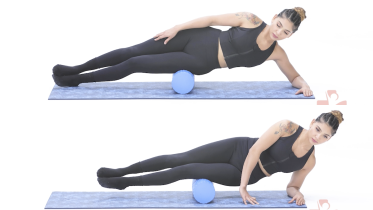
- Lie on your side on a mat with a foam roller under the outer side of your bottom lower leg. Start a little way below the knee, clear of the bony bump at the top of the outer shin.
- Take your weight on both hands, as in the video. Rest your top leg along the bottom one to start.
- Keep your hips on the floor at first. Shift your body with your arms so the roller moves slowly toward the ankle, stopping above the outer ankle bone.
- Then work back toward the knee, staying below that bony bump.
- For more pressure, do as the video shows: straighten your top leg and plant its foot on the mat to steady you, let the bottom knee bend, and lift your hips off the floor so more of your weight rests on the roller.
- Swap to the other side and repeat.
What you should feel
Firm pressure along the outer side of the lower leg, perhaps tender in places, that you can breathe through and relax into.
Common mistakes
- Rolling over the bony bump just below the outer knee, where a nerve runs close to the surface.
- Rolling onto the ankle bone or the tendons just behind it.
- Lifting your hips before you know how the lighter pressure feels.
- Rushing the passes, or pressing so hard that you tense up.
How often
A common range is about 30 seconds to 1 minute of slow rolling per leg, once or twice, before or after exercise. Your physio will adjust this.
Stop and check with your physio if
- Your calf or thigh becomes swollen, warm, tender, red or darker than usual, or has a throbbing or cramping pain that feels different from normal muscle ache. Do not massage or roll it. Stop and get medical advice the same day, as this can be a blood clot. If you are also short of breath or have chest pain, call emergency services.
- Sharp pain, or pins and needles, numbness or burning in the lower leg, the top of the foot or the toes. If it stays after you stop, or keeps getting worse, get medical advice the same day.
- Your leg or foot gets weaker, for example your foot drags, catches on the ground or slaps down when you walk (foot drop). Get medical advice the same day. If the weakness is getting worse by the hour, go to an emergency department.
From the clinic
Keep the roller on muscle. The bony bump at the top of the outer shin, just below the outside of the knee, is the head of the fibula, and the nerve that works the muscles lifting your foot and toes wraps around the bone there, close to the skin. Pressing hard on it can cause tingling or, rarely, weakness in the foot. Stay off the outer ankle bone too, and stop if rolling leaves bruises.
Ask your doctor or physio first if you are on blood-thinning medicine, bruise easily, have varicose veins or have had a clot in a leg vein. Ask too after a recent leg injury or surgery, or after time in a cast, boot or bed. Numb feet or lower legs, from diabetes or another cause, are another reason to ask first, since you may not feel when you are pressing too hard. After an ankle fracture or ankle surgery, follow your surgeon's or physio's plan, and start this exercise only when they have cleared you.
If you have had a hip replacement, get the go-ahead from your surgeon or physio before you try peroneal foam rolling. Resting the top leg on the bottom one, or crossing it over to plant its foot on the mat, brings that hip across the midline of your body, and many surgeons ask you to avoid that for the first months after some operations. This position also puts weight through your hands and wrists. If your wrists complain, keep your hips down.
How much rolling changes the muscle itself is still unclear. Use it alongside strengthening rather than instead of it: ankle eversion with band works the same muscles against resistance.
Written and checked by the PocketPhysio editorial team. Last updated 2026-09-28.
This page is general education, not a diagnosis or a personal treatment plan. If you have pain, an injury or a health condition, see a physiotherapist or doctor before starting new exercises.