IT band foam rolling
IT band foam rolling means lying on your side on a foam roller and slowly rolling the outside of your thigh, from just below the bony point of the hip to just above the knee. People use it to ease a tight or achy feeling along the outer thigh, often before or after running or training. Treat it as an extra next to hip strengthening. It does not replace that work.
How to do the it band foam rolling
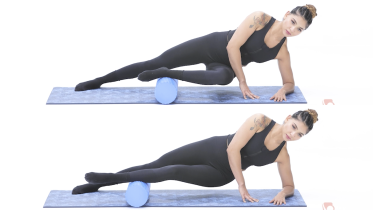
- Lie on your side with the foam roller under the outside of your bottom thigh, just below the bony point of your hip. Prop yourself up on your bottom hand, or on your forearm if that is easier.
- Put your top hand flat on the floor in front of your chest to help take your weight.
- Stack your legs, as in the video, for firmer pressure. For a lighter pressure, bend your top leg and put that foot flat on the floor in front of your bottom knee.
- Using your arms, slowly move your body so the roller travels down the outside of your thigh. Stop just above the knee joint.
- Roll slowly back up, stopping below the bony point of the hip. Keep breathing, and keep the pressure at a level you can relax into.
- Finish the time on one leg, then turn over and roll the other.
What you should feel
Firm pressure along the outside of the thigh. It may feel tender, but it should stay a pressure you can breathe through and relax into, never sharp pain.
Common mistakes
- Rolling onto the bony point at the side of the hip, or over the outside of the knee.
- Rolling quickly back and forth. Slow passes are easier to control, and you tense up less.
- Pressing so hard that you tense up, hold your breath or grimace.
- Letting your supporting shoulder sag toward your ear as you lean on your hand.
How often
Many people roll each leg for 30 to 60 seconds of slow passes, repeated 1 to 3 times, before or after activity. Your physio will adjust this.
Stop and check with your physio if
- Sharp pain, or pain that is worse afterward rather than easier.
- Numbness, tingling or a burning feeling spreading down the leg.
- Your calf or thigh becomes swollen, warm, tender, red or darker than usual, or has a throbbing or cramping pain that feels different from normal muscle ache. Do not massage or roll it. Stop and get medical advice the same day, as this can be a blood clot. If you are also short of breath or have chest pain, call emergency services.
- New bruising after rolling. Stop, and ask your physio before you roll again.
From the clinic
Roll soft tissue only. Keep off the bony point at the side of your hip, and never roll over an area that is painful, swollen or bruised. If you have a clotting or bleeding disorder, take blood-thinning medicine, have varicose veins, or have ever had a blood clot in the leg, check with your doctor or physio before you use a roller on it.
Do not roll a leg that shows any of the blood clot signs in the stop list on this page. Get medical advice the same day, and call emergency services if you are also short of breath or have chest pain. After hip or knee surgery, wait until your surgical team says it is fine to lie on that side and put pressure on the leg. If you have had a hip replacement, get the go-ahead from your surgeon or physio before you try IT band foam rolling. Bending the top leg to put that foot in front of the bottom knee brings it across the middle of your body, and many surgeons ask you to avoid that for the first months after some operations.
Rolling will not stretch or loosen the IT band itself. It is a thick, tough band, and a roller cannot change its length. What rolling does to the tissues is still debated. Most people roll simply because the outer thigh feels easier afterward. How much that helps differs from one person to the next.
Pair it with strengthening for the side of the hip, such as side-lying hip abduction or the lateral band walk. This position puts a lot of weight through your hands, wrists and shoulders, so prop on your forearm or bend the top leg to share the load if they complain.
Written and checked by the PocketPhysio editorial team. Last updated 2026-09-28.
This page is general education, not a diagnosis or a personal treatment plan. If you have pain, an injury or a health condition, see a physiotherapist or doctor before starting new exercises.