Plyo jacks
Plyo jacks join a squat to a star-shaped jump. From a squat with your feet close together, you spring up, spread your arms and legs wide in the air, then bring them back in to land softly in the same squat. The thighs and buttocks drive each jump, the calves help at take-off and landing, and your heart rate climbs quickly. This is high impact work. It belongs late in a program, once plain squats and jumping jacks feel comfortable.
How to do the plyo jacks
- Wear supportive shoes on a firm floor that does not slip, with space around you. Stand with your feet close together.
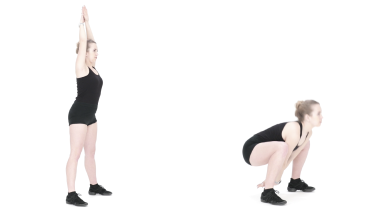
- Bend your hips and knees into a squat, keeping your chest up and letting your arms swing down beside your hips, as in the video.
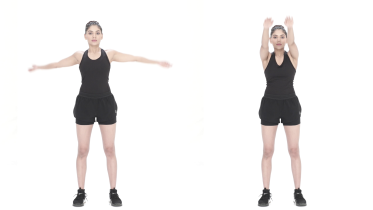
- Push hard through both feet and jump straight up. In the air, open your legs wide and sweep your arms out and up overhead into a star.
- Bring your legs back together before you touch down, and land softly on the balls of your feet, sinking back into the squat as your arms come down.
- Find your balance in the squat, then go again. Keep breathing and stay on the same spot.
What you should feel
Hard work in the thighs and buttocks, springy effort in the calves, and your breathing picking up within a few jumps.
Common mistakes
- Landing with the legs still apart, or on straight knees.
- Knees drifting inward in the squat.
- The chest dropping forward at the bottom.
- Speeding up until the landings get loud.
How often
Many programs start with 2 to 3 rounds of 5 to 10 jumps, or 20 to 30 seconds, with a full rest between rounds, on 2 or 3 days a week. Your physio will adjust this.
Stop and check with your physio if
- Chest pain or pressure, dizziness or feeling faint, a racing or irregular heartbeat, or being far more out of breath than the effort should cause.
- Knee, ankle or hip pain that is sharp or keeps building, or a knee that buckles or an ankle that rolls on landing.
- Any leaking of urine, or a pelvis that feels heavy or as if something is pressing down.
- A sudden pop or snap at the back of your ankle or heel, a feeling that someone kicked you there, or sudden pain there after which you cannot push off or rise onto your toes on that leg. Stop, take the weight off that leg carefully and go to an urgent care center or emergency department the same day, even if you can still walk, as this can be a torn Achilles tendon.
From the clinic
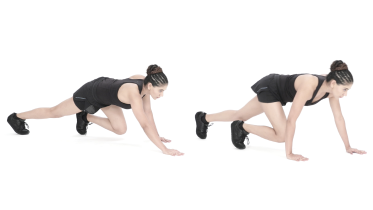
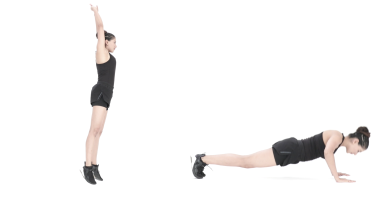
The voice guide lands the first jump wide in a squat and the next one with the feet together. The video is clearer. The legs open only in the air, every landing comes back to feet close together, and the steps below follow it. To take the jump out, stand up from the squat as your arms sweep overhead and step one foot out wide, then bring it back in and squat again. Jumping jacks and jump squats build each half on its own.
Each landing loads your knees, ankles, bones and pelvic floor. If you leak urine when you cough, sneeze or exercise, have osteoporosis, or have a leg injury that is still healing, use the no-jump version and ask your physio before you add the jump. If you have had a hip or knee replacement, get the go-ahead from your surgeon before you try plyo jacks. Many surgeons advise against jumping and hopping after a joint replacement for good, not just for the first months, because each landing sends high impact through the new joint.
After a knee fracture or knee surgery, including a knee replacement, follow your surgeon's or physio's plan, and start this exercise only when they have cleared you. After an ankle fracture or ankle surgery, follow your surgeon's or physio's weight-bearing plan, and start this exercise only when they have cleared you. If you are pregnant, check with your midwife or physio before you start. If you have recently given birth, including by cesarean section, or you have a gap down the middle of your stomach muscles (diastasis recti), ask your physio, midwife or doctor first. Work within reach of a wall or counter at first, and after a fall in the past year, get your physio's go-ahead before you jump.
With a heart condition or high blood pressure, check with your doctor before you start. If chest pain, pressure or tightness does not ease quickly when you rest, spreads to your arm, neck, jaw, stomach or back, or comes with sweating, feeling sick, feeling light-headed or being short of breath, call emergency services straight away, as this can be a heart attack. If it eases quickly and none of these happen, get medical advice the same day, and do not exercise again until you have been checked. If you faint while exercising, call emergency services, even if you feel fine again quickly.
Written and checked by the PocketPhysio editorial team. Last updated 2026-09-28.
This page is general education, not a diagnosis or a personal treatment plan. If you have pain, an injury or a health condition, see a physiotherapist or doctor before starting new exercises.