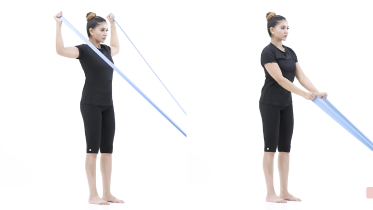
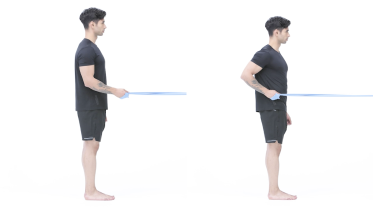
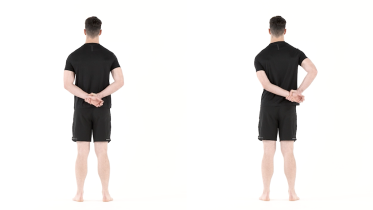
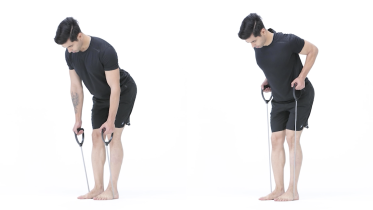
Forward shoulder rolls
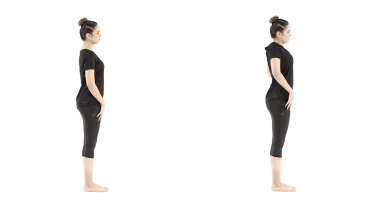
Forward shoulder rolls are slow circles of the shoulders: up toward your ears, forward, then down again. The video shows them standing, arms hanging loose, and they need no equipment. Many people use a few rounds to warm up, or to break up a long spell of sitting.
How to do the forward shoulder rolls
- Stand with your feet about shoulder width apart, knees soft and arms hanging relaxed by your sides.
- Keep your head still and your eyes looking ahead.
- Raise the tops of both shoulders toward your ears.
- Bring them forward, so your shoulder blades slide apart around your ribs.
- Let them sink down, then draw them gently back to the start to finish one full, smooth circle. Carry straight on into the next one.
What you should feel
The tops of your shoulders and upper back should move freely and feel easy. As the shoulders come forward, you may feel a light stretch between the shoulder blades.
Common mistakes
- Rounding the upper back and dropping the head as the shoulders come forward.
- Rushing, so the circles turn small and jerky.
- Holding your breath. Let it flow as you roll.
- Bending the elbows or swinging the arms instead of letting them hang.
How often
Something like 10 to 15 slow circles at a time, several times a day, is typical. Your physio will adjust this.
Stop and check with your physio if
- Sharp or grinding pain in the shoulder, or a catch that hurts.
- Pins and needles or numbness spreading into your arm or hand.
- Pins and needles in your arm or hand that do not go away after you stop, or part of your arm or hand goes numb. Get medical advice the same day. If one side of your face or body suddenly goes numb or weak, or your speech becomes slurred or muddled, call emergency services, even if it goes away.
From the clinic
The video is short and filmed from a slight angle, so you can watch the shoulders travel up, forward and down while the head and arms stay quiet. If standing tires you, do them sitting on a chair. Many programs mix forward circles with backward shoulder rolls, where the shoulder blades draw together instead of sliding apart.
After shoulder surgery, including a rotator cuff repair, or after a shoulder fracture or dislocation, follow your surgeon's or physio's plan, and do only the movements and range they have cleared. Many plans allow only passive movement at first, where the arm is moved for you and its muscles stay relaxed. The same care applies after a broken collarbone or an operation on your neck, so ask your surgeon or physio first.
Written and checked by the PocketPhysio editorial team. Last updated 2026-09-28.
This page is general education, not a diagnosis or a personal treatment plan. If you have pain, an injury or a health condition, see a physiotherapist or doctor before starting new exercises.