Pillow squeeze
The pillow squeeze is a gentle hold for your pelvic floor, deep stomach muscles and inner thighs. You lie on your back with your knees bent and a folded pillow between them, lift your pelvic floor, then press your knees into the pillow and hold for a few seconds before letting everything go. Nothing moves, which makes it an easy exercise to start with. It is close to the adductor ball squeeze, with a pelvic floor lift added first.
How to do the pillow squeeze
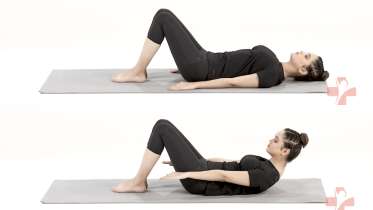
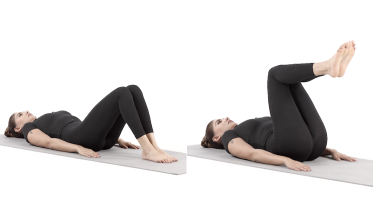
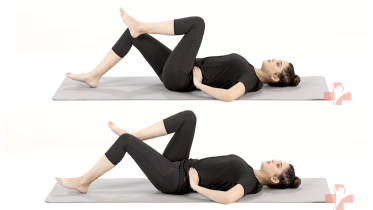
- Lie on your back on a mat or firm bed with your knees bent and your feet flat, about hip width apart. Your arms lie relaxed on the mat beside you.
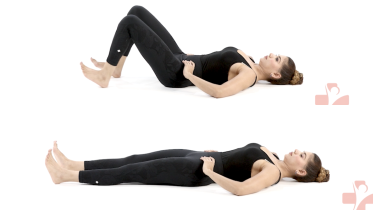
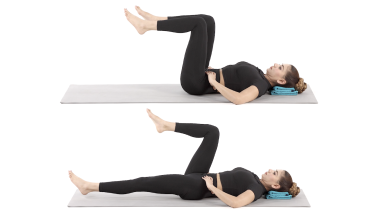
- Put a pillow under your head. If lying flat is uncomfortable, prop your head and upper back on a few pillows or a wedge cushion, as in the video.
- Fold a pillow in half, or use a firm cushion, and place it between your knees.
- Gently lift and squeeze your pelvic floor, as if stopping yourself passing wind and urine. Your lower tummy may firm up a little with it; let that happen without sucking it in.
- Keeping that lift, press both knees into the pillow. Hold the squeeze for a few seconds, breathing normally the whole time.
- Let go of the pillow and the pelvic floor completely, rest for a breath or two, then repeat.
What you should feel
A firm effort along the inside of both thighs and a gentle lift deep in your pelvis. Your buttocks and back should stay fairly relaxed.
Common mistakes
- Squeezing the pillow as hard as you can. Firm but moderate pressure does the job.
- Stopping your breath as you press instead of breathing through the hold.
- Bearing down, as if straining on the toilet, instead of lifting the pelvic floor up and in.
- Rushing the relax, so the muscles never fully let go before the next squeeze.
How often
Many programs begin with 5 to 10 squeezes, each held for about 5 seconds and building toward 10, once or twice a day. Your physio will adjust this.
Stop and check with your physio if
- Sharp pain in your groin, or low down at the front where your two pubic bones meet.
- Pain, heaviness or a dragging or bulging feeling low in your pelvis. Stop and mention it to your physio.
- Your stomach domes or bulges along its midline during the hold. Stop and ask your physio about it.
- You feel dizzy, lightheaded or sick while lying on your back. Roll onto your side and rest until it passes, and prop yourself up higher or sit for the next squeezes. If it keeps happening, get medical advice the same day. If you faint while exercising, call emergency services, even if you feel fine again quickly.
- You are pregnant and notice bleeding or fluid leaking from your vagina, regular painful tightenings, tummy pain that does not settle when you rest or comes with lower back pain, or a change in your baby's usual movements, such as moving less than usual. Stop and contact your midwife or maternity unit straight away. Do the same for a severe headache, problems with your vision such as blurring or flashing lights, pain just below your ribs, or sudden swelling of your face, hands or feet, which can be signs of pre-eclampsia. Call emergency services if the bleeding is heavy, the tummy pain is severe, bleeding or tummy pain comes with pain in your shoulder or feeling sick, faint or dizzy, or a headache comes on suddenly and is very severe.
From the clinic
The video shows her head and shoulders propped on pillows, which suits anyone who finds lying flat uncomfortable. The squeeze is the same either way. If you are not sure your pelvic floor is working, practice the pelvic floor exercise lying down on its own first. To work the inner thighs without the pelvic floor focus, try the adductor ball squeeze, and when this feels easy, the bridge with ball squeeze adds a hip lift.
If you are pregnant, check with your midwife or physio before you start. If you are pregnant and past the first three months, check with your physio before exercising flat on your back. If you have recently given birth, including by cesarean section, or you have a gap down the middle of your stomach muscles (diastasis recti), ask your physio, midwife or doctor first. Ask first as well if you have pain where your two pubic bones meet, because pressing the knees together pulls on the muscles that attach there. If you have high blood pressure, breathe steadily through every hold and never hold your breath.
If you leak urine, feel heaviness or dragging low in your pelvis, or have pelvic pain, ask a physio who works with the pelvic floor to check you before you start. If you have had a hip replacement, get the go-ahead from your surgeon or physio before you try the pillow squeeze. Some operations limit this kind of work for the first months, so the timing depends on your surgery.
Written and checked by the PocketPhysio editorial team. Last updated 2026-09-28.
This page is general education, not a diagnosis or a personal treatment plan. If you have pain, an injury or a health condition, see a physiotherapist or doctor before starting new exercises.