Shoulder blade depression
Shoulder blade depression is a small seated exercise for the muscles that draw the shoulder blade down your back (lower trapezius). Sitting tall with your arms straight, you slide one hand down your side toward the floor so that shoulder sits lower than the other, then let it rise again. Physios often give it when a shoulder keeps hitching up toward the ear as the arm moves, to teach it to stay down.
How to do the shoulder blade depression
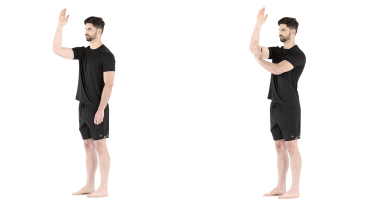
- Sit upright on a firm chair with your feet flat on the floor and your eyes looking straight ahead. Let both arms hang straight by your sides.
- Keeping the elbow straight, reach one hand down along your side toward the floor, so that shoulder sinks lower than the other.
- Let the movement come from the shoulder blade sliding down your back. Your trunk stays upright and does not lean toward that side.
- Pause for a moment at the bottom, then let the arm and shoulder rise slowly back to where they started.
- Repeat, switching sides each time as in the video, or work one side only if your program says so.
What you should feel
A light effort low around the shoulder blade and along the side of your back. You may also notice a gentle lengthening across the top of that shoulder and the side of the neck.
Common mistakes
- Leaning your trunk sideways so the hand reaches lower. Only the arm and shoulder blade move.
- Bending the elbow or cocking the wrist to fake extra reach.
- Rolling the shoulder forward and rounding the upper back instead of sliding the blade straight down.
- Letting your head tilt or your chin poke forward.
How often
Many programs start with 10 to 15 slow repetitions on each side, for 1 to 2 sets, once or twice a day. Your physio will adjust this.
Stop and check with your physio if
- Tingling, numbness or pain runs down your arm or into your hand.
- Pins and needles in your arm or hand that do not go away after you stop, or part of your arm or hand goes numb. Get medical advice the same day. If one side of your face or body suddenly goes numb or weak, or your speech becomes slurred or muddled, call emergency services, even if it goes away.
- Neck or shoulder pain gets sharper as you reach down, rather than easing.
- A sharp pain or a catch at the top of the shoulder or around the collarbone.
From the clinic
The drop is small and easy to miss in the video. Picture the shoulder blade sliding down toward your back pocket and the hand just going along with it. If you are not sure anything is happening, rest your other hand on top of the working shoulder and feel it sink. Think of it as a shoulder shrug in reverse. The seated scapular squeeze works the same area but draws the blades back rather than down.
Reaching down also puts a light stretch on the nerves that run from the neck into the hand. If you have neck pain that spreads into your arm, ask your physio before you start. After shoulder surgery, including a rotator cuff repair, or after a shoulder fracture or dislocation, follow your surgeon's or physio's plan, and do only the movements and range they have cleared. Many plans allow only passive movement at first, where the arm is moved for you and its muscles stay relaxed.
Written and checked by the PocketPhysio editorial team. Last updated 2026-09-28.
This page is general education, not a diagnosis or a personal treatment plan. If you have pain, an injury or a health condition, see a physiotherapist or doctor before starting new exercises.