
Scapular dyskinesis exercises and physiotherapy
What is scapular dyskinesis?
Your shoulder blade (scapula) is a flat, triangular bone that glides over the back of your ribs. Each time you lift your arm, it turns upward and tips back so the ball of the shoulder has a stable base to move on. Scapular dyskinesis simply means that movement looks different from usual. The inner edge or the lower tip of the blade may lift off the ribs, or it may move out of rhythm with the arm, rising too early or dropping in jerks as you lower.
It is a description of movement, not a diagnosis of what hurts. A physical therapist (physiotherapist) usually spots it by standing behind you and watching both shoulder blades while you lift and lower your arms a few times. Many people first hear the word this way, during a shoulder assessment.
Is scapular dyskinesis normal?
Often, yes. Plummer and colleagues (2017) watched the shoulder blades of 135 adults, about half of them with shoulder pain. Altered movement showed up in about two thirds of those with pain, and in a little over half of those without pain lifting the arm to the side. The difference was not significant, and the authors suggested it may be part of normal movement variation. Examiners who knew which people had pain also rated more of them as abnormal, so it is easy to see what you expect to see.
That does not mean it never matters. In athletes with no shoulder pain, those with dyskinesis were more likely to develop pain over the next 9 to 24 months: about 1 in 3 of them, against about 1 in 4 of those without it (Hickey 2018). The shoulder specialists behind the 2013 Scapular Summit consensus (Kibler and colleagues) agreed it turns up in a high share of shoulder injuries. What part it plays in causing them, they could not define. Their view was to treat it as something that may limit how well the shoulder works.
How this differs from shoulder impingement
If what bothers you most is pain over the outer shoulder as you raise the arm, start with our shoulder impingement program or the rotator cuff tendinopathy page. Those pages cover the pain itself, including posture, scans, injections and surgery. This page is for people who have been told their shoulder blade moves differently and want to know whether that matters and what to do about it. The program here puts more time into the shoulder blade muscles and less into loading the tendon.
Scapular dyskinesis or winging from a nerve injury?
Winging from a nerve injury is a different and much rarer problem. Martin and Fish (2008) describe it as most often following damage to a nerve that supplies the serratus anterior (the long thoracic nerve) or the trapezius (the spinal accessory nerve). The damage can come from an injury, an operation in the armpit, chest or neck, an illness, and sometimes no clear cause. A weak serratus anterior lets the inner edge of the blade stand off the ribs, often most obvious when you push against a wall. A weak trapezius makes the shoulder droop and the blade drift outward, and lifting the arm out to the side becomes hard.
These need a doctor's assessment, not a home program. Martin and Fish report that most serratus anterior palsies recover by themselves within 24 months, while trapezius weakness responds less well to nonsurgical care. Surgery may be considered if there is no recovery after 6 to 24 months of nonsurgical care. If your winging is marked, came on after an operation, an injury or an illness, or comes with a weak arm, see the warning signs below.
Does exercise help scapular dyskinesis?
For people with shoulder pain, the evidence gives a modest yes. Bury and colleagues (2016) pooled trials of treatment aimed at the shoulder blade, such as targeted exercise, for rotator cuff related shoulder pain. Compared with general shoulder exercise, it improved disability more over the first 6 weeks, with a benefit for pain too small to matter much in daily life. The one small trial that checked at 3 months found no clear extra benefit by then. The evidence on whether it changed the position of the shoulder blade was conflicting, and the authors advised caution because the trials had limits.
The Scapular Summit consensus reached a similar view: programs to restore shoulder blade position and movement can work within a wider shoulder rehab program (Kibler 2013). So shoulder blade work sits best alongside rotator cuff strengthening and a gradual return to the tasks you need. If you have no pain and a coach or clinician has only noticed an unusual pattern, there is no strong evidence that you need to treat it. Athletes may still choose to, given the link Hickey and colleagues found with later pain.
How to use this program
Pick the stage that matches your shoulder today. If you are not sure, begin at stage 1. You are ready for the next stage when this one feels easy and the following morning your shoulder is no worse for it.
You will find a typical starting dose on each exercise page. As a rough guide, many programs use 2 to 3 sets of 8 to 15 slow repetitions for the shoulder blade and band exercises. Stage 1 usually goes in once or twice daily, the band and weight-bearing work once a day or a few days a week. The wall exercises in stage 3 are lighter: often 10 to 15 slow wall slides, and 1 to 3 sets of 8 to 12 wall angels, once or twice a day.
Your physio will adjust this. They can change the exercises as well as the numbers to suit your shoulder and the work or sport you want to get back to.
You cannot see your own shoulder blade, so in the early weeks a mirror helps a lot, or a short video of your back taken by a friend. It is common to feel some discomfort while you do these. Many programs allow mild discomfort, provided it settles soon after you finish and your shoulder is no worse by the next morning. Stop any exercise that brings on sharp or catching pain, or pain that climbs with every repetition. A shoulder that is clearly worse the next day means drop back one step, not stop the program.
The exercise program
Stage 1: Find your shoulder blade and move it with little load
For a shoulder that aches with small reaches, or when you are still learning to feel what your shoulder blade does. The lying press and the seated squeeze teach you to ease both shoulder blades back while your arms stay down, and shoulder blade depression trains the lower part of the trapezius to draw the blade down rather than hitch it toward your ear. The serratus punch works the muscle on the side of the ribs that slides the shoulder blade forward and holds it flat (serratus anterior), with no weight in the hand. For the press, many programs use 8 to 10 holds, each lasting 5 to 10 seconds, once or twice a day, and 1 to 2 sets of 10 to 15 slow repetitions on each side for the depression, once or twice a day. The seated squeeze is 10 to 15 squeezes held for about 5 seconds, 2 to 3 times a day, and doubles as a posture check you can do at a desk. The serratus punch usually runs to 2 to 3 sets of 10, done once a day.
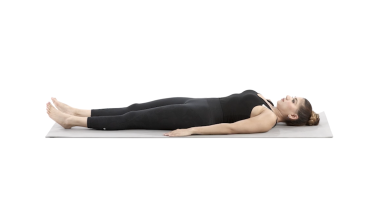 Lying shoulder blade press
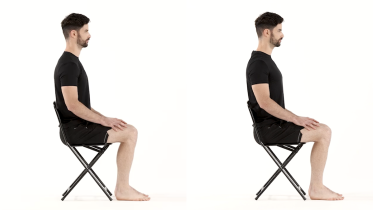 Scapular squeeze
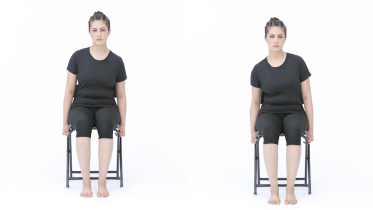 Shoulder blade depression
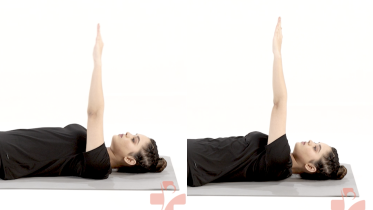 Serratus punch
Stage 2: Strengthen the shoulder blade muscles below shoulder height
Move on once stage 1 feels easy and you can reach to about chest height in daily life without trouble. The wall push up plus loads the serratus anterior with a little of your body weight. Prone scapular retraction and the band row make the muscles in the middle of your upper back, around and under the shoulder blades, work against gravity or a band. The side-lying turn trains the rotator cuff, the small muscles that keep the ball of the shoulder centered while the blade moves under it. Take each repetition slowly, with a short pause at the end of each push or squeeze. The aim is a shoulder blade that moves smoothly and in time with the arm, not one clamped in a single position.
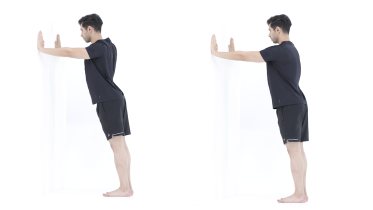 Wall push up plus
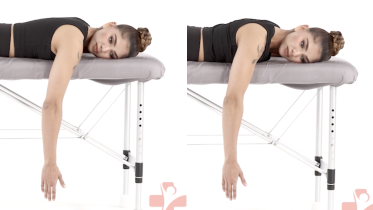 Prone scapular retraction
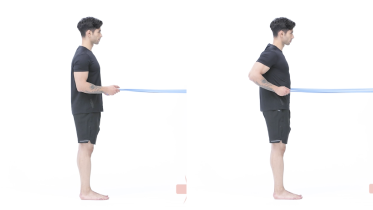 Resistance band row
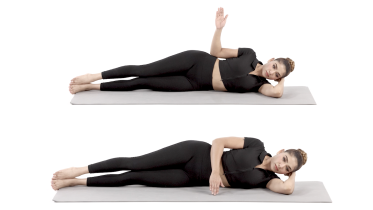 Side-lying external rotation
Stage 3: Take the control overhead
Add this stage once you can do 3 sets of each stage 2 exercise with ease and wake up the next day with the shoulder no worse. Keep the stage 2 work going alongside it. Wall slides and wall angels practice lifting the arms overhead while the shoulder blades turn upward smoothly and the shoulders stay away from your ears. The prone Y raise works the lower trapezius with the arms up beside your head, and the quadruped scapular push up puts more body weight through the arms than the wall version. The band row with a turn joins shoulder blade and rotator cuff work, which suits people heading back to throwing, swimming or overhead jobs. If the shoulder catches or pinches at a certain height, stay below it for now. Go higher over weeks, not in one session.
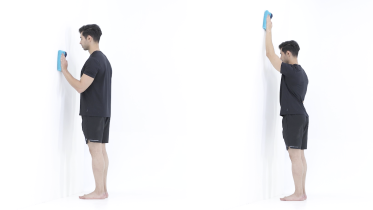 Wall slides with a towel
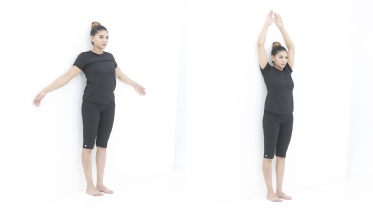 Wall angels
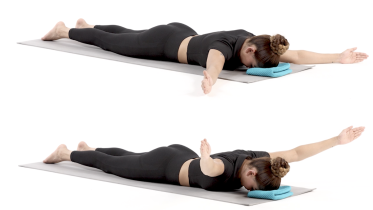 Prone Y raise
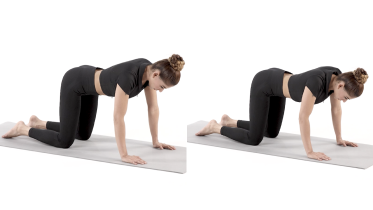 Quadruped scapular push up
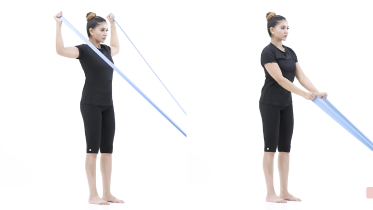 Band row with external rotation
Posture and everyday habits
Sitting and standing tall is worth practicing, and the seated shoulder blade squeeze in stage 1 is an easy way to check in on it through the day. Just do not expect posture alone to change your shoulder. Our shoulder impingement page explains what the research says about posture and shoulder pain.
For shoulder pain, the NHS says to stay active, keep moving the shoulder gently and not stop using it completely. For a while, cut back on whatever clearly makes the pain worse, such as heavy lifting or long spells of overhead work, and bring it back bit by bit as the program gets easier. A heat or cold pack, or paracetamol or ibuprofen, may take the edge off enough for you to keep moving. A pharmacist can tell you whether a medicine suits you.
When to see a physio or doctor
The NHS advises seeing a physio or doctor if shoulder pain is getting worse, has not improved after 2 weeks, or makes it very hard to move your arm. At that visit a physio can watch your shoulder blade move and hold it in a better position to see whether your pain changes. They will also look at your neck, your rotator cuff and how stable the joint is. If your shoulder has dislocated before, begin with the shoulder dislocation program instead. If pain or tingling spreads from your neck, see the neck pain program once a professional has checked it.
If you have had an operation on the shoulder, your surgeon's and physio's plan comes first, not this one. A shoulder blade that sticks out a long way, or winging with a weak arm, needs a doctor's assessment first. Read the warning signs below too. Each one needs medical attention, and for some that means straight away.
For physiotherapists
This page frames scapular dyskinesis in line with the 2013 Scapular Summit consensus (Kibler and colleagues): common in shoulder injury, of uncertain causal role, best treated as a potential impairment within a wider rehab program. Plummer and colleagues (2017) found no significant difference in prevalence on the scapular dyskinesis test between people with and without shoulder pain, and examiners unblinded to pain status rated more dyskinesis, so a positive observation alone should not drive the plan. In practice, symptom modification is commonly used to guide exercise choice in an individual: apply manual scapular assistance or retraction, or scapular and thoracic cues, and note whether the pain changes.
In rotator cuff related shoulder pain, Bury and colleagues (2016) found scapula-focused approaches beat generalized exercise on disability up to 6 weeks, though the pain change was not clinically significant. The single small trial reporting at 3 months showed no significant difference, and evidence on change in scapular position was conflicting. Marked static winging, lateral displacement with shoulder droop, or winging after cervical or axillary surgery, trauma or a viral illness suggests long thoracic or spinal accessory nerve involvement and needs medical referral rather than a motor control program alone. Martin and Fish (2008) describe electromyography as the only definitive diagnostic test, and most spinal accessory injuries in the series they cite were iatrogenic. Use the 24-hour response to decide when to progress, rather than a fixed timeline in weeks.
See a doctor promptly if
- Chest pain or tightness, which may spread to your arm, neck or jaw, or shoulder or arm pain that comes with shortness of breath, sweating or feeling sick. This can be a heart attack. Call emergency services straight away.
- The shoulder is hot, red and swollen, or you have a fever or feel unwell. This can be a joint infection. Go to an emergency department the same day.
- The shoulder feels as if it has slipped out of place, looks a different shape or suddenly locks so you cannot move the arm, or the pain is severe after a fall or an injury. Go to an emergency department straight away, without driving yourself, and do not try to put the shoulder back in yourself.
- Your arm, hand or fingers turn cold, pale, blue or gray compared with the other side. Call emergency services or go to an emergency department straight away, and do not drive yourself. The blood supply to the arm may be blocked.
- Sudden, very bad shoulder pain, or you suddenly cannot lift or move your arm at all. Get medical help the same day.
- The pain started after a fall, a pull or another injury, especially if the arm has been weak since, for example you cannot lift it out to the side or hold it up. This can be a broken bone or a torn tendon. Ask for an urgent appointment with your doctor, within days rather than weeks, because UK shoulder surgeons advise urgent referral for a rotator cuff tear caused by an injury.
- Pins and needles or numbness in the arm that does not go away, no feeling in part of the arm, or weakness that is getting worse. Get medical advice the same day. For pain spreading down the arm from your neck, ask for an urgent appointment with your doctor. If one side of your face or body suddenly goes numb or weak, or your speech becomes slurred or muddled, call emergency services, even if it goes away.
- Severe pain in both shoulders that has come on recently. Ask for an urgent appointment with your doctor.
- You are over 50 and have aching and stiffness in both shoulders, often in the neck or hips too, that is worst in the morning and lasts more than 45 minutes after you get up. See your doctor within a few days, as this can be an inflammatory condition (polymyalgia rheumatica) rather than a shoulder blade problem. If you also get a new headache, pain or tenderness at your temples or on your scalp, or jaw pain when you eat or talk, get medical advice the same day, and if your vision changes, call emergency services.
- A shoulder blade that sticks out clearly even with the arm resting or when you push against a wall, or a shoulder that has dropped lower than the other, especially with weakness or trouble lifting the arm. It matters most if it came on after an operation on your neck, armpit or chest, a blow or strain to the neck or shoulder, or an illness such as flu. This can be a nerve injury rather than a control problem. See your doctor within a few days, before you start this program. If it began after an operation, contact your surgical team within a few days. If the weakness is getting worse, get medical advice the same day.
- New shoulder pain and you have had cancer, now or in the past, or you are losing weight without trying. See your doctor within a day or two and mention it. If you are being treated for cancer now, contact your cancer team the same day.
- Night pain is common when a shoulder is painful, but get checked within a few days if the pain is constant, no rest or change of position eases it at all, and it keeps getting worse. If you have had cancer, now or in the past, or are losing weight without trying, see your doctor sooner, within a day or two, and mention it. If you are being treated for cancer now, contact your cancer team the same day.
Common questions
Can scapular dyskinesis cause shoulder pain?
It may add to it, but it is not a simple cause. The 2013 Scapular Summit consensus (Kibler and colleagues) found altered shoulder blade movement in a high share of shoulder injuries, yet said its exact role in creating shoulder problems is not clearly defined. A study of 135 adults found it about as often in people without shoulder pain, with no significant difference between the groups (Plummer 2017). Among athletes with no pain, those who had it were more likely to get shoulder pain later (35 against 25 percent, Hickey 2018).
Is scapular dyskinesis the same as scapular winging?
Not quite. Dyskinesis is a broad term for any change in how the shoulder blade sits or moves, and a mild lift of its inner edge is one of the things examiners look for. Marked winging, where the blade stands well off the ribs, can come from a nerve injury that weakens the serratus anterior or the trapezius, and less often the rhomboids (Martin and Fish 2008). That kind needs a doctor's assessment rather than a home program.
Can scapular dyskinesis be fixed?
Sometimes the pattern changes and sometimes it does not, and that may not matter. A study by Plummer and colleagues (2017) suggests altered shoulder blade movement may be part of normal variation between people. In the trials pooled by Bury and colleagues (2016), people with shoulder pain who had treatment aimed at the shoulder blade did better over the first 6 weeks than with general exercise, but the evidence on whether the shoulder blade position itself changed was conflicting. The goal is a shoulder that works and hurts less, not a textbook shoulder blade.
What exercises help scapular dyskinesis?
Physios commonly use exercises for the serratus anterior, which holds the shoulder blade against the ribs, and the lower trapezius, which draws it down and helps it turn upward as the arm lifts. The staged program on this page starts with gentle holds, moves to band and wall work below shoulder height, then takes that control overhead. Rotator cuff work usually runs alongside it. Your physio will adjust this, choosing the exercises and the numbers that suit your shoulder.
References
- Kibler WB, Ludewig PM, McClure PW, Michener LA, Bak K, Sciascia AD. Clinical implications of scapular dyskinesis in shoulder injury: the 2013 consensus statement from the 'Scapular Summit'. British Journal of Sports Medicine. 2013;47(14):877-885. https://doi.org/10.1136/bjsports-2013-092425
- Plummer HA, Sum JC, Pozzi F, Varghese R, Michener LA. Observational scapular dyskinesis: known-groups validity in patients with and without shoulder pain. Journal of Orthopaedic and Sports Physical Therapy. 2017;47(8):530-537. https://doi.org/10.2519/jospt.2017.7268
- Hickey D, Solvig V, Cavalheri V, Harrold M, Mckenna L. Scapular dyskinesis increases the risk of future shoulder pain by 43% in asymptomatic athletes: a systematic review and meta-analysis. British Journal of Sports Medicine. 2018;52(2):102-110. https://doi.org/10.1136/bjsports-2017-097559
- Bury J, West M, Chamorro-Moriana G, Littlewood C. Effectiveness of scapula-focused approaches in patients with rotator cuff related shoulder pain: a systematic review and meta-analysis. Manual Therapy. 2016;25:35-42. https://doi.org/10.1016/j.math.2016.05.337
- Martin RM, Fish DE. Scapular winging: anatomical review, diagnosis, and treatments. Current Reviews in Musculoskeletal Medicine. 2008;1(1):1-11. https://doi.org/10.1007/s12178-007-9000-5
- Kulkarni R, Gibson J, Brownson P, Thomas M, Rangan A, Carr AJ, Rees JL. Subacromial shoulder pain. BESS/BOA Patient Care Pathways. Shoulder and Elbow. 2015;7(2):135-143. https://doi.org/10.1177/1758573215576456
- NHS. Shoulder pain. Page last reviewed 22 May 2023. https://www.nhs.uk/symptoms/shoulder-pain/
- NHS. Heart attack. Page last reviewed 31 March 2026. https://www.nhs.uk/conditions/heart-attack/
- NHS. Polymyalgia rheumatica. Page last reviewed 23 April 2023. https://www.nhs.uk/conditions/polymyalgia-rheumatica/
- NHS. Temporal arteritis. Page last reviewed 14 August 2023. https://www.nhs.uk/conditions/temporal-arteritis/
Written and checked by the PocketPhysio editorial team. Last updated 2026-09-28.
This page is general education, not a diagnosis or a personal treatment plan. See a physiotherapist or doctor for advice about your own situation.