Lying shoulder blade press
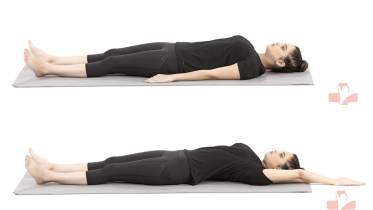
The lying shoulder blade press is a gentle hold for the muscles that draw your shoulder blades back toward your spine (rhomboids and middle trapezius). You lie on your back with your arms by your sides and ease both shoulder blades back and in, so they flatten against the floor, then hold. Nothing visible moves. That makes it a common starting point when a shoulder or upper back is too sore for exercises that lift the arms.
How to do the lying shoulder blade press
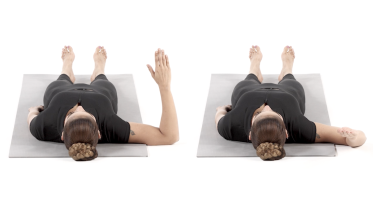
- Lie on your back on a firm surface, such as a mat on the floor, with your legs straight and your arms resting by your sides.
- Let your shoulders and neck relax, and look straight up at the ceiling.
- Gently draw both shoulder blades back and in toward your spine, so you feel them flatten and press into the floor.
- Keep the effort light. Your shoulders stay away from your ears, your chin stays level and your lower back does not arch off the floor.
- Hold while breathing normally, then let the shoulder blades relax fully before the next one.
What you should feel
An even pressure of both shoulder blades into the floor, with a mild effort between them. Your neck and the front of your shoulders stay soft.
Common mistakes
- Pushing the backs of the arms or elbows down into the floor instead of moving the shoulder blades.
- Arching the lower back or lifting the chest toward the ceiling.
- Pressing the back of the head down hard or tipping the chin up.
- Squeezing so hard that you stop breathing. A light press you can keep up while you breathe is enough.
How often
Many programs start with 8 to 10 holds of 5 to 10 seconds, with a short rest after each, once or twice a day. Your physio will adjust this.
Stop and check with your physio if
- Pain, numbness or tingling spreading into an arm or hand.
- Pins and needles in your arm or hand that do not go away after you stop, or part of your arm or hand goes numb. Get medical advice the same day. If one side of your face or body suddenly goes numb or weak, or your speech becomes slurred or muddled, call emergency services, even if it goes away.
- Neck or upper back pain that sharpens during the hold instead of settling.
From the clinic
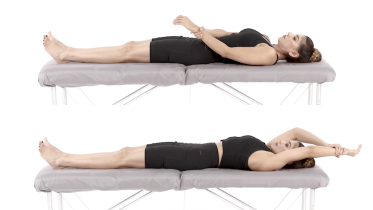
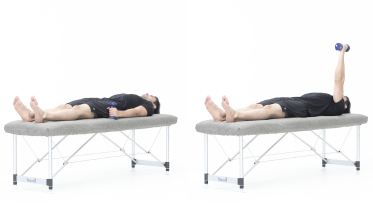
Nothing much shows from the outside, and the video looks almost still. What you should notice is both shoulder blades settling more firmly into the floor. If your neck feels strained lying flat, a thin folded towel under your head can help, and bending your knees with your feet flat often eases a sore lower back. When the hold feels easy, the seated scapular squeeze practices the squeeze upright, and prone scapular retraction adds the weight of a hanging arm.
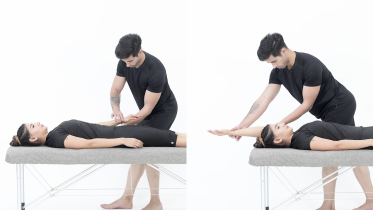
If you are pregnant and past the first three months, check with your physio before exercising flat on your back. If you have high blood pressure, breathe steadily through every hold and never hold your breath. After shoulder surgery, including a rotator cuff repair, or after a shoulder fracture or dislocation, follow your surgeon's or physio's plan, and do only the movements and range they have cleared. Many plans allow only passive movement at first, where the arm is moved for you and its muscles stay relaxed.
Written and checked by the PocketPhysio editorial team. Last updated 2026-09-28.
This page is general education, not a diagnosis or a personal treatment plan. If you have pain, an injury or a health condition, see a physiotherapist or doctor before starting new exercises.