Ladder step forward
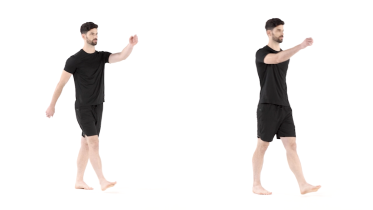
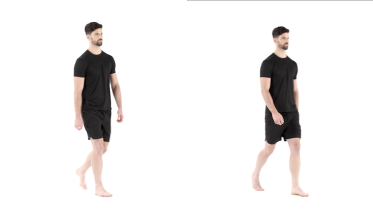
The ladder step forward is a stepping drill where you walk along a ladder laid flat on the floor, placing both feet into each square before moving on to the next. Stepping into the squares makes you lift your feet, place them with care and keep your balance on a narrow path. The slow version shown here suits balance and walking practice rather than fast sports footwork.
How to do the ladder step forward
- Lay the ladder flat on a clear floor alongside a kitchen counter or a wall with a rail. At home, squares marked out with tape work just as well and cannot slide.
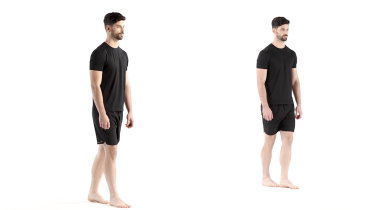
- Stand at one end of the ladder, facing along it, with your feet together.
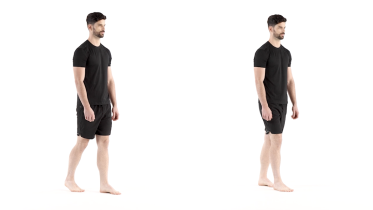
- Step one foot forward into the first square, then bring the other foot in beside it.
- Step into the next square the same way, leading with the same foot, and carry on to the end.
- At the end, step off the ladder and turn back with several small steps in a wide arc, not by pivoting on one foot. Come back along the ladder leading with your other foot.
What you should feel
Steady work at the front of your hips as you lift your feet, and in your calves and ankles as you balance. It should feel controlled, never rushed.
Common mistakes
- Rushing, so a toe catches on the edge of the ladder.
- Shuffling instead of lifting each foot clear of the rungs.
- Stepping on the rungs rather than into the middle of each square.
- Pivoting sharply at the end of the ladder.
How often
A common start is 2 to 4 lengths of the ladder (there and back) once a day or on most days. Speed and harder patterns come only once every step feels secure. Your physio will adjust this.
Stop and check with your physio if
- You feel dizzy, lightheaded, faint or sick, or the room seems to spin. Hold your support, sit down and get medical advice the same day before you practice again. If you faint, it does not settle within a few minutes of sitting still, your vision suddenly blurs or goes double, or you cannot stand or walk steadily, call emergency services.
- Your toe catches on the ladder or you nearly lose your footing. Hold your support and rest, then slow down before you go again.
- Pain in a hip, knee or ankle that is sharp or keeps building.
From the clinic
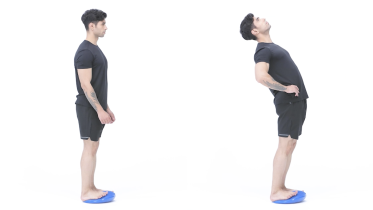
The video shows him barefoot with nothing to hold. At home, set the ladder beside a counter, rail or solid wall you can reach at any moment, and clear away rugs, cables and clutter. Wear flat shoes that fit well and grip the floor, not socks, tights or bare feet. People who walk with a cane or walker should ask their physio whether to keep it for this drill. Have another adult nearby for your first sessions if you have had a fall in the last year, often feel unsteady, or take medicine that can make you drowsy or dizzy, and ask your doctor or physio whether a falls check would help.
The voice guide says to start beside the ladder, but the video and the app title have you starting at one end, facing along it, so follow that. For a similar drill without a ladder, see stride length walking with markers. The balance and falls prevention program explains where stepping drills like this fit.
A sudden loss of balance is different. Call emergency services straight away for any sign of a stroke, even if it goes away: sudden dizziness with unsteadiness or falling over, a face that droops on one side, an arm you cannot lift or keep up, slurred or muddled speech, weakness or numbness on one side of your body or face, sudden blurred vision, double vision or loss of sight, or a sudden severe headache.
Written and checked by the PocketPhysio editorial team. Last updated 2026-09-28.
This page is general education, not a diagnosis or a personal treatment plan. If you have pain, an injury or a health condition, see a physiotherapist or doctor before starting new exercises.