Plank with leg lift
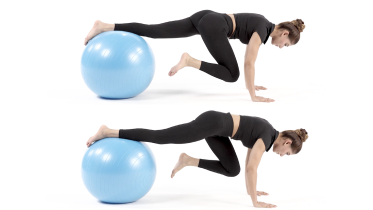
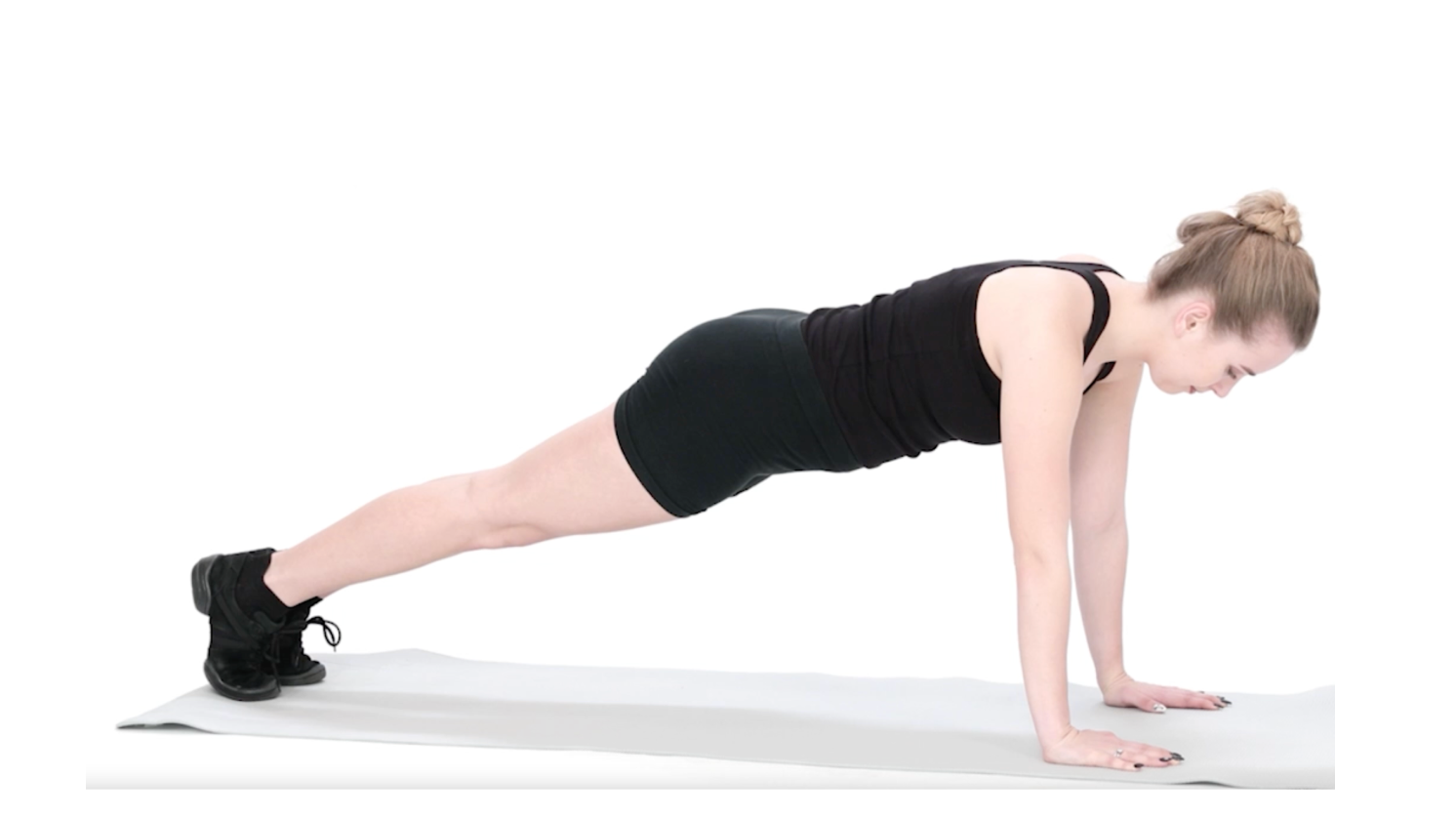
The plank with leg lift starts from a normal forearm plank on your toes. While you hold the plank, you lift one straight leg behind you and lower it again, without letting your hips tip or your back arch. It is a harder plank, because your trunk has to stay steady on three points of contact instead of four.
How to do the plank with leg lift
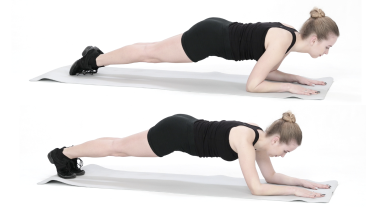
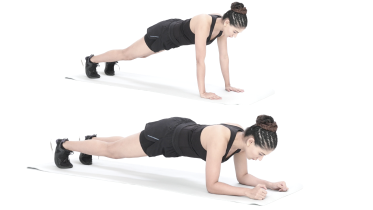
- Lie face down and prop yourself on your forearms, elbows under your shoulders. Tuck your chin in a little and bring your feet together with your toes tucked under.
- Tighten your stomach and lift your hips until your body is in one straight line from shoulders to ankles, with no arch in your back.
- Keeping that line, squeeze your buttock and lift one straight leg toward the ceiling. Go only as high as you can without your back arching or your hips tipping. For many people that is not much above hip height, lower than in the video.
- Lower the leg with control until your toes touch the floor again.
- Do your lifts on one leg, as the video shows, then switch to the other leg. Keep breathing throughout, and lower your knees to the mat to rest between sets.
What you should feel
Your stomach and trunk working hard to hold the plank, plus the buttock and back of the thigh of the leg you lift. Your shoulders work as well.
Common mistakes
- Getting the leg higher by arching the lower back.
- Hips twisting or dropping toward the side of the lifted leg.
- Hips sagging as you tire. That is the point to end the set.
- Holding your breath while the leg is up.
How often
A common start is 1 to 3 sets of 5 to 8 lifts on each leg, with a pause of a second or two at the top. Rest on your knees between sets. Your physio will adjust this.
Stop and check with your physio if
- Lower back pain that comes on or builds during the set.
- Pain in your shoulders, elbows or the hip of the lifted leg.
- Chest pain or pressure, dizziness or feeling faint, a racing or irregular heartbeat, or being far more out of breath than the effort should cause.
From the clinic
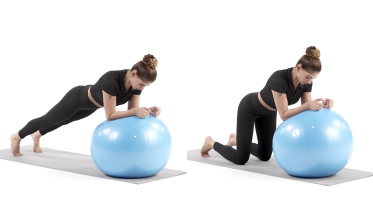
Get comfortable with a steady plank first. If you cannot yet hold a clean straight line for around 30 seconds, adding the leg lift usually just makes the hips sag. Quadruped hip extension and prone hip extension train the same leg movement with less load on your trunk.
If you have had a hip replacement, get the go-ahead from your surgeon or physio before you try the plank with leg lift. Lifting the leg takes the hip back behind the line of your body, and many surgeons ask you to avoid that for the first months after some operations, especially when the hip was replaced from the front.
If you are pregnant, have recently given birth, have had abdominal surgery or have a hernia, ask your physio or doctor before you try this plank. With high blood pressure, breathe steadily all the way through each hold and never hold your breath. If it is not well controlled, get your doctor's go-ahead before you start. If chest pain, pressure or tightness does not ease quickly when you rest, spreads to your arm, neck, jaw, stomach or back, or comes with sweating, feeling sick, feeling light-headed or being short of breath, call emergency services straight away, as this can be a heart attack. If it eases quickly and none of these happen, get medical advice the same day, and do not exercise again until you have been checked. If you faint while exercising, call emergency services, even if you feel fine again quickly.
Written and checked by the PocketPhysio editorial team. Last updated 2026-09-26.
This page is general education, not a diagnosis or a personal treatment plan. If you have pain, an injury or a health condition, see a physiotherapist or doctor before starting new exercises.