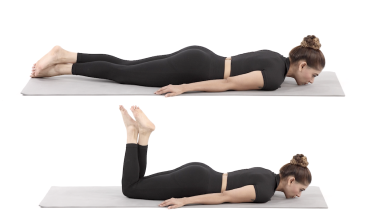
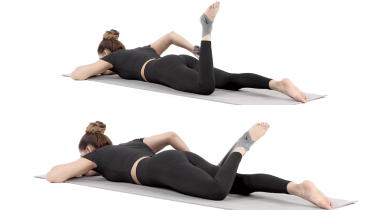
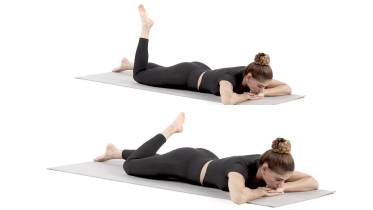
Prone hip extension
Prone hip extension is a leg lift done lying face down. You keep your knee straight, tighten your buttock and raise the whole leg off the bed, then lower it slowly. It works the big buttock muscle (gluteus maximus) and the back of the thigh. Physios use it in programs for the hip and knee, and for the lower back.
How to do the prone hip extension
- Lie on your stomach on a bed or mat. Fold your arms under your forehead and let your head rest on them so your neck can relax.
- Keep both legs straight. Tighten your stomach gently so your lower back stays still.
- Straighten the knee of the leg you are working and squeeze the buttock on that side.
- Lift the straight leg off the bed, only as high as you can go without your hip or lower back lifting with it.
- Hold for a few seconds and feel the buttock doing the work.
- Lower the leg slowly back down, rest for a moment, and repeat.
What you should feel
Work in the buttock of the lifting leg, and some in the back of the thigh. A little effort in the lower back is common, but it should not be the main thing you feel.
Common mistakes
- Lifting too high, so the lower back arches and the hip on that side rolls up off the bed.
- Bending the knee as the leg lifts. Keep it straight the whole way.
- Raising the head and shoulders or tensing the neck.
- Letting the leg drop instead of lowering it slowly.
How often
Many programs start with 2 to 3 sets of 8 to 12 on each side, holding each lift for 3 to 5 seconds, once a day. Your physio will adjust this for you.
Stop and check with your physio if
- Sharp or pinching pain in the lower back, or back pain that builds with each lift.
- Pain goes down the leg, or you notice numbness or tingling.
- Sharp pain at the front of the hip or in the groin.
From the clinic
Most people lift too high, and the leg in the video goes higher than most backs will allow. The hip joint only moves a short way behind your body before the lower back starts to arch and take over, so a small lift is plenty. If your back complains, put a pillow under your stomach and make the lift smaller.
Lying face down does not suit everyone, and later in pregnancy it is usually not practical at all. Ask your physio for a standing or hands and knees alternative instead.
If you have had a hip replacement or other hip surgery, get the go-ahead from your surgeon or physio before you try prone hip extension. Lifting the leg takes the hip back behind the line of your body, and many surgeons ask you to avoid that for the first months after some operations, especially when the hip was replaced from the front (anterior approach).
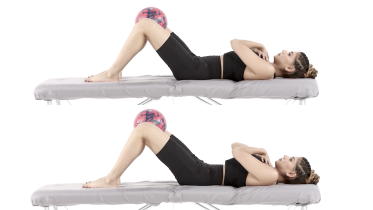
Once this feels easy and your back stays quiet, the glute bridge works the same buttock muscle from a different position.
Written and checked by the PocketPhysio editorial team. Last updated 2026-09-26.
This page is general education, not a diagnosis or a personal treatment plan. If you have pain, an injury or a health condition, see a physiotherapist or doctor before starting new exercises.