Prayer stretch
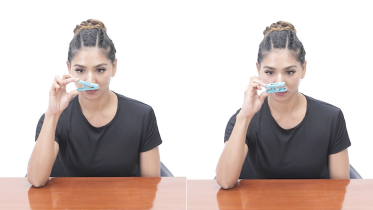
The prayer stretch eases tightness in the muscles on the palm side of your forearm (wrist flexors). You sit tall, press your palms together in front of your chest with the fingers pointing up, and lift your elbows out to the sides until you feel a stretch across the front of your wrists. It needs no equipment, so it is easy to fit in between spells of typing or gripping.
How to do the prayer stretch
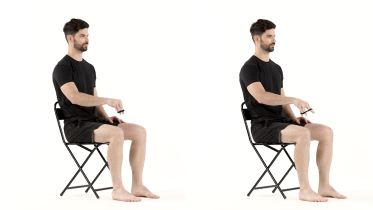
- Sit tall on a chair with your feet flat on the floor and your hands resting on your thighs.
- Bring your hands up in front of your chest and press your palms and fingers together, fingers pointing up.
- Lift your elbows out to the sides until your forearms are close to level. Keep the heels of your hands pressed together.
- Stop when you feel a gentle stretch across the front of your wrists and forearms. Hold it and keep breathing.
- Lower your hands back to your thighs, relax for a moment, then repeat.
What you should feel
A stretch across the palm side of your wrists and along the front of your forearms. Your neck and shoulders should stay relaxed.
Common mistakes
- Letting the heels of the hands drift apart, which takes the stretch off the wrists.
- Hunching the shoulders up toward your ears as the elbows lift.
- Slumping in the chair.
- Pushing into pain to get a deeper stretch.
How often
Many programs use 2 to 4 holds of 15 to 30 seconds, a few times a day. Your physio will adjust this for you.
Stop and check with your physio if
- Sharp pain in the wrist, rather than a stretch.
- Numbness or tingling in the fingers. If one side of your face or body suddenly goes numb or weak, or your speech becomes slurred or muddled, call emergency services, even if it goes away.
- Pain at the inner side of the elbow that builds as you hold.
From the clinic
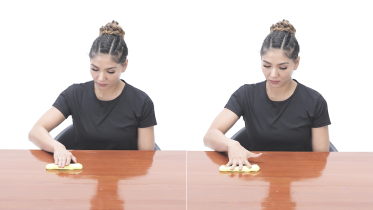
To make the stretch stronger, keep the palms pressed together and slowly lower your hands a little toward your waist. The app's voice guide describes another common setup, at a table. You rest your elbows on it with your palms together, then slide the elbows apart while the hands stay joined. Over time you work toward bringing your forearms down onto the table, but only as far as you feel a gentle stretch.
The prayer position bends the wrists fully back and can press on the nerve at the front of the wrist. If your fingers start to tingle, lower your hands and tell your physio. After a wrist fracture or with a painful wrist joint, this much bend may be too much at first, so check before you start. For the muscles on the back of the forearm, see the wrist extensor stretch.
Written and checked by the PocketPhysio editorial team. Last updated 2026-09-28.
This page is general education, not a diagnosis or a personal treatment plan. If you have pain, an injury or a health condition, see a physiotherapist or doctor before starting new exercises.