Carpal tunnel self-massage
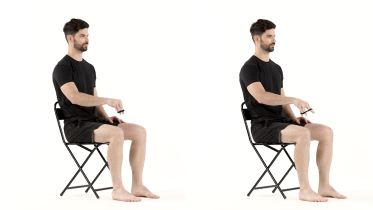
Carpal tunnel self-massage is a light stroke along your arm, done sitting down. You hold a smooth, flat object in your other hand and slide it slowly from the hand, up the forearm and upper arm to the shoulder, then back down. The video does this first with the hand resting on your thigh, then with the arm hanging straight by your side and the palm turned forward. That second position puts a gentle stretch on the median nerve, the nerve squeezed in carpal tunnel syndrome. The app calls it nerve flossing, but the arm itself stays still, so it is not a nerve glide. Evidence that massage or nerve glides help carpal tunnel syndrome is weak, so treat this as an easy extra rather than a treatment on its own.
How to do the carpal tunnel self-massage
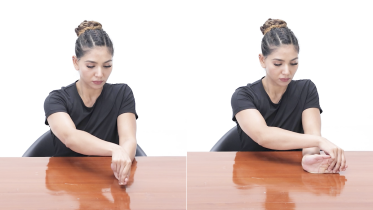
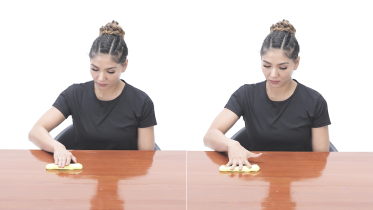
- Sit up tall on a chair, both feet on the floor. Rest the hand you are treating on your thigh, palm down, with the elbow a little bent and the arm relaxed.
- Hold a smooth, flat object in your other hand. The voice guide suggests a piece of paper, and the video uses a small, flat, dark sheet; anything without sharp edges or corners will do.
- Rest the object on the back of the hand, then slide it slowly up over the wrist, forearm and upper arm to the shoulder, pressing only lightly. Slide it back down the same line to the hand. That is one stroke.
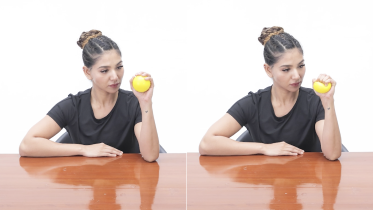
- If that feels easy and brings on no tingling, switch to the position in the second half of the video: let the arm hang straight by your side, just clear of the chair, with the palm turned forward and the fingers relaxed and a little apart. Stroke from the palm up the inside of the forearm and upper arm to the front of the shoulder, and back.
- Keep the treated arm still and loose the whole time, so only your other hand moves. The video treats the left arm.
What you should feel
A light, smooth stroke over the skin and nothing more. There should be no tingling, numbness or pain in the hand, either while you stroke or afterward.
Common mistakes
- Pressing in hard, as if kneading a muscle. This is a light stroke over the skin.
- Rubbing fast back and forth, so the object drags on the skin.
- In the hanging position, bending the elbow or hitching up the shoulder of the treated arm.
- Using something with a sharp corner or rough edge.
How often
A typical start is 5 to 10 slow strokes from hand to shoulder and back, once or twice a day. Your physio will adjust this.
Stop and check with your physio if
- Tingling, pins and needles or numbness in your hand, most often in the ring and little fingers (from the nerve behind the elbow, the ulnar nerve) or in the thumb, index and middle fingers (the median nerve).
- Pins and needles in your arm or hand that do not go away after you stop, or part of your arm or hand goes numb. Get medical advice the same day. If one side of your face or body suddenly goes numb or weak, or your speech becomes slurred or muddled, call emergency services, even if it goes away.
- Your forearm, hand or upper arm becomes swollen, warm, tender, red or darker than usual, has swollen veins that are sore to touch, or has a throbbing or cramping pain that feels different from normal muscle ache. Do not massage it. Stop and get medical advice the same day, as this can be a blood clot. If you are also short of breath or have chest pain, call emergency services.
- Since a needle procedure, injection or operation on your hand, the hand is getting more painful rather than less, the skin becomes very sensitive to light touch, or the hand changes color, temperature, swelling or sweating compared with the other one, or looks shiny. See your doctor or physio as soon as you can, within a few days at most, as this can be complex regional pain syndrome (CRPS) and early treatment may help.
From the clinic
Think of this self-massage as gentle skin contact rather than a deep rub. For carpal tunnel syndrome, the usual first steps are a wrist splint at night and cutting down on the gripping and wrist bending that bring the tingling on. Hand exercises sit alongside those. If tingling comes on in the hanging position, stop. The stretch on the nerve is too much for it today, so go back to the hand-on-thigh position next time.
Keep the object off broken skin, a rash, a bruise or a scar that has not fully healed. If you have had lymph nodes removed from your armpit, have lymphedema, or have had a blood clot in the arm, check with your doctor or physio before stroking up toward the armpit. After a broken wrist, hand or forearm, or surgery on any of them such as a tendon repair, start only when your doctor, surgeon, physio or hand therapist says the bone or repair is ready for this, and follow their plan for how much to do. That includes carpal tunnel release.
Numbness that is there all the time, a thumb that keeps getting weaker, or a thinner muscle at the base of the thumb needs a doctor within a few days rather than more stroking. If the weakness is getting worse from day to day or spreads beyond the thumb, get medical advice the same day. The median nerve glide and tendon glides are the movement exercises in the first stage of the carpal tunnel program, and forearm self massage works the muscles of the forearm with your fingers instead.
Written and checked by the PocketPhysio editorial team. Last updated 2026-09-28.
This page is general education, not a diagnosis or a personal treatment plan. If you have pain, an injury or a health condition, see a physiotherapist or doctor before starting new exercises.