Step taps
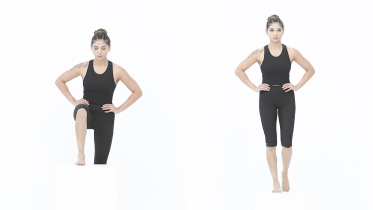
Step taps are a standing balance exercise. You face a low step, lift one foot and touch your toes lightly on top of it without putting weight through that foot, then bring it back down and switch legs. Each tap means a moment on one leg, so the hip and ankle of the standing leg have to keep you steady.
How to do the step taps
- Stand facing a low, sturdy step, close enough to reach it with your toes, with your feet hip width apart. Have a counter, rail or wall within reach.
- Stand tall and shift your weight onto one leg.
- Lift the other foot and touch your toes lightly on top of the step. Keep your weight on the standing leg, so the foot on the step only rests there.
- Stay tall on the standing leg for a moment, with your pelvis level and the standing knee pointing forward.
- Bring the foot back down to the floor, then tap with the other foot.
What you should feel
Work in the buttock and the side of the hip of the standing leg, with small balance corrections through that ankle and foot.
Common mistakes
- Stepping up onto the step and loading the tapping foot.
- Bending forward at the waist to look for the step.
- Letting the hip on the tapping side drop, or leaning over the standing leg.
- Tapping fast and landing heavily instead of placing the foot.
How often
Many programs start with 2 to 3 sets of 10 taps on each leg, alternating sides, once or twice a day. Your physio will adjust this and choose the step height for you.
Stop and check with your physio if
- You feel dizzy or lightheaded, or your balance starts to go. If you faint while exercising, call emergency services, even if you feel fine again quickly.
- Sharp pain in the standing leg, at the hip, knee or ankle.
- You catch your foot on the edge of the step or nearly trip.
From the clinic
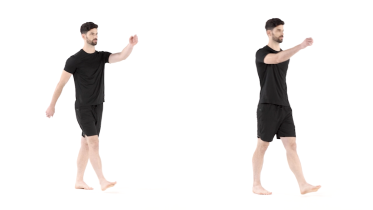
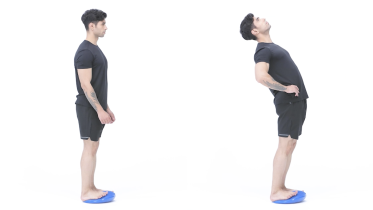
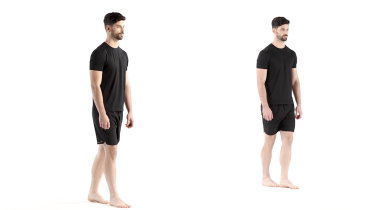
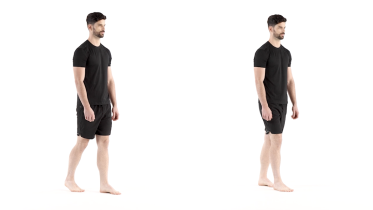
The video shows the taps with no support nearby, which suits someone already steady on their feet. At home, put the step beside a kitchen counter, or use the bottom stair of a staircase with a rail, so a hand can go to it straight away. The step must not slide, the floor around it should be clear, and a height no higher than a single stair is a sensible start. If you have fallen in the past year or often feel unsteady, keep one hand on the support for every tap and practice when someone else is home.
Your physio may later make the taps harder with a higher step or a longer pause on one leg. Single leg stance and the step up are close relatives. If you have had a hip or knee replacement, get the go-ahead from your surgeon or physio before you try step taps. Some operations limit this kind of work for the first months, so the timing depends on your surgery. Balancing on the operated leg alone is usually added at a particular point in rehab.
Written and checked by the PocketPhysio editorial team. Last updated 2026-09-26.
This page is general education, not a diagnosis or a personal treatment plan. If you have pain, an injury or a health condition, see a physiotherapist or doctor before starting new exercises.