Tandem walking with a ball toss
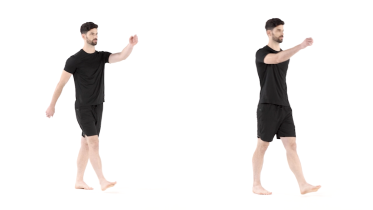
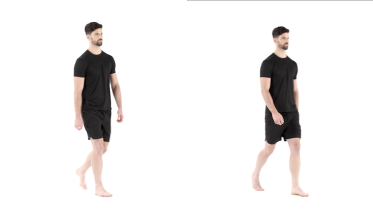
Tandem walking with a ball toss adds a small throw and catch to heel to toe walking. You walk slowly along a straight line, setting each heel just in front of the other foot's toes, while you toss a tennis ball a short way up and catch it. Your attention is split between the ball and your feet, much like walking while you carry something or look around. It is a harder version of plain tandem walking and usually comes once that feels steady.
How to do the tandem walking with a ball toss
- Mark a straight line on the floor with tape, or use a floorboard or tile edge, running beside a counter or along a hallway wall. Hold a tennis ball in one hand.
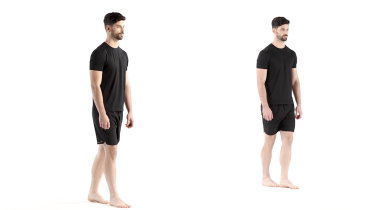
- Stand tall at the start of the line with your feet together. Look ahead along the line rather than down at your toes.
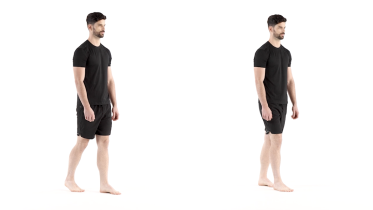
- Step forward so the heel of the front foot lands just ahead of the toes of the back foot, both on the line. Let your weight settle before the next step.
- Once a few steps feel steady, toss the ball gently upward and catch it in the same hand while you keep walking. Start with low tosses, no higher than your head.
- At the end of the line, catch the ball and stop with your feet side by side. Turn around with a few ordinary steps and walk back.
What you should feel
Lots of small adjustments through your feet and ankles and up into your hips, and real concentration to keep both the ball and your line. A few dropped catches are normal at first.
Common mistakes
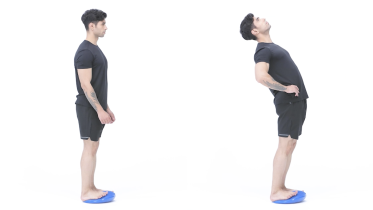
- Tossing so high that you tip your head right back or lunge to catch.
- Letting your feet wander off the line while you watch the ball.
- Speeding up to chase a bad throw.
- Bending down for a dropped ball while your feet are still heel to toe.
How often
Many programs start with 10 to 20 steps along the line, 2 to 3 times, once a day, with slow, low tosses. Your physio will adjust this.
Stop and check with your physio if
- You feel dizzy, lightheaded, faint or sick, or the room seems to spin. Hold your support, sit down and get medical advice the same day before you practice again. If you faint, it does not settle within a few minutes of sitting still, your vision suddenly blurs or goes double, or you cannot stand or walk steadily, call emergency services.
- You step off the line and cannot steady yourself without grabbing the wall or counter.
- New pain in the foot, ankle, knee or hip, or neck pain from looking up at the ball.
From the clinic
The man in the video walks with nothing beside him and tosses the ball a little above his head. At home, keep the tosses lower than that at first, walk alongside a counter or hallway wall, toss with the hand farther from it, and let the other hand trail close to the surface so you can grab it. Clear rugs and cables from the path, keep pets out of the way, and leave a dropped ball where it lands until both feet are back side by side. Wear flat shoes that fit well and grip the floor, not socks, tights or bare feet. If you have had a fall in the last 12 months, feel unsteady, or take medicines that affect your balance, ask your physio before you add the ball, and have someone walk beside you when you do.
Watching the ball tips your head back a little. If looking up brings on dizziness or makes the room spin, stop and hold your support, then sit down and follow the dizziness stop sign above. Looking up is one of the head movements that can set off benign paroxysmal positional vertigo (BPPV), an inner ear problem explained on the dizziness and BPPV page. Low tosses keep your head closer to level.
A sudden loss of balance is different. Call emergency services straight away for any sign of a stroke, even if it goes away: sudden dizziness with unsteadiness or falling over, a face that droops on one side, an arm you cannot lift or keep up, slurred or muddled speech, weakness or numbness on one side of your body or face, sudden blurred vision, double vision or loss of sight, or a sudden severe headache.
Begin with tandem walking without the ball, and add it only when heel to toe steps feel steady on their own. A gentler first step is to pass the ball from hand to hand at waist height as you walk. Throwing it upward comes after that, and your physio may change the height or pace of the tosses once it is easy.
If you have had a hip replacement, get the go-ahead from your surgeon or physio before you try tandem walking with a ball toss. Some operations limit this kind of work for the first months, so the timing depends on your surgery. After an ankle fracture or ankle surgery, follow your surgeon's or physio's weight-bearing plan, and start this exercise only when they have cleared you.
Written and checked by the PocketPhysio editorial team. Last updated 2026-09-26.
This page is general education, not a diagnosis or a personal treatment plan. If you have pain, an injury or a health condition, see a physiotherapist or doctor before starting new exercises.