Thread the needle
Thread the needle is a gentle rotation stretch done on your hands and knees. You slide one arm under your body, through the gap between your other hand and knee, and let that shoulder and the side of your head lower toward the floor. It turns your upper back (thoracic spine) and stretches around the shoulder blade, and physios often add it to programs for a stiff upper back or neck.
How to do the thread the needle
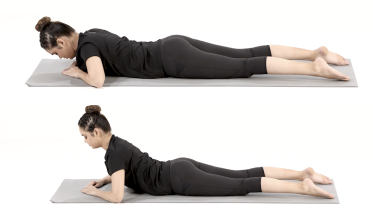
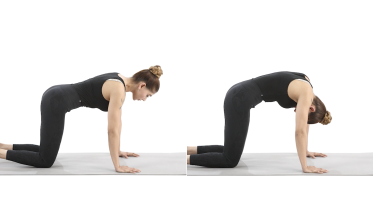
- Start lying on your front, then push up onto your hands and knees. Your hands go under your shoulders and your hips over your knees.
- Lift one hand off the floor and slide it under your body, through the gap between your other hand and knee.
- Keep reaching so that shoulder and the side of your head lower toward the floor. Your upper back twists as the arm goes through.
- Keep your hips over your knees and leave the supporting hand where it is.
- Hold where you feel a comfortable stretch and keep breathing. Then bring the arm back out and return to hands and knees.
- Repeat, then switch to the other arm.
What you should feel
A stretch down the side of your trunk and around the shoulder blade, sometimes up into the neck, on the side of the arm that reaches through.
Common mistakes
- Sitting the hips back toward the heels or letting them drift sideways, so the twist comes from the hips instead of the upper back.
- Dropping your full weight onto your head. Lower only as far as you can control, with the supporting arm still holding you.
- Holding your breath in the stretched position.
How often
Many programs use 3 to 5 repetitions on each side, holding each one for about 10 to 30 seconds, once or twice a day. Your physio will adjust this for you.
Stop and check with your physio if
- Sharp pain in your shoulder, neck or back as you reach through.
- Pain, numbness or tingling spreads down your arm.
- Pins and needles in your arm or hand that do not go away after you stop, or part of your arm or hand goes numb. Get medical advice the same day. If one side of your face or body suddenly goes numb or weak, or your speech becomes slurred or muddled, call emergency services, even if it goes away.
- Kneeling hurts your knees or leaning on your hand hurts your wrist. Your physio can suggest padding or a different position.
From the clinic
Your head only needs to rest lightly on the floor, or not touch it at all. If your neck is sore, put a folded towel or a small pillow where your head lands and let the stretch come from the upper back. A folded towel under the knees helps on a hard floor.
The reaching arm crosses in front of your body, so this position loads the back of the shoulder. After a shoulder dislocation or shoulder surgery, ask your physio whether this movement is allowed yet. If you have osteoporosis or a past fracture in the spine, check with your physio before twisting to the end of your range. If kneeling is not possible, the upper back stretch is done sitting on a chair.
Written and checked by the PocketPhysio editorial team. Last updated 2026-09-28.
This page is general education, not a diagnosis or a personal treatment plan. If you have pain, an injury or a health condition, see a physiotherapist or doctor before starting new exercises.