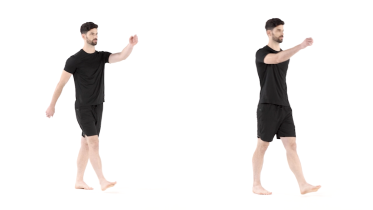
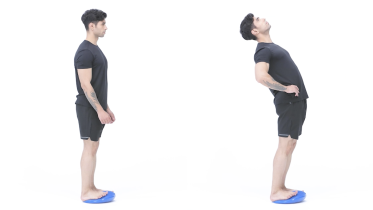
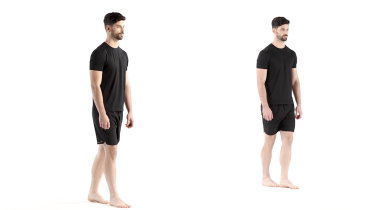
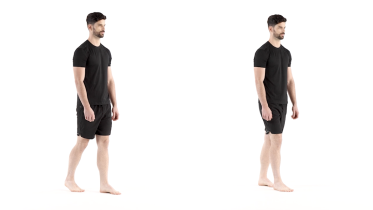
Walking lunges
Walking lunges are forward lunges that travel. You step into a long stride, lower your back knee toward the floor, then bring the back leg through into the next lunge. In this version you also reach up and clap your hands above the shoulder opposite your front leg at the bottom of each lunge. The thighs and buttocks do most of the work, and the moving stride asks a lot of your balance, so physios tend to bring it in late in knee or hip rehab and in sports training.
How to do the walking lunges
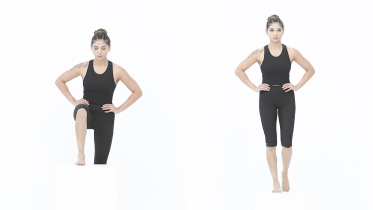
- Pick a clear, straight path several meters long, ideally beside a wall or counter you can touch if you wobble. Stand tall with your feet together.
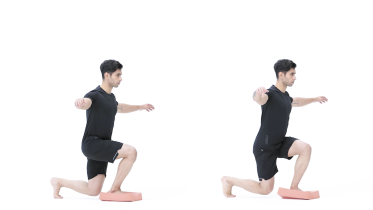
- Step well forward with one leg, then sink down between your feet until both knees are bent and the back knee hovers just above the floor. It should not touch.
- At the bottom, reach both arms up and clap your hands above the shoulder on the opposite side to your front leg, turning your upper body a little toward it. Hold the low position for a few seconds, as in the video, and keep breathing.
- Keep your chest up. Your front knee stays above the ankle and lines up with your second toe.
- Drive up through your front heel and swing the back leg forward into the next lunge, then clap above the other shoulder.
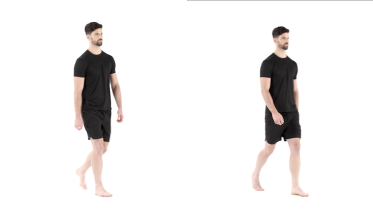
- Carry on to the end of your path, bring your feet together, then turn slowly and lunge your way back.
What you should feel
The thigh and buttock of the front leg work hard on every step. On the back leg you feel a stretch across the front of the hip. The clap adds a light twist through your upper back.
Common mistakes
- Short, choppy steps that lift your front heel and pile the load onto the front knee.
- Letting the front knee drift in toward the middle.
- Dropping too fast so the back knee bumps the floor.
- Swinging the clap so hard that you lose your line.
- Rushing from one lunge to the next without control.
How often
Many programs start with 2 to 3 sets of 6 to 10 lunges on each leg, resting in between, a few times a week. Leave the clap out until the lunges themselves feel steady. Your physio will adjust this.
Stop and check with your physio if
- Sharp knee or hip pain, or pain around the kneecap that grows with every lunge.
- Your knee buckles, or you stumble and need the wall to stay up.
From the clinic
Walking lunges need more room and more balance than a lunge on the spot. Clear the floor of rugs and clutter, and walk alongside a wall or kitchen counter so a hand can reach it straight away. If you have had a fall in the past year or often feel unsteady, stay with the supported lunge or the forward lunge for now, and ask your physio when the walking version is right for you.
Half depth is a sensible place to start, and you can go lower as your control improves. If the front of your knee aches, or you have had knee surgery or a knee replacement, ask your physio how deep to go before you try the full version. With low bone density (osteoporosis) or a past fracture in the spine, check with your physio before you add the clap twist, and ask how far to turn. If you have high blood pressure, breathe steadily through every repetition and never hold your breath.
If you have had a hip replacement, get the go-ahead from your surgeon or physio before you try walking lunges. Each deep lunge bends the front hip to around a right angle while stretching the back hip out behind you, and many surgeons ask you to avoid that for the first months after some operations. The turn toward the clap adds some twist at the hips as well, so leave it out until you have been cleared.
Written and checked by the PocketPhysio editorial team. Last updated 2026-09-26.
This page is general education, not a diagnosis or a personal treatment plan. If you have pain, an injury or a health condition, see a physiotherapist or doctor before starting new exercises.