
Skier's thumb exercises and physiotherapy
Warning signs, and when to get help
What is skier's thumb?
Skier's thumb is an injury to the ulnar collateral ligament, the band on the inner side of the thumb's main knuckle where the thumb meets the hand. OrthoInfo describes that ligament as what keeps the thumb steady, especially when you pinch and grasp. Lose it and the thumb has nothing to push against, so the hand still works for most things and fails at the small ones: a key, a zip, a page turned, a jar lid.
The usual story is a thumb forced backward or sideways, away from the palm, most often in a fall onto an outstretched hand (OrthoInfo). Skiing gives the injury its name because the hand lands while still strapped into a pole, and the pole holds the thumb out at the moment your weight arrives on it (OrthoInfo). HealthLink BC puts the mechanism plainly: the thumb gets pulled back or to the side, away from the fingers. Falls off bikes, hands caught in a ball or a dog lead, and a hand landing awkwardly on a kerb do the same job.
Most people notice pain and swelling on the inner side of the thumb knuckle, often bruising, and trouble holding anything between the thumb and the index finger (OrthoInfo). OrthoInfo adds that a complete tear can also leave a lump on the inner side of the thumb. How much it hurts tells you very little about how much is torn. That is what the next section is about.
A partial tear and a complete tear are two different problems
A stretched or partly torn ligament is still attached at both ends. Hold the thumb still for a few weeks and it generally heals, which is what a cast or splint is for.
A ligament torn right through is not the same injury wearing a worse grade. When the end comes off the bone, it can pull back and come to rest on the wrong side of a sheet of tissue that runs across the thumb muscles, the adductor aponeurosis. That sheet then sits between the torn ligament and the bone it is supposed to heal back to, and it keeps the two apart. Bertil Stener described this in 1962, and it carries his name: a Stener lesion. A review of it spells out what that costs you: with that tissue in the gap the two ends stay apart and cannot heal together, and putting it right means surgery (Kundu and colleagues, 2012).
How far the torn end has moved matters even when it has not flipped behind that sheet. In 43 thumb ligament injuries looked at with MRI, partial tears and tears that had moved less than 3 mm usually healed with the thumb held still in a cast or splint, while 90% of those that had moved more than 3 mm were not fixed by holding it still and came to surgery, as did every Stener lesion in the series (Milner and colleagues, 2015). That is one small single center study and not a rule, but it is the reason a surgeon may still offer an operation for a thumb whose scan shows no true Stener lesion.
Look at what put a thumb in the group that healed: millimeters, measured off an MRI. It is not a group you can put yourself in from how the thumb feels, and a scan reported as showing no Stener lesion does not put you in it either, because the distance the ligament has moved is a separate measurement from whether it has flipped behind that sheet of tissue. Every thumb in that study had already been examined and scanned before anyone decided to hold it still, which is the opposite order from taping it and hoping.
If the ligament has displaced in this way, six weeks in a splint cannot bring the ends together, so the thumb comes out of the splint as loose as it went in. MedlinePlus says injuries that are not treated properly can lead to long-term weakness, pain or arthritis, and a thumb treated as something milder than it is belongs in that sentence as much as one that was ignored. That is the whole reason this page is more insistent than a page about an ankle sprain.
You cannot tell which one you have, and you are not meant to
There is no home test here. How far the knuckle opens when the thumb is stressed is judged by someone with two thumbs to compare and X-rays to go with it, and that joint stressing is the examination, not something to have a go at yourself. A swollen, painful thumb tightens up and guards itself, so pulling on it at home is more likely to reassure you falsely than to tell you anything.
The examination is a more particular thing than it sounds. In the studies the UK guideline is built on, the force is applied with the knuckle at a set angle, once straight and once bent to about 30 degrees to take the palmar plate out of the way, and the opening is compared against a threshold and against the other thumb (BSSH BEST guideline, 2023). Where pain stops the thumb being examined properly, a local anesthetic injection is sometimes given first, which OrthoInfo also describes before a stress X-ray. None of that is available to you at the kitchen table, and the part you could copy, pulling the thumb sideways, is the part that tells you least.
Among hand specialists this is still argued about. The UK national survey reports continuing debate about how often a Stener lesion occurs, how to diagnose it and how to treat it, and the lack of a firm endpoint when the joint is stressed was the strongest single influence on whether surgery was offered (Mikhail and colleagues, 2024). People who do this for a living find it hard. That is the best argument there is against sorting it out yourself with a roll of tape.
So this page gives you a different job. Get the thumb examined, and get it examined early.
What happens at the appointment
The UK hand surgery guideline recommends assessing an acute ulnar collateral ligament injury with the history, a clinical examination and X-rays (Dean and colleagues, 2024). X-rays look for a chip of bone pulled off with the ligament and for other breaks, sometimes alongside an X-ray of the uninjured thumb for comparison, and stress X-rays, taken with tension applied to the thumb, can show the joint opening up (OrthoInfo).
Scans are not automatic. OrthoInfo says MRI or ultrasound may be ordered for more detail, and the UK picture is genuinely split: 46% of 112 surgeons and hand therapists across 37 centers routinely used extra imaging while 54% did not, ultrasound being the commonest at 41% and MRI used by 10%, and that paper quotes the national guideline as saying there is not enough evidence to require routine ultrasound or MRI (Mikhail and colleagues, 2024).
Then there is a timetable, and it is the part the other pages on this subject bury. The guideline says people without significant looseness can be treated without surgery, that people with significant looseness may have either immobilization or a surgical repair, and that the decision should be reached with a clinician within 2 weeks of presentation (Dean and colleagues, 2024). Two weeks is not a deadline for your thumb to heal by. It is the window in which the choice gets made properly. "I will give it another month in the brace and see" is the plan to avoid.
The first few days
For the first 2 days the NHS advises protection, rest, ice, compression and elevation: support the thumb, stop sport, put an ice pack or a bag of frozen vegetables wrapped in a tea towel on it for up to 20 minutes every 2 to 3 hours, and keep the hand raised on a pillow when you sit. MedlinePlus gives a slightly different ice schedule, about 20 minutes every hour while you are awake for the first 48 hours and then 2 or 3 times a day, and says not to put ice straight onto the skin. Either pattern is in common use, so follow whichever your own clinician gives you. The NHS also advises no hot baths or heat packs, no alcohol and no massage for the first couple of days, as all three can add to the swelling.
That advice is for a thumb that is simply swollen. If the thumb has been held in a cast or splint, and that cast feels tight, the pain is getting worse or your fingers feel numb, tingle or look more swollen, the ice and the pillow stop there: do not put ice on it and do not lift the hand higher than your heart. Both of those cut down the blood reaching the hand if pressure is building up inside the forearm. Follow the warning sign for a tight cast below instead.
For pain relief, ask a pharmacist or doctor what suits you. The NHS says to avoid ibuprofen in pregnancy unless a doctor or pharmacist tells you to take it, and that paracetamol is usually the better choice then, and it lists asthma, heart, liver and kidney conditions and a history of stomach ulcers among the reasons ibuprofen may not suit you. None of it changes the ligament; it only makes the first week easier to live through.
Getting through the splint weeks with one working thumb
A thumb spica teaches you how much of the day runs through one joint. Buttons, bra hooks, a toothpaste cap, a seatbelt, a kettle lid, a card into a reader, hair tied back. People expect the big jobs to be hard and are caught out by the small ones.
The swaps that help most are dull and specific. Move the computer mouse to the other hand on day one, because the small repeated clicking is more irritating than typing. Use voice dictation for anything long, buy soap in a pump instead of a bottle with a cap, and switch to slip-on shoes and pull-on tops for a few weeks. Pre-chopped vegetables and a wide-handled bottle opener will do more for your week than any gadget sold for hands.
Keep the splint dry. The usual advice is a bag taped over it in the shower and someone else washing your hair for the first week or two, which assumes there is someone there. If you live alone, taping a bag on one-handed is more trouble than it is worth: a pull-on waterproof cast cover from a pharmacy goes on with one hand, and dry shampoo, or a wash basin at a hairdresser, covers the hair. If it is a removable splint, take it off only when your clinic says you may, and put it straight back on afterward. A cast or splint that feels loose, cracks or gets soaked has stopped doing its job, and that is a same-day phone call, not something to live with until the next appointment.
Nights are the complaint we hear most. The splint catches the sheet, the arm ends up somewhere awkward, and sleep goes. A pillow tucked in front of you to rest the forearm on helps, and so does keeping the hand raised when you sit in the evening, when a swollen hand usually makes itself known.
How long does skier's thumb take to heal, and how good is the evidence?
For a tear treated without surgery, most UK hand units immobilize for 4 to 6 weeks: 6 weeks was the commonest at 58% of respondents and 4 weeks the next at 30%, in a cast or a thermoplastic splint (Mikhail and colleagues, 2024). MedlinePlus says exercises to recover movement and strength may start anywhere from 3 to 8 weeks after the injury, set by the person looking after you.
After a repair the two patient sources give different spans, and you may as well have both: OrthoInfo says you may have to wear a short arm cast or splint for 6 to 12 weeks, and MedlinePlus says the hand and forearm are in a cast or splint for 6 to 8 weeks. They are describing what is commonly done, not setting your timetable. Some teams work to something shorter and hold the repair in a splint that lets the knuckle move, as in the trial of a modified spica (Mikhail and colleagues, 2018), so a plan shorter than either figure is not a sign you are being rushed and a longer one is not a sign something has gone wrong. Ask your surgeon for the numbers that actually govern your thumb: how long the splint stays on, how much it is meant to let the thumb move, and when you may start putting load through it.
The evidence underneath all of that is thinner than you would hope. A systematic review found no prospective evidence comparing surgery with non-surgical treatment for an acute complete tear, and only weak evidence that moving early after a repair may be better than being held still, resting largely on one trial of a modified spica that allowed the knuckle to move (Mikhail and colleagues, 2018). A Dutch randomized trial, MUSCAT, is now comparing cast treatment with immediate surgery in adults with complete tears including Stener lesions, and its own background states that the current preference for surgery rests on expert opinion, anatomic reasoning and low quality case series (de Haas and colleagues, 2024).
That unsettled evidence is about which treatment, and it is argued between clinicians who have examined the thumb and seen the X-rays. It helps to see what the non-surgical half of that trial actually is: a cast that cannot be taken off, around the thumb knuckle and the joint at its base, for 4 weeks, then a removable one for 4 weeks more, with the joint examined again by the surgeon at 2 to 3 weeks and surgery within days if it is still loose (de Haas and colleagues, 2024). A thumb taped at home, or held in a brace bought from a pharmacy, is in neither half of it.
The anatomic point is not the thing being tested either: a sheet of tissue lying between the ligament and the bone holds the two apart, and no splint moves it out of the way. What the trial asks is narrower, whether starting everyone in a cast and operating only on the thumbs that are still loose at 2 to 3 weeks leaves hand function as good as operating on all of them. Both halves of it have a surgeon examining the thumb twice, which is the part no plan made at home can give you.
What we see in the first weeks
The person who worries us is not the one in a cast. It is the one who turns up three or four weeks later with the thumb taped, because the pain faded and the looseness did not, and who has been pinching with it the whole time. The pain settling is the least informative thing this injury does.
By then they rarely complain of pain. They complain about the key that will not turn, the pen that slips, the jar that beats them, the feeling that the thumb bends away when they push on something. That is weak pinch, and it is the function the ligament exists for.
Two habits cost people range later. The first is leaving a removable splint on around the clock long after the clinic said it could come off for exercises, after which the thumb is less sore and a good deal stiffer. The second is testing the thumb by pulling it sideways several times a day to see whether it still feels loose, which teaches you nothing and keeps an irritated joint irritated.
The stiffness that actually turns up is often not where people expect. After weeks in a thumb spica it is the wrist and the web between the thumb and the index finger that feel locked, more than the thumb knuckle itself. That is why stage 2 moves the wrist as well, and why we are in no hurry to add resistance.
How to use this program
Start it only once your thumb has been examined and you have been told what the injury is and what the plan is. That is not a formality on this page. After a repair, follow the program your surgeon and hand therapist give you, and use this one only if they say it fits.
Pick the stage that matches where you are. Stage 1 should be completely pain free. From stage 2 onward, mild discomfort that fades soon after you stop and leaves the thumb no worse the next morning is acceptable, while sharp pain, pain that climbs with each repetition, or a thumb that is more swollen or sore the following day means going back a stage for a few days.
Nothing in any stage uses an outside force to push or pull the thumb sideways, away from the hand, because that is the direction the ligament was hurt in. In stage 3 your own muscles take the thumb out that way, within the limit that stage sets, and nothing presses on it: that is the difference, and it is the whole reason those two movements wait until stage 3. OrthoInfo is blunt about the other half of that: avoid putting any pressure or resistance through the thumb until your doctor says it is all right to do so, which is why the putty and the clothespin sit at the end of this program and not in the middle of it.
Each exercise page gives its own starting numbers, and each stage above gives its own. Where they differ, use the stage, because the stage figures are set for a healing thumb ligament and never go above the range on the exercise page. Do not add the two together. Your physio will adjust all of it to your thumb and to what you need the hand for.
Read the stop signs on every exercise page before you try it. Several of them were written for a hand that had been broken or held in a cast and their warnings say so, the complex regional pain syndrome one in particular. If a warning there names a fracture or a cast and you had neither, it still applies to you: read it as the injury you did have, which is the way the same warning is written in the list at the foot of this page. That holds for the warnings.
One of them runs the other way, though. Several of the thumb exercise pages say that suddenly being unable to straighten the end of the thumb can be checked by a doctor within a few days, and that was written for a tendon that snaps weeks after a broken wrist. If you have had an operation on your thumb and it suddenly will not bend or straighten, use the post-operative warning at the foot of this page instead, which asks you to contact your surgical team straight away.
One of the pinch pages also carries the full list of stroke signs as a line of its own, which looks out of place on a thumb page. It is there because those signs need emergency help whenever they turn up, not because squeezing putty brings them on. Read the thumb lines around it anyway. What you actually do with the thumb, and how much of it, stays as the stage above sets it.
Breathe steadily through the grip and pinch holds rather than holding your breath, particularly if you have high blood pressure. A child's or teenager's thumb injury needs checking by a doctor, not managing from a page like this, because growing bones injure differently. No exercise protocol for this injury has been tested against another in the references on this page, so the staging follows the healing and immobilization times above, ordinary hand therapy practice, and the one written protocol that does exist, which is the Dutch trial's.
The exercise program
The exercises below carry their own stop signs and precautions. Open the line under an exercise and read them before you try it.
Stage 1: While the thumb is held still
This stage is for the weeks the thumb is in a cast, splint or dressing, and it starts only once your clinic has examined the thumb and told you what you have. Nothing here moves the thumb. Fingers and wrists stiffen fast when they are parked, so open and close the fingers and work through the tendon glides, keeping the thumb where the splint holds it. One thing to know before you watch: the fist in the first video is made with the thumb wrapped over the outside of the fingers, and yours is not. Close the fingers without the thumb and leave it exactly where the splint has it. A common start is 5 to 10 slow rounds of each, 2 to 4 times a day, and none of it should hurt. If a movement pulls at the thumb or at the edge of the splint, stop and ask your clinic how much your splint allows.
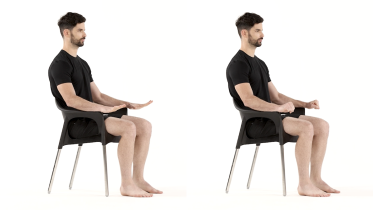 Open and close the hands
Stop signs and precautions for the open and close the hands
Before you start
- After a broken hand or finger, a tendon repair or other hand surgery, how far you may move the fingers and thumb is often limited for several weeks, so do only the movements your surgeon or hand therapist has shown you.
- After a wrist fracture, keep moving your fingers and thumb as far as the cast or splint allows, unless your fracture clinic has told you otherwise.
When to stop and get help
- Sharp pain in a finger joint, the palm or the wrist.
- Tingling or numbness in the fingers that comes on as you work. If one side of your face or body suddenly goes numb or weak, or your speech becomes slurred or muddled, call emergency services, even if it goes away.
- Your fingers puff up or feel stiffer once you have finished.
- Emergency: while you are in a cast or splint, your fingers turn blue, white or pale, or feel cold. Do not wait to see if raising your hand helps. Go to an emergency department straight away, and do not drive yourself. The cast or splint may be cutting off the blood supply, or pressure may be building up inside the forearm (compartment syndrome), and both need checking quickly.
- In a cast or splint, the pain gets worse, your fingers feel numb or tingle or look more swollen, or the cast feels too tight. Stop, rest your hand at about the level of your heart, keep moving your fingers and contact your fracture clinic or get medical advice straight away. Do not lift the hand higher than your heart and do not put ice on it, because if pressure is building up inside the forearm both of those cut down the blood reaching it. If you cannot move your fingers, the pain is severe even after painkillers, or the numbness, tingling or swelling has not settled within 30 minutes, go to your fracture clinic or an emergency department straight away, and do not drive yourself.
- Since the fracture or cast, the hand is getting more painful rather than less, the skin becomes very sensitive to light touch, or the hand changes color, temperature, swelling or sweating compared with the other one, or looks shiny. See your doctor or physio as soon as you can, within a few days at most, as this can be complex regional pain syndrome (CRPS) and early treatment may help.
 Tendon glides
Stop signs and precautions for the tendon glides
Before you start
- After a broken hand or finger, a tendon repair or other hand surgery, how far you may move the fingers and thumb is often limited for several weeks, so do only the movements your surgeon or hand therapist has shown you. After a flexor tendon repair or a carpal tunnel release, use this home version only if your surgeon or hand therapist has told you to. With rheumatoid or another inflammatory arthritis, keep the fists gentle on days when the joints are hot and swollen, and ask your physio what suits you.
- After a wrist fracture, keep moving your fingers and thumb as far as the cast or splint allows, unless your fracture clinic has told you otherwise.
When to stop and get help
- Sharp pain in a finger joint or in the palm.
- Tingling or numbness in the fingers that builds as you work through the positions. If one side of your face or body suddenly goes numb or weak, or your speech becomes slurred or muddled, call emergency services, even if it goes away.
- Fingers that are more swollen or stiff after the session than before.
- Emergency: while you are in a cast or splint, your fingers turn blue, white or pale, or feel cold. Do not wait to see if raising your hand helps. Go to an emergency department straight away, and do not drive yourself. The cast or splint may be cutting off the blood supply, or pressure may be building up inside the forearm (compartment syndrome), and both need checking quickly.
- In a cast or splint, the pain gets worse, your fingers feel numb or tingle or look more swollen, or the cast feels too tight. Stop, rest your hand at about the level of your heart, keep moving your fingers and contact your fracture clinic or get medical advice straight away. Do not lift the hand higher than your heart and do not put ice on it, because if pressure is building up inside the forearm both of those cut down the blood reaching it. If you cannot move your fingers, the pain is severe even after painkillers, or the numbness, tingling or swelling has not settled within 30 minutes, go to your fracture clinic or an emergency department straight away, and do not drive yourself.
- Since the fracture or cast, the hand is getting more painful rather than less, the skin becomes very sensitive to light touch, or the hand changes color, temperature, swelling or sweating compared with the other one, or looks shiny. See your doctor or physio as soon as you can, within a few days at most, as this can be complex regional pain syndrome (CRPS) and early treatment may help.
Stage 2: The thumb starts moving again
Start only when the team looking after your thumb says the ligament is ready and the splint may come off for exercises. For a tear treated without surgery that is often after 4 to 6 weeks of immobilization, which is what most UK hand units use (Mikhail and colleagues, 2024), and after surgery it is your surgeon's own timetable. Bend the thumb across the palm, bring it round to meet each fingertip, and move the wrist, which is usually stiff after weeks in a thumb spica. Begin with 10 slow repetitions of each, 2 or 3 times a day, and add a second set of the thumb bend and the wrist movement once that feels easy. The fingertip touches stay at one run of 10, and the ball squeeze at one run of 10 squeezes once or twice a day, which is at or inside where those two exercise pages set them. That ball squeeze figure is for the firm squeeze with a short hold at the top. The same exercise page also carries a quick, light pumping version for a swollen hand, done many more times a day, and that one is yours only if your own clinic has asked for it and told you how often. The ball squeeze here is for grip rather than pinch, so the fingers do the work: pick a ball small enough to hold without spreading the thumb wide, curl the fingers into it, keep the squeeze light, and let the thumb lie along the side of the ball instead of pressing in against the fingers. Nothing here should push the thumb sideways, away from the hand.
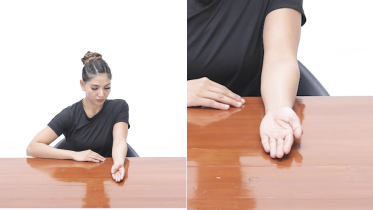 Thumb flexion
Stop signs and precautions for the thumb flexion
Before you start
- After a broken hand or finger, a tendon repair or other hand surgery, how far you may move the fingers and thumb is often limited for several weeks, so do only the movements your surgeon or hand therapist has shown you. After a flexor tendon repair in the thumb, active bending follows a strict timetable, so follow the one your surgeon or therapist gives you and do not start this from a video alone.
- After a wrist fracture, keep moving your fingers and thumb as far as the cast or splint allows, unless your fracture clinic has told you otherwise.
When to stop and get help
- Sharp pain in any thumb joint while it bends.
- A thumb that catches, clicks painfully or locks in the bent position.
- Tingling or numbness in the thumb or fingertips. If one side of your face or body suddenly goes numb or weak, or your speech becomes slurred or muddled, call emergency services, even if it goes away.
- Emergency: while you are in a cast or splint, your fingers turn blue, white or pale, or feel cold. Do not wait to see if raising your hand helps. Go to an emergency department straight away, and do not drive yourself. The cast or splint may be cutting off the blood supply, or pressure may be building up inside the forearm (compartment syndrome), and both need checking quickly.
- In a cast or splint, the pain gets worse, your fingers feel numb or tingle or look more swollen, or the cast feels too tight. Stop, rest your hand at about the level of your heart, keep moving your fingers and contact your fracture clinic or get medical advice straight away. Do not lift the hand higher than your heart and do not put ice on it, because if pressure is building up inside the forearm both of those cut down the blood reaching it. If you cannot move your fingers, the pain is severe even after painkillers, or the numbness, tingling or swelling has not settled within 30 minutes, go to your fracture clinic or an emergency department straight away, and do not drive yourself.
- Since the fracture or cast, the hand is getting more painful rather than less, the skin becomes very sensitive to light touch, or the hand changes color, temperature, swelling or sweating compared with the other one, or looks shiny. See your doctor or physio as soon as you can, within a few days at most, as this can be complex regional pain syndrome (CRPS) and early treatment may help.
- Suddenly being unable to straighten the end of your thumb or lift it back, especially in the weeks after a wrist fracture. A thumb tendon can snap, so have a doctor check it within a few days.
- In the first weeks after an operation on your hand, wrist or thumb, suddenly being unable to straighten the end of your thumb, lift it back or bend it. Stop the thumb exercises, keep any splint or dressing on, and contact your surgical team straight away, day or night, or get urgent medical advice straight away if you cannot reach them. This one applies even if your wrist was also broken: a check within a few days is for a thumb tendon that snaps weeks or months after a broken wrist, while in the first weeks after an operation a repaired tendon can give way, and bleeding, swelling or pressure under the dressing can press on a nerve. That is for the team that operated rather than something to grade for yourself.
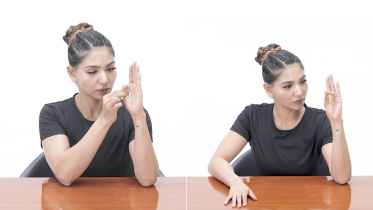 Thumb opposition
Stop signs and precautions for the thumb opposition
Before you start
- After a broken hand or finger, a tendon repair or other hand surgery, how far you may move the fingers and thumb is often limited for several weeks, so do only the movements your surgeon or hand therapist has shown you. With arthritis at the base of the thumb or rheumatoid arthritis, keep the touches gentle and ask your physio what suits you on days when the joints are flared.
- After a wrist fracture, keep moving your fingers and thumb as far as the cast or splint allows, unless your fracture clinic has told you otherwise.
When to stop and get help
- Sharp pain in the joint at the base of the thumb, or in any finger joint.
- Numbness or tingling in the thumb or fingers. If one side of your face or body suddenly goes numb or weak, or your speech becomes slurred or muddled, call emergency services, even if it goes away.
- Thumb or finger joints that are more swollen or stiff afterward.
- Emergency: while you are in a cast or splint, your fingers turn blue, white or pale, or feel cold. Do not wait to see if raising your hand helps. Go to an emergency department straight away, and do not drive yourself. The cast or splint may be cutting off the blood supply, or pressure may be building up inside the forearm (compartment syndrome), and both need checking quickly.
- In a cast or splint, the pain gets worse, your fingers feel numb or tingle or look more swollen, or the cast feels too tight. Stop, rest your hand at about the level of your heart, keep moving your fingers and contact your fracture clinic or get medical advice straight away. Do not lift the hand higher than your heart and do not put ice on it, because if pressure is building up inside the forearm both of those cut down the blood reaching it. If you cannot move your fingers, the pain is severe even after painkillers, or the numbness, tingling or swelling has not settled within 30 minutes, go to your fracture clinic or an emergency department straight away, and do not drive yourself.
- Since the fracture or cast, the hand is getting more painful rather than less, the skin becomes very sensitive to light touch, or the hand changes color, temperature, swelling or sweating compared with the other one, or looks shiny. See your doctor or physio as soon as you can, within a few days at most, as this can be complex regional pain syndrome (CRPS) and early treatment may help.
- Suddenly being unable to straighten the end of your thumb or lift it back, especially in the weeks after a wrist fracture. A thumb tendon can snap, so have a doctor check it within a few days.
- In the first weeks after an operation on your hand, wrist or thumb, suddenly being unable to straighten the end of your thumb, lift it back or bend it. Stop the thumb exercises, keep any splint or dressing on, and contact your surgical team straight away, day or night, or get urgent medical advice straight away if you cannot reach them. This one applies even if your wrist was also broken: a check within a few days is for a thumb tendon that snaps weeks or months after a broken wrist, while in the first weeks after an operation a repaired tendon can give way, and bleeding, swelling or pressure under the dressing can press on a nerve. That is for the team that operated rather than something to grade for yourself.
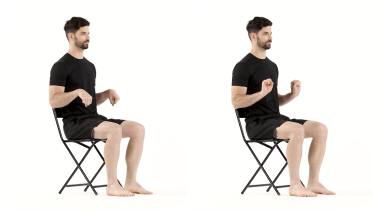 Wrist flexion and extension
Stop signs and precautions for the wrist flexion and extension
Before you start
- After a broken wrist, hand or forearm, or surgery on any of them such as a tendon repair, start only when your doctor, surgeon, physio or hand therapist says the bone or repair is ready for this, and follow their plan for how much to do.
When to stop and get help
- Sharp or catching pain in the wrist.
- Numbness or tingling in the hand or fingers that builds as you go. If one side of your face or body suddenly goes numb or weak, or your speech becomes slurred or muddled, call emergency services, even if it goes away.
- The wrist is more swollen, hot or stiff after the session.
- Since the fracture or cast, the hand is getting more painful rather than less, the skin becomes very sensitive to light touch, or the hand changes color, temperature, swelling or sweating compared with the other one, or looks shiny. See your doctor or physio as soon as you can, within a few days at most, as this can be complex regional pain syndrome (CRPS) and early treatment may help.
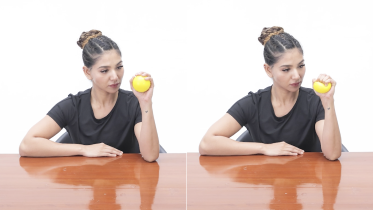 Ball grip and release
Stop signs and precautions for the ball grip and release
Before you start
- After a broken wrist, hand or forearm, or surgery on any of them such as a tendon repair, start only when your doctor, surgeon, physio or hand therapist says the bone or repair is ready for this, and follow their plan for how much to do.
When to stop and get help
- Sharp pain in the wrist, the palm or a finger joint.
- Numbness or tingling in your fingers that comes on as you squeeze. If one side of your face or body suddenly goes numb or weak, or your speech becomes slurred or muddled, call emergency services, even if it goes away.
- The hand is more swollen, hot or stiff after the session rather than less.
- Emergency: while you are in a cast or splint, your fingers turn blue, white or pale, or feel cold. Do not wait to see if raising your hand helps. Go to an emergency department straight away, and do not drive yourself. The cast or splint may be cutting off the blood supply, or pressure may be building up inside the forearm (compartment syndrome), and both need checking quickly.
- In a cast or splint, the pain gets worse, your fingers feel numb or tingle or look more swollen, or the cast feels too tight. Stop, rest your hand at about the level of your heart, keep moving your fingers and contact your fracture clinic or get medical advice straight away. Do not lift the hand higher than your heart and do not put ice on it, because if pressure is building up inside the forearm both of those cut down the blood reaching it. If you cannot move your fingers, the pain is severe even after painkillers, or the numbness, tingling or swelling has not settled within 30 minutes, go to your fracture clinic or an emergency department straight away, and do not drive yourself.
- Since the fracture or cast, the hand is getting more painful rather than less, the skin becomes very sensitive to light touch, or the hand changes color, temperature, swelling or sweating compared with the other one, or looks shiny. See your doctor or physio as soon as you can, within a few days at most, as this can be complex regional pain syndrome (CRPS) and early treatment may help.
Stage 3: Out to the side, and first strength
Move on when the thumb bends and straightens comfortably and the knuckle is no longer sore to touch. Taking the thumb out to the side is the direction the ligament was hurt in, so it waits until here, and it is your own muscles moving it with nothing pressing on the thumb. Keep the other hand off it: no pushing, no pulling, and no stretching the thumb further than it travels on its own, which is the one thing that would turn these two movements into a load on the healing ligament. Two sets of 10 slow movements twice a day is a usual starting point, stopping at the first pull at the knuckle rather than working on into it. The two end-of-range feelings are worth telling apart, because they sit close together: a mild stretch in the web of skin between the thumb and the index finger is the exercise doing its job, while a pull, tug or stretch felt at the knuckle itself is where you stop that repetition. The web is the soft fold of skin you can take hold of between thumb and index finger. The knuckle is the bony bump where the thumb joins the hand, which is where the injury is and where the thumb has been tender. A swollen thumb aches in a vague way and will not always separate the two for you, so if you cannot place the feeling, treat it as the knuckle and stop there. Both of those exercise pages tell you to take the thumb out as far as it comfortably goes, and on a healing ligament that limit is replaced by this one. The ball squeeze gets firmer now: 10 to 15 squeezes held for 3 to 5 seconds, once or twice a day, with the thumb still lying along the side of the ball rather than pressing in against the fingers, because a firm squeeze with the thumb wrapped around a ball is pinch work by another name and that waits for stage 4. As in stage 2, mild discomfort that settles soon after you stop and leaves the thumb no worse the next morning is acceptable.
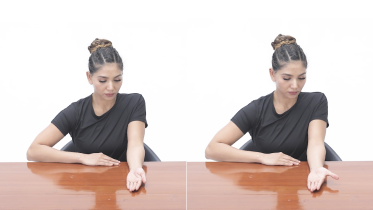 Thumb extension
Stop signs and precautions for the thumb extension
Before you start
- After a broken wrist, hand or forearm, or surgery on any of them such as a tendon repair, start only when your doctor, surgeon, physio or hand therapist says the bone or repair is ready for this, and follow their plan for how much to do.
When to stop and get help
- Sharp pain in the thumb or on the thumb side of the wrist.
- Tingling or numbness spreading into your thumb and fingers. If one side of your face or body suddenly goes numb or weak, or your speech becomes slurred or muddled, call emergency services, even if it goes away.
- Suddenly being unable to straighten the end of your thumb or lift it back, especially in the weeks after a wrist fracture. A thumb tendon can snap, so have a doctor check it within a few days.
- In the first weeks after an operation on your hand, wrist or thumb, suddenly being unable to straighten the end of your thumb, lift it back or bend it. Stop the thumb exercises, keep any splint or dressing on, and contact your surgical team straight away, day or night, or get urgent medical advice straight away if you cannot reach them. This one applies even if your wrist was also broken: a check within a few days is for a thumb tendon that snaps weeks or months after a broken wrist, while in the first weeks after an operation a repaired tendon can give way, and bleeding, swelling or pressure under the dressing can press on a nerve. That is for the team that operated rather than something to grade for yourself.
- Since the fracture or cast, the hand is getting more painful rather than less, the skin becomes very sensitive to light touch, or the hand changes color, temperature, swelling or sweating compared with the other one, or looks shiny. See your doctor or physio as soon as you can, within a few days at most, as this can be complex regional pain syndrome (CRPS) and early treatment may help.
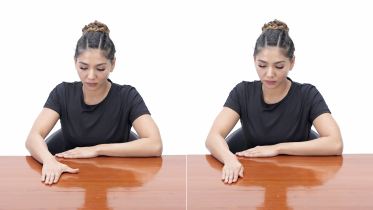 Thumb side slide
Stop signs and precautions for the thumb side slide
Before you start
- After a broken wrist, hand or forearm, or surgery on any of them such as a tendon repair, start only when your doctor, surgeon, physio or hand therapist says the bone or repair is ready for this, and follow their plan for how much to do.
When to stop and get help
- Sharp pain where the thumb meets the wrist, or over the tendons on the thumb side of the wrist.
- Numbness or tingling in the thumb or fingers that comes on while you work. If it stays after you stop, or keeps getting worse, get medical advice the same day. If one side of your face or body suddenly goes numb or weak, or your speech becomes slurred or muddled, call emergency services, even if it goes away.
- Suddenly being unable to straighten the end of your thumb or lift it back, especially in the weeks after a wrist fracture. A thumb tendon can snap, so have a doctor check it within a few days.
- In the first weeks after an operation on your hand, wrist or thumb, suddenly being unable to straighten the end of your thumb, lift it back or bend it. Stop the thumb exercises, keep any splint or dressing on, and contact your surgical team straight away, day or night, or get urgent medical advice straight away if you cannot reach them. This one applies even if your wrist was also broken: a check within a few days is for a thumb tendon that snaps weeks or months after a broken wrist, while in the first weeks after an operation a repaired tendon can give way, and bleeding, swelling or pressure under the dressing can press on a nerve. That is for the team that operated rather than something to grade for yourself.
- Since the fracture or cast, the hand is getting more painful rather than less, the skin becomes very sensitive to light touch, or the hand changes color, temperature, swelling or sweating compared with the other one, or looks shiny. See your doctor or physio as soon as you can, within a few days at most, as this can be complex regional pain syndrome (CRPS) and early treatment may help.
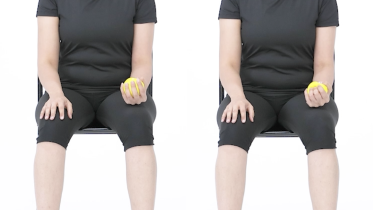 Hand grip squeeze
Stop signs and precautions for the hand grip squeeze
Before you start
- After a broken wrist, hand or forearm, or surgery on any of them such as a tendon repair, start only when your doctor, surgeon, physio or hand therapist says the bone or repair is ready for this, and follow their plan for how much to do.
- Arthritis at the base of the thumb and rheumatoid arthritis can both flare with hard gripping. Ask your physio how firm to go, and skip it on days when the joints are hot and swollen.
- Keep breathing through each hold, because holding your breath while you strain can push your blood pressure up.
When to stop and get help
- Sharp pain in the wrist, a finger joint or at the base of the thumb.
- Your hand or fingers go numb or start to tingle. If one side of your face or body suddenly goes numb or weak, or your speech becomes slurred or muddled, call emergency services, even if it goes away.
- Hand joints that are more swollen, hot or stiff afterward.
- Since the fracture or cast, the hand is getting more painful rather than less, the skin becomes very sensitive to light touch, or the hand changes color, temperature, swelling or sweating compared with the other one, or looks shiny. See your doctor or physio as soon as you can, within a few days at most, as this can be complex regional pain syndrome (CRPS) and early treatment may help.
Stage 4: Pinch, grip and the jobs you have been avoiding
Move on only when stage 3 is comfortable through its full range and the team looking after your thumb has said you may put load through it, which is what OrthoInfo asks you to wait for before applying any pressure or resistance to the thumb. If nobody has told you that, you are not at this stage yet. Being out of the splint is not the same as being cleared to put load through the thumb, and no one is going to say it by accident. If you were discharged without being given a date, ask the clinic that treated you, or your own doctor, or a hand physiotherapist, before you start this stage rather than after it. Pinching comes last because it puts the biggest load through the thumb knuckle. For a complete tear treated without surgery there is a further reason to be patient: in the Dutch trial's non-surgical arm the thumb is immobilized for 8 weeks in total and is used for everyday jobs without resistance through the second half of that (de Haas and colleagues, 2024). That 8 weeks describes a thumb treated in a cast rather than a thumb with an anchor in the bone, so after a repair it is not your figure: the date resisted pinch starts is the one your own surgeon gives you. Start with the softest putty and the weakest clothespin in the house, 5 to 10 slow repetitions of each once a day, building toward 2 or 3 sets of the putty and the clothespin over a few weeks while the cloth pull stays at 5 to 10 holds. Keep the pull on the cloth as light as it can be while the cloth still does not slip, because your own other hand sets that load and there is no weakest setting to pick up instead. Two of those three pages go on to repeat the pinch against the middle, ring and little fingers. Leave that out here and keep all three exercises to thumb against index finger, because a pinch against any finger loads the healing ligament the same way and working through four of them multiplies the day's total by four. Stop a set if the end joints of the thumb or finger buckle backward, or if the knuckle aches for hours afterward. Everyday jobs are the real test: a key in a stiff lock, a zip, a jar, a pen held for a whole page. Build those back the same way, a little at a time.
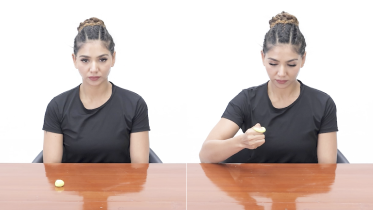 Key grip with putty
Stop signs and precautions for the key grip with putty
Before you start
- After a broken wrist, hand or forearm, or surgery on any of them such as a tendon repair, start only when your doctor, surgeon, physio or hand therapist says the bone or repair is ready for this, and follow their plan for how much to do.
- With arthritis at the base of your thumb, or rheumatoid arthritis in your hands, ask your physio before you start, because a side pinch presses hard through that joint.
- If feeling in your hand is reduced, look the thumb, the index finger and the web between them over for red marks, blisters or broken skin after each session, because a sore spot can form without you feeling it. Do not use putty over a cut or an open wound.
When to stop and get help
- Sharp pain at the base of the thumb or along the thumb side of the wrist.
- New or worse numbness or tingling in your thumb or index finger.
- Call emergency services straight away for any sign of a stroke, even if it goes away: sudden dizziness with unsteadiness or falling over, a face that droops on one side, an arm you cannot lift or keep up, slurred or muddled speech, weakness or numbness on one side of your body or face, sudden blurred vision, double vision or loss of sight, or a sudden severe headache.
- The thumb joints are more swollen, hot or sore for hours after the session.
- Since the fracture or cast, the hand is getting more painful rather than less, the skin becomes very sensitive to light touch, or the hand changes color, temperature, swelling or sweating compared with the other one, or looks shiny. See your doctor or physio as soon as you can, within a few days at most, as this can be complex regional pain syndrome (CRPS) and early treatment may help.
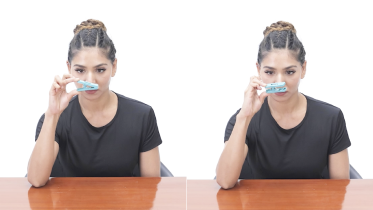 Clothespin pinch
Stop signs and precautions for the clothespin pinch
Before you start
- After a broken wrist, hand or forearm, or surgery on any of them such as a tendon repair, start only when your doctor, surgeon, physio or hand therapist says the bone or repair is ready for this, and follow their plan for how much to do. Resisted pinching usually comes later in rehab. Pinching puts a strong load through the joint at the base of the thumb, so check with your physio first if you have arthritis there or rheumatoid arthritis in your hands.
When to stop and get help
- Sharp pain at the base of the thumb or in a finger joint.
- Pins and needles or loss of feeling in your thumb or fingertips. If one side of your face or body suddenly goes numb or weak, or your speech becomes slurred or muddled, call emergency services, even if it goes away.
- A finger gets stuck bent or snaps straight as you release the clothespin.
- Your thumb or finger joints are more swollen, hot or sore for hours afterward.
- Since the fracture or cast, the hand is getting more painful rather than less, the skin becomes very sensitive to light touch, or the hand changes color, temperature, swelling or sweating compared with the other one, or looks shiny. See your doctor or physio as soon as you can, within a few days at most, as this can be complex regional pain syndrome (CRPS) and early treatment may help.
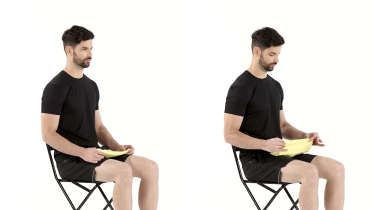 Pinch and pull with a cloth
Stop signs and precautions for the pinch and pull with a cloth
Before you start
- After a broken wrist, hand or forearm, or surgery on any of them such as a tendon repair, start only when your doctor, surgeon, physio or hand therapist says the bone or repair is ready for this, and follow their plan for how much to do. Resisted pinching usually comes later in rehab. Pinching loads the joint at the base of the thumb, so with arthritis there or rheumatoid arthritis in your hands, ask your physio first and keep the pull light on days when a joint is sore or swollen.
When to stop and get help
- Sharp pain in the thumb, especially where it meets the wrist, or in a finger joint.
- Your thumb or fingers start to tingle or go numb. If one side of your face or body suddenly goes numb or weak, or your speech becomes slurred or muddled, call emergency services, even if it goes away.
- Hand or finger joints that are more swollen or sore for hours afterward.
- Since the fracture or cast, the hand is getting more painful rather than less, the skin becomes very sensitive to light touch, or the hand changes color, temperature, swelling or sweating compared with the other one, or looks shiny. See your doctor or physio as soon as you can, within a few days at most, as this can be complex regional pain syndrome (CRPS) and early treatment may help.
Where these exercises go wrong
Open and close the hands and tendon glides feel too small to bother with, so they get dropped in the first week, and then the fingers stiffen inside a splint that was only ever meant to hold the thumb. Go through the tendon glide positions properly rather than making a vague fist. The fist in that first video is made with the thumb wrapped over the outside of the fingers, which yours is not: keep the thumb exactly where the splint holds it and close the fingers without it.
In thumb flexion, watch the fingers. The usual fault is the fingers curling in to meet the thumb halfway, which makes it look as though the thumb has traveled when it has barely moved. Thumb opposition has its own version of the same cheat: pressing the pads flat together instead of making a round shape tip to tip, which skips the turn you are trying to get back. Wrist flexion and extension belongs with them, and the forearm stays on the table so the wrist cannot borrow movement from the elbow.
Thumb extension and the thumb side slide take the thumb out to the side, the direction the injury happened in, so they are the two to be fussy about. Your own muscles move the thumb, nothing pushes or pulls on it, and the range stops at the first pull at the knuckle rather than going on into it. Both exercise pages describe a mild stretch in the web between thumb and index finger, and that one is fine; it is the pull at the knuckle itself that ends the repetition. If it ever feels as though the thumb is being levered away from the hand, that is the movement to stop. The side slide is the gentler of the pair, because the table carries the weight of the thumb.
Grip comes before pinch, and the difference matters here. Ball grip and release and the hand grip squeeze load the whole hand, so start on something as soft as a rolled-up pair of socks and move up only when a full set is comfortable. Both of those pages tell you to squeeze with the fingers and the thumb. Here the thumb lies along the side of the ball and the fingers do the work, in stage 3 as much as in stage 2, because a thumb pressed into a ball is pinching against it.
Then key grip with putty, the clothespin pinch and pinch and pull with a cloth put load straight through the thumb knuckle. Start with the softest putty and the weakest clothespin, and if the end joints buckle backward as you press, the resistance is too much for now.
After a repair
The operation puts the ligament back on the bone, usually with a bone anchor, and OrthoInfo adds that a pin or a screw may be used where a piece of bone came away with it. After that, the timetable belongs to your surgeon, as the section above explains, and this page does not substitute for it.
Two things to know while you wait. Moving the knuckle early, inside a splint designed to allow it, may turn out to be better than being held completely still, though the evidence for it is weak and comes from very few patients (Mikhail and colleagues, 2018), so if your team holds you still for longer there is a reason and it is not neglect. And resisted pinch work waits until late, whatever stage your movement has reached.
The warning signs below cover what to watch for after the operation: the wound, a wire if you have one, a thumb that suddenly will not move, and a numb patch that outlasts the anesthetic. MedlinePlus lists severe pain, thumb weakness, numb or cold fingers, and drainage or redness around pins as reasons to contact your provider or go to an emergency room right away.
The thumb that was hurt months ago
Plenty of people reach this page late, with a thumb that was sprained last season and still gives way. That is a real problem with real treatment, not a lost cause. OrthoInfo describes late instability, weakness and arthritis after this injury, and says reconstruction of the ligament or fusing the joint may be needed.
The encouraging part comes from a systematic review of 14 studies covering 293 thumbs: reconstruction for a chronic injury gave excellent results, about the same as repair of a fresh injury, and good results were still reached in thumbs that came to surgery after non-surgical treatment had failed (Samora and colleagues, 2013). Nearly all of those studies were low level evidence, so it is encouragement rather than a guarantee. The same review found that non-surgical treatment of complete tears often failed and ended in surgery, which is the other half of the same message.
So being late is a reason to get seen, not a reason to give up on the thumb. Take a list of what you cannot do with it, because function is what the decision turns on.
One thing not to do while you wait for that appointment: do not use the pinch work in stage 4 to find out how bad it is. A knuckle that gives way is one with nothing holding that side of it, and chronic instability, weakness and arthritis are the three long-term problems OrthoInfo lists for a sprained thumb left to heal on its own, so an unstable thumb is not one to go testing under load. Stage 4 is for a thumb that has been examined and cleared for load, and a thumb hurt last season has had neither.
Getting back to skiing, sport and the gym
Pinch strength and confidence are the last things to come back, so they set the timing, not pain. Before you go back to a sport where you land on your hands, stage 4 should feel easy, pinch and grip should compare reasonably well with your other hand, and the thumb should not drift away from the hand when you push against something. Pinch strength is one of the three measures the UK guideline suggests hand services audit themselves on, a fair indication of how much it matters here (BSSH BEST guideline, 2023). A physio can compare the two sides and help you judge it.
Think about the thumb's position in whatever you are going back to. The injury happens when the thumb is held out and away from the hand while a force arrives (OrthoInfo). Keep that in mind for how you hold a pole, a handlebar or a racquet. Ask your instructor or clinician about equipment and strapping for your sport, because this page is not going to invent a recommendation on something the sources do not cover.
Keep the NHS advice in view as well: after a sprain, avoid strenuous exercise for up to 8 weeks. For a complete tear or a repair, that timeline is the floor and not the target, and your own clinic's plan comes first.
When to see a physio or doctor
See a doctor if the pain and swelling last more than 2 days, which is what OrthoInfo advises even after an injury that seemed mild, and sooner if the knuckle feels loose, gives way or will not pinch. A physical therapist (physiotherapist) can take over the rehab once the thumb has been assessed and you know whether you are healing a partial tear, coming out of a cast or recovering from a repair.
A thumb that was injured weeks or months ago and is still weak or unstable is also worth an appointment, as the section above sets out. If the injury happened on a skiing trip, get it looked at where you are rather than waiting until you are home, given the 2-week window the UK guideline sets for deciding treatment (Dean and colleagues, 2024).
Each warning sign below says how fast to act. For a thumb-side wrist pain that came on without a fall, see pain at the base of the thumb or De Quervain's tenosynovitis instead. If the fall left pain in the hollow at the base of the thumb on the back of the wrist rather than at the knuckle, that is a different injury and needs the same-day advice on the wrist sprain and scaphoid fracture pages.
For physiotherapists
This page is written for adults with a thumb metacarpophalangeal ulnar collateral ligament injury, covering the splinted partial tear, the post-repair patient and the chronic presentation, and it repeatedly routes any suspicion of a complete tear or a Stener lesion back to assessment rather than to a home program. The BSSH BEST guideline recommendations are assessment by history, clinical examination and radiographs in two orthogonal planes, non-operative treatment for those without significant laxity, and either immobilization or repair for those with significant laxity, with a shared decision about definitive management inside 2 weeks (BSSH BEST, 2023; Dean and colleagues, 2024).
Several points come from the guideline document itself and not from the summary of it. It labels the evidence behind its two key recommendations as low for clinical examination and very low for the choice between early surgery and immobilization. Its good practice point times the 2 weeks from referral to specialist musculoskeletal services, while its own plain language summary and the journal summary both time it from presentation, and this page uses the shorter of the two. Immobilization for significant laxity is specified as a rigid orthosis, meaning a cast or a thermoplastic splint, and pinch strength is one of three suggested audit indicators, the outcome this program is built to end on. Its scope is adults of 18 and over inside 3 weeks of injury, with significant bony avulsion fragments, open injuries, non-isolated injuries and children all excluded, so none of it carries over to the chronic or the pediatric presentation.
On how hard the examination is, the two level 2 diagnostic studies the guideline includes report sensitivity of 0.92 to 0.94 with specificity of 0.41 to 0.57 for a displaced ligament. The guideline also states plainly that no study has shown a Stener lesion can be reliably diagnosed by any form of clinical examination or investigation. Have that ready for the patient whose ultrasound was reported as normal and who has taken it as an all clear.
Where a patient does arrive with an MRI report, Milner's treatment-oriented classification is the useful frame: tears displaced less than 3 mm typically healed with immobilization while 90% of those displaced more than 3 mm failed it, in 43 cases from a single center (Milner and colleagues, 2015). Displacement reported without a true Stener lesion is therefore still a reason to route back to hand surgery rather than to press on with a non-operative program. The national cross-sectional study is useful for setting patient expectations about variation: imaging practice split 46% to 54%, ultrasound 41% and MRI 10%, immobilization 6 weeks in 58% and 4 weeks in 30%, bone anchors dominant for repair, and absence of a firm endpoint on stress testing the strongest influence on offering surgery (Mikhail and colleagues, 2024).
Progression here follows the immobilization and healing times from those sources plus symptom response, because the evidence base for exercise in this injury is thin: no prospective comparison of operative and non-operative treatment, and weak evidence favoring early mobilization after repair (Mikhail and colleagues, 2018). Valgus stress at the MCP joint is the load to govern, so active thumb abduction and extension are staged after flexion and opposition, and resisted pinch is last. The nearest thing to a written regime is the MUSCAT protocol's non-operative arm: the MCP joint held in 10 to 30 degrees of flexion and the carpometacarpal joint in 30 to 40 degrees of palmar abduction with the interphalangeal joint and wrist free, a non-removable cast to 4 weeks, re-examination at 2 to 3 weeks with surgery inside 5 working days where laxity persists, then a removable splint to 8 weeks, daily activities without resistance, exercises combining opposition with abduction and adduction 5 to 10 times a day, and immediate referral to a hand therapist (de Haas and colleagues, 2024). It brings active abduction in at 4 weeks alongside opposition, so holding it to stage 3 here is the more conservative of the two; what it does not do before 8 weeks is add resistance, which is where the pinch work sits.
Worth screening at every contact: laxity that has not been formally assessed in someone who self-managed, the dorsal radial sensory branch after an incision, CRPS, and pinch strength against the other side as the outcome that tracks function. Refer back to hand surgery for an unstable joint, for a thumb that is not regaining pinch as expected, and for chronic instability, where reconstruction remains a reasonable option (Samora and colleagues, 2013).
Warning signs
Get emergency help now
- Emergency: your arm, hand or fingers turn cold, pale, blue or gray compared with the other side. Call emergency services or go to an emergency department straight away, and do not drive yourself. The blood supply to the arm may be blocked.
- Emergency: after a fall or injury to the thumb, your hand is numb, tingles or has pins and needles, the thumb has changed color, changed shape or sits at an odd angle, or you heard a crack. The same applies to a bone showing through the skin or a cut that is bleeding heavily. Go to an emergency department or call emergency services straight away, and do not drive yourself. The thumb may be broken or out of place.
- Emergency: you cannot remember the fall that hurt your thumb or how it happened. Go to an emergency department straight away, and do not drive yourself. You may have blacked out or hit your head without knowing it.
- Emergency: after a knock to the head, you were knocked out, even for a moment, you cannot remember what happened just before or after, you have had a headache ever since, or you are being sick (vomiting). The same applies, even if you feel fine, if you take medicine that thins your blood, other than aspirin on its own, have a bleeding or clotting condition, have had brain surgery in the past, or had been drinking alcohol or taking drugs when it happened. Go to an emergency department straight away, and do not drive yourself.
- Emergency: while you are in a cast or splint, your fingers turn blue, white or pale, or feel cold. Do not wait to see if raising your hand helps. Go to an emergency department straight away, and do not drive yourself. The cast or splint may be cutting off the blood supply, or pressure may be building up inside the forearm (compartment syndrome), and both need checking quickly.
- Emergency: while you are wearing a wrist support or a compression wrap that you put on yourself, your fingers turn white, pale or blue, or feel cold. Take it off at once, and if the color and the feeling do not come straight back, go to an emergency department straight away, and do not drive yourself. Do not wait to see whether raising your hand helps, because a hand held higher than your heart gets less blood rather than more. A support or wrap that is too tight can press on the blood supply to the hand.
- Emergency: a thumb or finger that becomes swollen along its length, red, hot and tender, and hurts a lot when you try to straighten it, so you keep it slightly bent, or a palm that becomes red, hot and swollen, especially after a cut, splinter, bite, injection or operation on the hand. Go to an emergency department straight away, and do not wait to see if it settles. An infection in the sheath around the tendon can spread quickly and often needs antibiotics through a drip and an operation. If you have a very high or very low temperature, shivering you cannot control, you are breathing very fast or finding it hard to breathe, you are confused or your speech is slurred, your skin, lips or tongue look blue, gray, pale or blotchy (on brown or black skin this can be easier to see on the palms of the hands or soles of the feet), or you have a rash that does not fade when you press it, call emergency services, as this can be sepsis.
Get help now, day or night
- In a dressing, splint or cast on your hand or wrist, or in a wrist support or compression wrap you put on yourself, the pain gets worse, your fingers feel numb or tingle or look more swollen, or it feels too tight. Take off anything you put on yourself. Leave a dressing, splint or cast your team fitted on, and do not cut it or unwrap it. Stop, rest your hand at about the level of your heart, keep moving your fingers and contact your surgical team or get medical advice straight away. Do not lift the hand higher than your heart and do not put ice on it, because if pressure is building up inside the forearm both of those cut down the blood reaching it. If you cannot move your fingers, the pain is severe even after painkillers, or the numbness, tingling or swelling has not settled within 30 minutes, go to an emergency department straight away, and do not drive yourself.
- Your repair was held with a wire or pin that comes out through the skin, and the skin around it becomes redder, hotter or more swollen, the redness spreads away from it, there is pus or cloudy fluid, there is a bad smell, or the pain at that spot is climbing rather than settling. Contact your surgical team straight away, day or night, or get urgent medical advice straight away if you cannot reach them. Redness can be harder to see on brown or black skin. MedlinePlus lists drainage or redness around pins among the reasons to contact your provider or go to an emergency room right away after this operation. Do not pull a wire, trim one or try to take one out yourself, and keep the hand out of baths, pools and washing-up water while a wire is still in unless your team has told you otherwise.
- Since an operation on your thumb, you suddenly cannot bend or straighten the thumb, or a numb patch on the hand or the back of the thumb is still there once any numbing injection has worn off. Contact your surgical team straight away, day or night, or get urgent medical advice straight away if you cannot reach them. A tendon or a small nerve can rarely be injured during the operation itself, a tendon can also give way weeks afterward, and swelling or pressure under the dressing can press on a nerve, so this is not something to wait out or to grade for yourself. MedlinePlus lists weakness in the thumb and numb fingers among the reasons to contact your provider or go to an emergency room right away after this operation.
Get help today
- Same day: your cast or splint feels too loose or uncomfortable, cracks, softens, gets wet or itches badly. Ring your fracture clinic, plaster room or surgical team and ask to be seen, and go to an emergency department if they cannot see you that day. A cast or splint that has gone loose or soft may no longer be holding the thumb still, and holding it still is the treatment.
- Same day: the thumb knuckle feels loose or unstable, gives way when you pinch or grip, or you cannot hold anything between your thumb and index finger. Get medical advice the same day, ask to be examined, and say how the injury happened. Keep the thumb in whatever support you were given and leave the exercises out until you have been seen. A ligament torn right through is treated differently from one that is stretched, and the UK hand surgery guideline asks for the decision about treatment to be made with you within 2 weeks of you first being seen (Dean and colleagues, 2024). This line is for a thumb that has not been operated on. If you have had this ligament repaired, the next line below is the one for you, because it sends you to the team that did the operation rather than to general medical advice.
- Same day: since a repair of the thumb ligament, the knuckle starts to feel loose again or wobbly, gives way when you pinch or grip, or you can no longer hold anything between the thumb and index finger. This is the post-operative version of the line above. Keep the splint or cast on, leave the exercises out, and ask the team that operated on your thumb to see you the same day. A repair can pull away from the bone it was fixed to, and whether the thumb now needs holding differently or repairing again is a decision for the surgeon who did it rather than something to work out from a page.
- Same day: after a fall onto your hand, pain, swelling or tenderness on the thumb side of the wrist, especially in the small hollow at the base of the thumb that shows when you give a thumbs-up (the anatomical snuffbox). Leave the exercises out and keep weight off that hand until it has been checked. Get medical advice the same day, even if it feels like a mild sprain, and ask about an X-ray. It can be hard to tell a broken wrist from a bad sprain, and a break in the small wrist bone on the thumb side (scaphoid) does not always show on the first X-ray. If your doctor still suspects one, you may wear a splint or cast and have a repeat X-ray or a scan, so keep that appointment even if the wrist feels better. A missed scaphoid break can fail to heal.
- Same day: the thumb is hot, red and swollen, or you have thumb pain with a high temperature or feel hot, cold or shivery. Get medical advice the same day, and go to an emergency department if you feel very unwell. Redness can be harder to see on brown or black skin. This can be a sign of infection in the joint, which needs treatment quickly. If you feel hot and shivery or unwell with it, use the infection and sepsis line on this page.
- Same day: since an operation on your thumb, the skin or wound where it was done becomes more red, hot, swollen or painful, starts to leak fluid or pus, smells unusual, or its edges come apart, or the pain in that area is new or getting worse quickly. Contact your medical team the same day. Redness can be harder to see on brown or black skin. If redness is spreading up your thumb, hand or arm, go to an emergency department the same day. If you also have a high temperature, feel hot and shivery or feel unwell, use the infection and sepsis line on this page.
- Same day: you blacked out before the fall that hurt your thumb and nobody has checked why. Get medical advice the same day. A blackout needs its own check, especially if you are over 65 or it came without warning.
- The thumb hurts at night or at rest and the pain keeps getting worse rather than easing as the weeks go by. If you are being treated for cancer now, contact your cancer team the same day.
Book an appointment
- Within a day or two: the pain and swelling are still there more than 2 days after the injury, or the thumb is not clearly getting better. See a doctor even if the sprain seemed mild, which is what OrthoInfo advises, because a ligament torn right through can look like a mild sprain in the first days and is treated differently.
- Within a few days: a thumb injured weeks or months ago that is still weak, aches at the knuckle or gives way when you pinch. See a doctor or ask about a hand specialist within a few days rather than waiting longer. An old tear can still be treated, often by rebuilding the ligament with a tendon graft, and a review of the published cases found results after that were about as good as after an early repair, although nearly all those studies were small and low quality (Samora and colleagues, 2013).
- Since the injury or an operation on your hand, the hand is getting more painful rather than less, the skin becomes very sensitive to light touch, or the hand changes color, temperature, swelling or sweating compared with the other one, or looks shiny. See your doctor or physio as soon as you can, within a few days at most, as this can be complex regional pain syndrome (CRPS) and early treatment may help.
- The thumb hurts at night or at rest and the pain keeps getting worse rather than easing as the weeks go by. If you have had cancer, now or in the past, or are losing weight without trying, see your doctor sooner, within a day or two, and mention it. This applies even if the pain is not getting worse.
- The thumb hurts at night or at rest and the pain keeps getting worse rather than easing as the weeks go by. See your doctor within a few days.
Common questions
Will skier's thumb heal on its own?
A stretched or partly torn ligament often does, provided the thumb is held still while it heals. A ligament torn right through is the one that does not, because the torn end can pull back so that a sheet of tissue over the thumb muscles lies between it and the bone it should heal to, which keeps the two ends apart (Kundu and colleagues, 2012). That is why the first job is an examination rather than a wait. OrthoInfo advises seeing a doctor if pain and swelling last more than 2 days, which is the 48 hours its own home care advice gives, even after an injury that seemed mild.
How do you get skier's thumb?
A force bends the thumb backward or sideways, away from the palm, most often in a fall onto an outstretched hand (OrthoInfo). The name comes from skiing, where a hand still strapped into a pole lands first and the pole holds the thumb out while the rest of you keeps going (OrthoInfo; HealthLink BC). It happens plenty of times without snow: a hand caught in a ball, a dog lead, a bike handlebar, a fall onto a kerb. Gamekeeper's thumb is the same ligament stretched gradually, over months of repeated gripping and twisting, rather than torn in one go.
What is the difference between skier's thumb and gamekeeper's thumb?
They are the same ligament and two different stories. Skier's thumb is the sudden one, from a single fall or force. Gamekeeper's thumb is the slow one, named after the Scottish gamekeepers it was first seen in, and OrthoInfo describes it as a work injury that came on gradually from repeated grasping or twisting. The treatment follows what the ligament is actually like when it is examined, not which name the injury was given.
How is skier's thumb diagnosed?
By examination and X-rays first. The UK hand surgery guideline recommends assessing an acute ulnar collateral ligament injury with the history, a clinical examination and X-rays (Dean and colleagues, 2024). The examination tests how far the knuckle opens when the thumb is stressed, and a joint that opens up points to a complete tear; stress X-rays can show the same thing, and X-rays also look for a chip of bone pulled off with the ligament (OrthoInfo). There is no test for this at home, and a swollen thumb guards itself, so pulling on your own thumb to see how loose it feels tells you nothing useful.
Do I need an ultrasound or an MRI scan?
Not always, and UK practice is split. In a survey of 112 surgeons and hand therapists across 37 UK centers, 46% routinely used extra imaging and 54% did not, with ultrasound the commonest at 41% and MRI used by 10%, and the same paper quotes the UK guideline as saying there is not enough evidence to require routine ultrasound or MRI (Mikhail and colleagues, 2024). OrthoInfo notes that MRI or ultrasound may be ordered for more detail. If you do have a scan, a normal result is not an all clear: the guideline document says no study has shown that a Stener lesion can be reliably diagnosed by any form of examination or investigation, so the decision still rests on how the joint behaves when a clinician stresses it (BSSH BEST guideline, 2023). Which, if any, you have is a decision for the clinician examining your thumb.
Does skier's thumb need surgery?
Some do. The UK guideline says people without significant looseness at the joint can be treated without surgery, and that people with significant looseness may have either immobilization or a surgical repair, with that decision made together with a clinician within 2 weeks of being seen (Dean and colleagues, 2024). Where the ligament has pulled out of place, surgery is the way it gets back to the bone (Kundu and colleagues, 2012). The honest position on the evidence is that a systematic review found no prospective study comparing surgery with non-surgical treatment for a complete tear (Mikhail and colleagues, 2018), and a Dutch randomized trial is now testing cast treatment against immediate surgery (de Haas and colleagues, 2024).
How long does a sprained thumb take to heal?
For a mild sprain, the NHS says most sprains and strains feel better after about 2 weeks, while advising against strenuous exercise for up to 8 weeks and noting that severe injuries can take months. For a thumb ligament tear treated without surgery, most UK units immobilize for 4 to 6 weeks, 6 weeks being the commonest (Mikhail and colleagues, 2024). MedlinePlus says exercises to get movement and strength back may start as early as 3 weeks or as late as 8 weeks after the injury, depending on what your provider decides. Getting a confident pinch back usually takes longer than getting movement back.
What splint or brace is used for skier's thumb?
Usually a thumb spica, which holds the thumb and the wrist and leaves the fingers free. OrthoInfo describes immobilization in a bandage, a thumb spica cast or a splint until the ligament has healed. In the UK survey, surgeons most often used a cast and hand therapists most often used a thermoplastic splint made to fit, or a cast and then a splint (Mikhail and colleagues, 2024). A support bought off the shelf is not the same thing as a fitted splint, and it is not a substitute for having the thumb examined first.
Can I tape my thumb and keep skiing?
Not before it has been examined, and that is the single most useful line on this page. Taping a stretched ligament for a few days is one thing; taping a ligament that is torn right through, and skiing on it for the rest of the week, is how a thumb ends up permanently loose and weak at pinching. MedlinePlus puts it as injuries that are not treated properly, rather than injuries left alone, and says they can lead to long-term weakness, pain or arthritis. If this happened on a trip, get it looked at where you are rather than waiting until you fly home, because the UK guideline sets a 2-week window for deciding treatment (Dean and colleagues, 2024). A resort clinic, an urgent care center or a local emergency department will all do, and a pharmacy can usually point you to the nearest one. If there is genuinely nowhere, stop using the thumb for anything that pushes it sideways, keep it supported and still, and get it seen the day you land rather than waiting to see how it settles. Say the date of the fall when you go, because what can be offered changes as the weeks pass: the UK guideline's own scope stops at 3 weeks from the injury, and a tear that reaches a surgeon late is often rebuilt with a tendon graft rather than simply stitched back on.
Can I drive with skier's thumb?
Not while the thumb is in a cast or splint that stops you gripping the wheel properly, and not while pain would slow you down in an emergency. The practical test is whether you could steer hard and fast with both hands if something happened in front of you, and whether you can work the handbrake, the gearstick and the indicators without wincing. Ask your clinic before driving in a splint, and check your insurer if you are unsure. People underestimate how much of driving runs through the thumb until the thumb is strapped up.
My thumb was injured months ago and is still weak. Is it too late?
It is worth having looked at. OrthoInfo describes late problems after this injury, including instability, weakness and arthritis, and says that ligament reconstruction or fusing the joint may be needed for them. A systematic review of 293 thumbs found that reconstruction for a chronic injury gave results about as good as repair of a fresh one, with no significant difference between the two, and that good results were still reached in thumbs that came to surgery after non-surgical treatment had failed (Samora and colleagues, 2013). Nearly all of those studies were low level evidence, so treat it as encouraging rather than settled.
References
- American Academy of Orthopaedic Surgeons. Sprained thumb. OrthoInfo. https://www.orthoinfo.org/en/diseases--conditions/sprained-thumb/
- American Academy of Orthopaedic Surgeons. Scaphoid fracture of the wrist. OrthoInfo. https://www.orthoinfo.org/en/diseases--conditions/scaphoid-fracture-of-the-wrist/
- MedlinePlus. Skier's thumb: aftercare. US National Library of Medicine. Page reviewed 7 October 2024. https://medlineplus.gov/ency/patientinstructions/000572.htm
- NHS. Sprains and strains. Page last reviewed 23 April 2024. https://www.nhs.uk/conditions/sprains-and-strains/
- NHS. Ibuprofen for adults. Page last reviewed 27 August 2025. https://www.nhs.uk/medicines/ibuprofen-for-adults/
- HealthLink BC. Skier's or gamekeeper's thumb. Current as of 9 November 2022. https://www.healthlinkbc.ca/healthwise/skiers-or-gamekeepers-thumb
- British Society for Surgery of the Hand. Evidence based management of adults with acute ulnar collateral ligament (UCL) of the thumb injuries. BSSH Evidence for Surgical Treatment (BEST). April 2023. https://www.bssh.ac.uk/_userfiles/pages/files/professionals/BEST%20Guidelines/BEST%20UCL%20Final.pdf
- Dean B, Rodrigues J, Riley N, et al. Guideline on managing thumb ulnar collateral ligament injuries: the British Society of Surgery for the Hand Evidence for Surgical Treatment (BEST) findings and recommendations. Journal of Hand Surgery (European Volume). 2024;49(10):1195-1201. doi:10.1177/17531934241274612
- Mikhail M, Riley N, Rodrigues J, et al. The management of acute complete ruptures of the ulnar collateral ligament of the thumb: a national cross-sectional study. Bone and Joint Open. 2024;5(8):708-714. doi:10.1302/2633-1462.58.BJO-2024-0062.R1
- Mikhail M, Wormald JCR, Thurley N, Riley N, Dean BJF. Therapeutic interventions for acute complete ruptures of the ulnar collateral ligament of the thumb: a systematic review. F1000Research. 2018;7:714. doi:10.12688/f1000research.15065.1
- Kundu N, Asfaw S, Polster J, Lohman R. The Stener lesion. Eplasty. 2012;12:ic11. PMID 22852039
- Milner CS, Manon-Matos Y, Thirkannad SM. Gamekeeper's thumb: a treatment-oriented magnetic resonance imaging classification. Journal of Hand Surgery (American Volume). 2015;40(1):90-95. doi:10.1016/j.jhsa.2014.08.033
- Stener B. Displacement of the ruptured ulnar collateral ligament of the metacarpo-phalangeal joint of the thumb. The Journal of Bone and Joint Surgery. British volume. 1962;44-B(4):869-879. doi:10.1302/0301-620X.44B4.869
- Samora JB, Harris JD, Griesser MJ, Ruff ME, Awan HM. Outcomes after injury to the thumb ulnar collateral ligament: a systematic review. Clinical Journal of Sport Medicine. 2013;23(4):247-254. doi:10.1097/JSM.0b013e318289c6ff
- de Haas L, van Hoorn B, van de Lucht V, Schep N, Dijkgraaf M, van Heijl M. Study protocol for a multicenter non-inferiority randomized controlled trial to assess functional outcomes and cost-effectiveness of a primarily non-operative treatment strategy with cast immobilization versus immediate operative treatment followed by cast immobilization for patients with complete ulnar collateral ligament ruptures, including Stener lesions: MUSCAT study. Trials. 2024;25(1):723. doi:10.1186/s13063-024-08576-x
Written and checked by the PocketPhysio editorial team. Last updated 2026-10-29.
This page is general education, not a diagnosis or a personal treatment plan. See a physiotherapist or doctor for advice about your own situation.