Thumb side slide
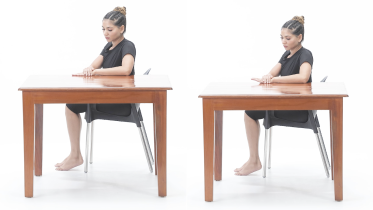
The thumb side slide moves your thumb out to the side, away from your index finger, and back again while your hand lies flat on a table. You sit with the forearm and palm resting on the tabletop and glide the thumb across the surface as the fingers stay still. Physios use it to get a stiff thumb moving and to practice moving the thumb on its own, for example after a thumb or wrist injury, or when a stroke or nerve injury has left one hand weak or clumsy.
How to do the thumb side slide
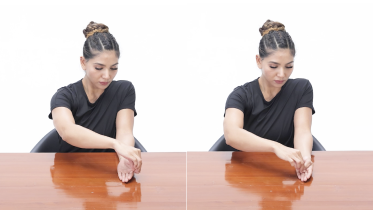
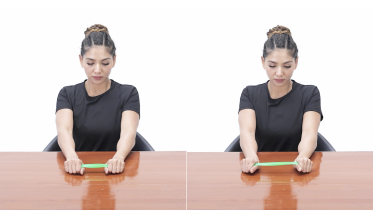
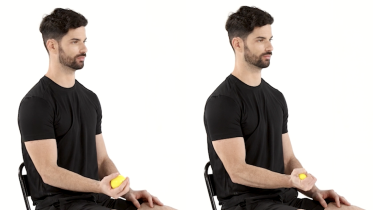
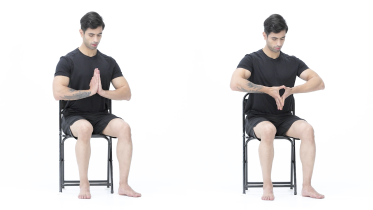
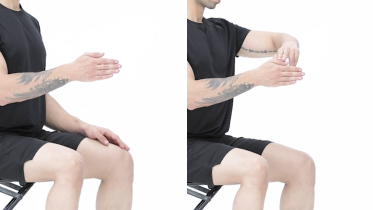
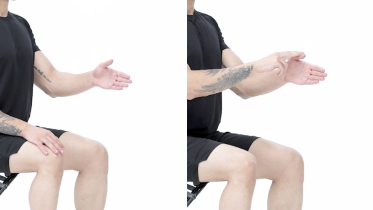
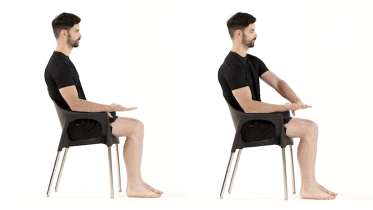
- Sit up straight at a table. Rest the forearm of the hand you are working on the tabletop with the elbow bent, and lay the hand flat, palm down. In the video the other forearm rests across the table in front of you.
- Let the thumb lie beside the index finger, with all the fingers straight and relaxed on the table.
- Keeping the fingers where they are, glide the thumb out to the side along the table, away from the index finger, as far as it goes without strain.
- Glide the thumb back until it rests beside the index finger again.
- Repeat at a slow, steady pace, keeping your elbow, shoulder and body still so only the thumb moves. The video shows the right hand; work whichever side your program lists.
What you should feel
The muscles on the back of the thumb and wrist working a little, and the skin between thumb and index finger opening out as the thumb travels. Nothing more than that.
Common mistakes
- Letting the fingers spread or creep sideways with the thumb.
- Lifting the palm off the table or tipping the hand onto its little finger edge.
- Pressing the thumb down hard, so it drags instead of gliding.
- Bending the wrist sideways to make the thumb travel farther.
How often
A common start is 2 or 3 sets of 10 slow glides, 2 or 3 times a day. Your physio will adjust this.
Stop and check with your physio if
- Sharp pain where the thumb meets the wrist, or over the tendons on the thumb side of the wrist.
- Numbness or tingling in the thumb or fingers that comes on while you work. If it stays after you stop, or keeps getting worse, get medical advice the same day. If one side of your face or body suddenly goes numb or weak, or your speech becomes slurred or muddled, call emergency services, even if it goes away.
- Suddenly being unable to straighten the end of your thumb or lift it back, especially in the weeks after a wrist fracture. A thumb tendon can snap, so have a doctor check it within a few days.
- Since the fracture or cast, the hand is getting more painful rather than less, the skin becomes very sensitive to light touch, or the hand changes color, temperature, swelling or sweating compared with the other one, or looks shiny. See your doctor or physio as soon as you can, within a few days at most, as this can be complex regional pain syndrome (CRPS) and early treatment may help.
From the clinic
With the hand flat, the table carries the weight of the thumb, which makes this a gentle way in when the thumb is stiff or weak. The voice guide aims it at the weaker hand and at control as much as range, so a smooth glide matters more than a wide one. If the thumb sticks to the surface, a thin cloth under it helps. Thumb extension moves the thumb the same way with the palm facing up, and thumb opposition takes it across to each fingertip.
The tendons that move the thumb out run along the thumb side of the wrist. If that area is already sore, as in de Quervain's tenosynovitis, or you have arthritis at the base of the thumb (hand osteoarthritis), check with your physio how far to go. After a broken wrist, hand or forearm, or surgery on any of them such as a tendon repair, start only when your doctor, surgeon, physio or hand therapist says the bone or repair is ready for this, and follow their plan for how much to do.
This page explains the general technique, not a stroke rehab program. If a stroke or a nerve problem has weakened your hand, your physio or occupational therapist can tell you whether this suits you and how much help the thumb needs to get started. A hand that has become weak or clumsy for no known reason needs a doctor to check it before you exercise it, and if the weakness came on suddenly, call emergency services straight away.
Written and checked by the PocketPhysio editorial team. Last updated 2026-09-28.
This page is general education, not a diagnosis or a personal treatment plan. If you have pain, an injury or a health condition, see a physiotherapist or doctor before starting new exercises.