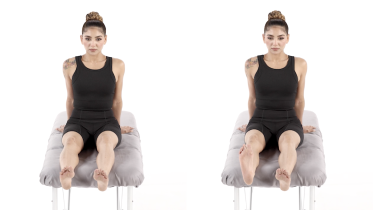
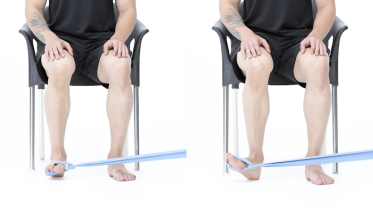
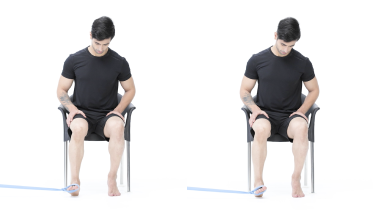
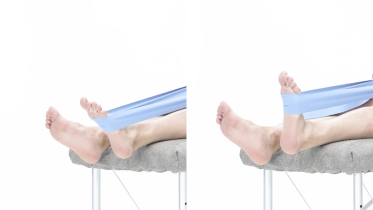
Calf massage with a ball
Calf massage with a ball lets you press gently on the muscles at the back of your lower leg yourself. You sit on the floor with one leg straight, put a ball such as a tennis ball under that calf, and slowly roll the leg over it. Many people use it to ease a calf that feels tight or tired. Never massage a calf that is swollen, warm or throbbing, or where the skin is red or darker than usual, because that can be a sign of a blood clot.
How to do the calf massage with a ball
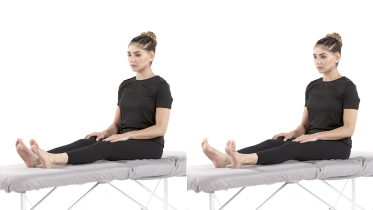
- Sit on a mat, lean back on your hands and stretch one leg out straight. Bend the other knee with its foot resting flat, as in the video.
- Place the ball under the middle of the calf of your straight leg.
- Using your arms and hips, slowly move your leg so the ball rolls up and down the calf, between just above the ankle and just below the knee. Keep the pressure gentle.
- If you reach a spot that feels tender, stop there and let the leg rest on the ball with light pressure. Breathe slowly until the tenderness eases, then carry on rolling.
- When you have covered the calf, change legs.
What you should feel
Firm pressure and some tenderness in the calf that eases as you go. It should never be sharp, and it should not spread down into the foot as tingling.
Common mistakes
- Pressing too hard or pushing on through pain. Gentle pressure is enough.
- Rolling behind the knee or over the Achilles tendon.
- Rolling fast. Slow movements let you find and ease tender spots.
- Staying on one spot for minutes at a time.
How often
Many people roll each calf for about 1 to 2 minutes, stopping on a tender spot for up to about 30 seconds. Your physio will adjust this.
Stop and check with your physio if
- Your calf or thigh becomes swollen, warm, tender, red or darker than usual, or has a throbbing or cramping pain that feels different from normal muscle ache. Do not massage or roll it. Stop and get medical advice the same day, as this can be a blood clot. If you are also short of breath or have chest pain, call emergency services.
- Sharp pain, or tingling or numbness in the lower leg or foot.
- Bruising, or soreness that is worse the next day.
From the clinic
Check with your doctor or physio before massaging your calf if you take blood thinners or bruise easily, or if you have ever had a blood clot in the leg. The same applies after a recent calf tear or leg surgery, after a spell in a cast, in bed or on a long trip, and if you are pregnant or had a baby in the last few weeks. If you have varicose veins, ask first too, and never roll over the veins themselves. Do not roll a leg that shows any of the blood clot signs in the stop list on this page. Get medical advice the same day, and call emergency services if you are also short of breath or have chest pain.
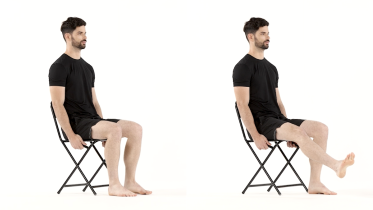
The voice guide describes doing this from a chair if sitting on the floor is uncomfortable. In that case, rest your calf on the ball on a low stool or table in front of you and move the leg in the same way. The video shows the floor version. Many programs follow the rolling with a calf stretch.
Written and checked by the PocketPhysio editorial team. Last updated 2026-09-26.
This page is general education, not a diagnosis or a personal treatment plan. If you have pain, an injury or a health condition, see a physiotherapist or doctor before starting new exercises.