
Forward and side lunge
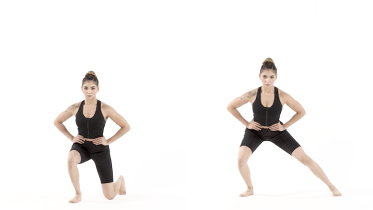
This exercise puts two lunges together. One leg stays planted while the other steps forward into a short lunge and pushes back to the start, twice, then steps out to the side into a side lunge and pushes back, twice. Switching direction makes your hips and knees control your weight going forward and going sideways. Sport needs that, and so do plenty of everyday tasks. The lunges in the video are shallow, with short steps.
How to do the forward and side lunge
- Start standing upright, feet side by side and arms relaxed at your sides, as in the video. Have a kitchen counter or solid chair within arm's reach.
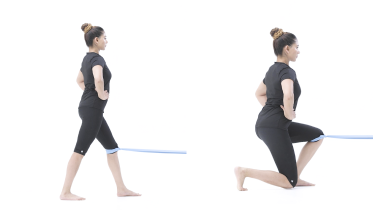
- Keep one foot planted. Step the other leg forward, bend both knees a little into a short lunge, then push off the front foot to bring it back beside the other. Do this twice.
- Now step the same leg out to the side. As it lands, bend that knee and sit your hips back over it, keeping the planted leg straight.
- Push off the side foot to come back to standing with your feet together. Do the side lunge twice as well.
- In both directions, stay tall through your chest and aim the bent knee at your second toe. Keep going in this pattern, two forward and two to the side, then switch legs if your physio wants both sides done.
What you should feel
Work in the thigh and buttock of the stepping leg, and in the hip of the planted leg as it holds you steady. In the side lunge, the inside of the straight leg's thigh may feel a pull.
Common mistakes
- Taking a bigger step than you can push back from with control.
- The bent knee falling in toward the other leg.
- Turning your hips and chest toward the side step. Stay facing the front.
- Letting the side foot's heel come up as you bend.
How often
Many programs start with 1 to 3 sets of 6 to 10 lunges in each direction for each stepping leg. Your physio will adjust this.
Stop and check with your physio if
- Your knee buckles, or a sharp pain hits the knee or hip.
- A sudden pull high on the inner thigh or in the groin, often during the side step.
- You lose your balance and cannot recover without grabbing the support.
From the clinic
The voice guide asks you to balance on your affected leg while the other leg does the stepping. That means the planted leg is usually the one your physio is working on. It holds you steady each time the other foot leaves the floor. In the video the same leg does every step, two lunges forward and then two to the side, which is what the voice guide means by "two steps". If you are not sure which leg should step, check with your physio.
Learn each direction on its own first with the forward lunge and the lateral lunge. The clock lunge builds on this, with lunges in every direction around you.
Clear the floor around you before you start. Anyone who has had a fall in the last year, or who often feels unsteady, should check with their physio first and keep one hand on the counter or chair throughout.
If you have had a hip replacement, get the go-ahead from your surgeon or physio before you try forward and side lunges. Some operations limit this kind of work for the first months, so the timing depends on your surgery. After a knee fracture or knee surgery, including a knee replacement, follow your surgeon's or physio's plan, and start this exercise only when they have cleared you.
Written and checked by the PocketPhysio editorial team. Last updated 2026-09-28.
This page is general education, not a diagnosis or a personal treatment plan. If you have pain, an injury or a health condition, see a physiotherapist or doctor before starting new exercises.
.png)