Kneel sit to tall kneel
Kneel sit to tall kneel is a lift from sitting back on your heels to kneeling upright, with your arms crossed over your chest. Your buttocks straighten the hips as you rise, and the front of the thighs control the knees as you lower. Folded arms leave you nothing to push on, so the legs and trunk have to do it all. Physios often use it for buttock strength and trunk control, and as practice for the kneeling part of getting up from the floor.
How to do the kneel sit to tall kneel
- Kneel on a padded mat with your knees about hip width apart and the tops of your feet flat on the floor behind you. In the video a padded stool stands just in front of him, which is handy for steadying yourself.
- Sit back so your bottom rests on your heels. Cross your arms over your chest and sit tall.
- Gently brace your stomach and squeeze your buttocks to lift your hips up and forward, until you are kneeling upright in a straight line from your knees through your hips to your shoulders. Your legs do the lifting, not your arms.
- At the top, rest your hands lightly on the stool in front of you, as he does in the video, and hold the tall kneeling position for about 3 seconds without leaning back or arching your lower back.
- Cross your arms over your chest again and lower slowly back down to sit on your heels, then repeat. The voice guide keeps the arms crossed the whole time, which is a harder version to try once you are steady.
What you should feel
Work in the buttocks as you rise and in the front of the thighs as you lower. The tops of your feet and the front of your knees feel the stretch of sitting on your heels.
Common mistakes
- Leaning the upper body forward to rise, instead of driving the hips up and forward.
- Arching the lower back or leaning backward at the top.
- Dropping onto the heels instead of lowering with control.
- Pushing down on the stool to lift yourself up.
- Kneeling on a hard floor with no padding.
How often
Many programs start with 2 to 3 sets of 8 to 12, pausing for 2 to 4 seconds at the top of each lift. Your physio will adjust this.
Stop and check with your physio if
- Pain at the front of the knee or over the kneecap that extra padding does not ease.
- Sharp pain in the knee or hip, or a knee that swells after the session.
- Pain in your lower back as you rise or hold the top.
From the clinic
Kneeling puts your weight straight through the front of the knees, so pad them well with a thick mat or a folded towel. If sitting fully back on your heels is too much, put a cushion between your heels and your bottom so you start a little higher. If kneeling hurts or you have swelling over the kneecap, leave this one out and ask your physio for something else.
After a knee fracture or knee surgery, including a knee replacement, follow your surgeon's or physio's plan, and start this exercise only when they have cleared you. Many people find kneeling on a replaced knee hard or uncomfortable even a year or more after the operation. Sitting back on your heels also needs a deeper knee bend than most replaced knees reach, so ask about padding, a cushion under your bottom or a different exercise.
Getting down to the floor and back up again takes strength and balance of its own. Keep a sturdy chair or stool in front of you, as in the video, and use it to lower yourself and to stand up afterward. If that is hard, or you have fallen in the past year, practice when someone else is at home, and work on getting up from the floor with your physio first.
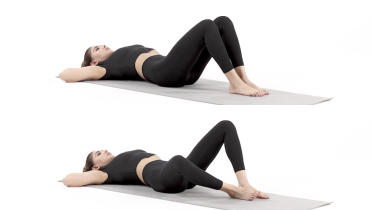
If you have had a hip replacement, get the go-ahead from your surgeon or physio before you try kneel sit to tall kneel. Some operations limit this kind of work for the first months, so the timing depends on your surgery. For similar buttock work without kneeling, the glute bridge is done lying on your back.
Written and checked by the PocketPhysio editorial team. Last updated 2026-09-26.
This page is general education, not a diagnosis or a personal treatment plan. If you have pain, an injury or a health condition, see a physiotherapist or doctor before starting new exercises.