Prone knee bend
The prone knee bend is a simple knee exercise done lying on your front. You bend one knee to bring your heel up toward your bottom, pause, then lower the foot back to the mat. It keeps the knee moving through its bend and works the muscles at the back of the thigh (hamstrings) against the weight of the lower leg, with no equipment. Physios often use it in knee programs once lying on your front is comfortable.
How to do the prone knee bend
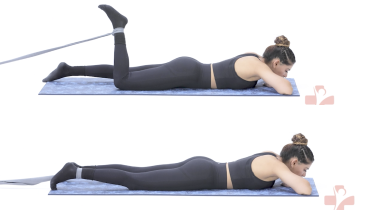
- Lie on your front on a mat, legs out long and arms resting alongside you. Put a small folded towel or cushion under your forehead, as in the video.
- Let your hip bones stay heavy on the mat and draw your stomach in a little, to stop your lower back from arching.
- Bend one knee and bring the heel up past the point where your lower leg points at the ceiling, on toward your bottom as far as is comfortable. In the video the heel travels a little past that upright point.
- Pause there for a moment, then lower the foot slowly back to the mat.
- Swap to the other leg, as the video does, or finish one side first if your physio prefers.
What you should feel
Work at the back of the thigh, and often a gentle stretch along the front of the thigh as the knee bends. The knee itself should not hurt.
Common mistakes
- Raising your bottom to get the heel higher.
- Arching your lower back as the leg comes up.
- Letting gravity drop the foot, instead of lowering it with control.
- Rushing, so there is no pause at the top.
How often
Many programs start with 1 to 3 sets of 10 to 15 bends on each leg, once or twice a day. Your physio will adjust this.
Stop and check with your physio if
- A sharp knee pain, knee pain that grows rep by rep, or a knee that swells up or locks afterward.
- Your wound becomes more red, hot, swollen or painful, or starts to leak. Contact your medical team the same day.
- Your lower back starts to hurt in the face-down position or each time the leg comes up.
- Your calf or thigh is getting more swollen, or becomes warm, tender, red or darker than usual, or has a new throbbing or cramping pain. This can be a blood clot, especially after an operation, an injury, time in a cast, boot or brace, or a spell of being much less mobile than usual, and after an operation it can also be an infection. Stop and contact your medical team or get medical advice the same day. If you are also short of breath or have chest pain, call emergency services.
From the clinic
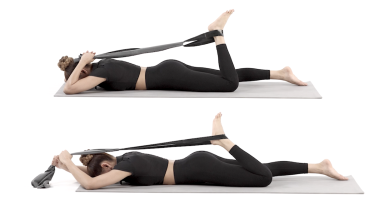
The app title and the voice guide talk about bending both knees together to a right angle, but the video bends one leg at a time and a little further. This page goes with the video. If the back of your thigh cramps, lower the leg, straighten it and rest for a minute before you carry on. When this feels easy, the lying hamstring curl with a band adds resistance to the same movement.
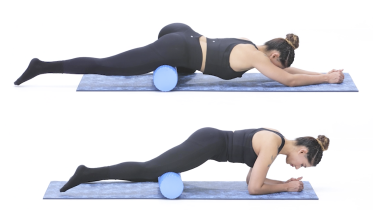
After a knee fracture or knee surgery, including a knee replacement, follow your surgeon's or physio's plan, and start this exercise only when they have cleared you. Some operations limit how far the knee may bend for a while, so ask your physio how far to go, and stop at a right angle if that is your limit. If lying flat on your front bothers your lower back, try a flat cushion under your stomach. Later in pregnancy, lying face down stops being comfortable, and the standing hamstring curl is a common alternative to ask your physio about.
Written and checked by the PocketPhysio editorial team. Last updated 2026-09-28.
This page is general education, not a diagnosis or a personal treatment plan. If you have pain, an injury or a health condition, see a physiotherapist or doctor before starting new exercises.