
Side step with a push
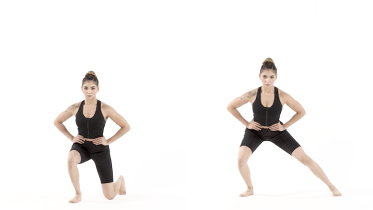
The side step with a push is a wide step out to the side into a low side lunge, with your chest turning toward the stepping leg and both arms pushing straight out in that direction. You then push back to standing and repeat to the other side. The thigh and buttock of the bent leg do most of the work, while the muscles around your waist control the turn. Despite the name, it is not a sideways walk: it is a side lunge with a twist and a push added.
How to do the side step with a push
- Stand tall with your feet about shoulder width apart and your arms by your sides. After the first push, she brings her hands back to the front of her chest between steps, ready for the next one.
- In the video she lifts the knee of the stepping leg to about hip height first. Lift it only as high as you can while staying steady, then take a big step out to the side with it and bend that knee as the foot lands, sitting your hips back and down. The other leg stays fairly straight, and both feet stay flat. If lifting the knee makes you wobble, simply step out.
- As you sink, turn your chest toward the stepping leg and push both arms out straight in that direction, at about shoulder height, as if pushing something away.
- Point the bent knee the same way as your toes, and keep your back long rather than rounded.
- Push off the bent leg to bring your feet back under you and your hands back to your chest. Then repeat to the other side, as the video does.
What you should feel
Hard work in the thigh and buttock of the bent leg, a pull in the inner thigh of the straight leg, and some effort around your waist as you turn.
Common mistakes
- Letting the bent knee cave inward as you turn and push.
- Turning from the knee, so it twists over a planted foot, instead of turning your chest.
- Stepping wider or dropping lower than you can control.
- Rounding your back and dropping your head as you push.
- Rushing from side to side before each landing is steady.
How often
Many programs start with 2 to 3 sets of 6 to 10 on each side, at a depth you can control. Your physio will adjust this.
Stop and check with your physio if
- Sharp pain in your knee, hip or groin, or the knee feels as if it might give way.
- A sudden sharp pull high in your inner thigh.
- Pain in your back as you turn, or pain that travels down a leg.
- You wobble enough to need a hand on the counter to stop yourself falling.
From the clinic
If you were after the sideways walk, that is side stepping. Get the plain lateral lunge steady first, then add the turn and the push once you can step out and back without wobbling. Practice beside a kitchen counter at first, with the floor clear on both sides. After a fall in the last year, or if your balance often feels shaky, ask your physio before you try it.
The turn happens while one leg carries most of your weight. If you have osteoporosis or have broken a bone in your spine, ask your physio whether the turn suits you and how far to go.
If you have had a hip replacement, get the go-ahead from your surgeon or physio before you try the side step with a push. Some operations limit this kind of work for the first months, so the timing depends on your surgery. After a knee fracture or knee surgery, including a knee replacement, follow your surgeon's or physio's plan, and start this exercise only when they have cleared you. If you are pregnant, check with your midwife or physio before you start.
Written and checked by the PocketPhysio editorial team. Last updated 2026-09-28.
This page is general education, not a diagnosis or a personal treatment plan. If you have pain, an injury or a health condition, see a physiotherapist or doctor before starting new exercises.
.png)