Sit to stand with a walker
Sit to stand with a walker is a common way to get up from a chair when you use a walking frame. The walker waits in front of you, but you do not use it to get up. You push up from the chair's armrests, stand up fully, and only then move your hands to the walker's handgrips, one at a time. A walker can roll or tip toward you if you pull on it, which is why the pushing is done on the chair. Your thighs and buttocks do most of the work, with your arms helping.
How to do the sit to stand with a walker
- Sit in a sturdy chair with armrests and place the walker in front of you, close enough to reach once you are up, with all its legs on the floor.
- Shuffle your bottom toward the front of the seat. Set your feet about shoulder width apart, flat on the floor.
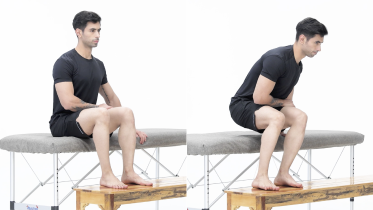
- Put your hands on the armrests and lean forward from your hips until your head is roughly over your toes.
- Push down through your legs and hands to stand up. Straighten your hips and knees fully before you let go of the armrests.
- Once you are upright and steady, move one hand to a handgrip of the walker, then the other. Stand still for a few seconds before you walk.
What you should feel
Work in your thighs and buttocks as you rise, and in the backs of your arms as you push on the armrests. You should feel steady, not rushed.
Common mistakes
- Pulling on the walker to get up, so it rolls or tips toward you.
- Trying to rise straight up without leaning forward first.
- Grabbing the walker before your hips and knees are straight.
- Leaving the walker too far away, so you have to reach or step to get to it.
- Setting off walking the moment you are up, before you have checked your balance.
How often
As practice, many programs use 5 to 10 careful stands, once or twice a day, resting as needed. You also use the same method every time you get up during the day. Your physio will adjust this.
Stop and check with your physio if
- You feel dizzy, lightheaded or faint as you get up. Sit back down and wait for it to pass. If it does not pass within a minute or two, or it keeps happening, get medical advice the same day before you practice again. If you faint, or it does not settle within a few minutes of keeping still, call emergency services. A drop in blood pressure on standing, or a side effect of a medicine, can cause this, so mention your medicines when you get advice.
- A leg gives way or you feel you are about to fall. Sit back down with control if you can, and practice only with someone beside you until your physio has checked you.
- Sharp pain in your hip, knee or back, or in a wrist or shoulder as you push on the armrests.
- Chest pain or pressure, dizziness or feeling faint, a racing or irregular heartbeat, or being far more out of breath than the effort should cause.
- Your calf or thigh is getting more swollen, or becomes warm, tender, red or darker than usual, or has a new throbbing or cramping pain. This can be a blood clot, especially after an operation, an injury, time in a cast, boot or brace, or a spell of being much less mobile than usual, and after an operation it can also be an infection. Stop and contact your medical team or get medical advice the same day. If you are also short of breath or have chest pain, call emergency services.
- You suddenly become short of breath, get chest pain or pain in your upper back that may be worse when you breathe in, cough up blood, your heart beats very fast, or you faint. Call emergency services straight away, even if your leg looks normal, as this can be a blood clot in the lungs (pulmonary embolism).
- You have had a fall or an injury and now have severe hip pain, or you cannot walk or put weight on the leg. Call emergency services or go to an emergency department. This can be a sign of a broken hip (hip fracture).
From the clinic
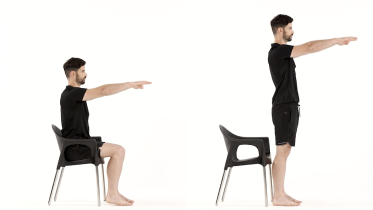
In the video the man keeps his hands on the chair until he is fully upright, then reaches for the walker one hand at a time. The voice guide warns you not to pull yourself up on the armrest. Pushing down on the armrests, as the video shows, is a different thing, and it is what this page teaches. The one thing you should never pull on is the walker. Without a walker, the same push is taught in sit to stand using armrests.
Use a firm chair with armrests that will not slide, never one on wheels or a rocking chair. If your walker has four wheels and hand brakes (a rollator), lock the brakes before you stand. A higher seat or a firm cushion makes rising easier. Wear flat shoes that fit well and grip the floor, not socks, tights or bare feet. Have someone with you while you are learning, especially if you have fallen before.
This page explains the general technique, not a stroke rehab program. It is not an after-surgery protocol either. After a hip or knee operation, a broken leg or a stroke, your physio or occupational therapist may teach you a different way to place your feet and hands, or limit how much weight one leg can take, and their method comes first. If you have had a hip replacement, get the go-ahead from your surgeon or physio before you try sit to stand with a walker. Getting up from a low chair bends the hip well past a right angle, and many surgeons ask you to avoid that for the first months after some operations.
If chest pain, pressure or tightness does not ease quickly when you rest, spreads to your arm, neck, jaw, stomach or back, or comes with sweating, feeling sick, feeling light-headed or being short of breath, call emergency services straight away, as this can be a heart attack. If it eases quickly and none of these happen, get medical advice the same day, and do not exercise again until you have been checked.
Written and checked by the PocketPhysio editorial team. Last updated 2026-09-28.
This page is general education, not a diagnosis or a personal treatment plan. If you have pain, an injury or a health condition, see a physiotherapist or doctor before starting new exercises.