Walking with hand support
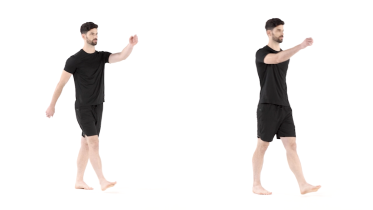
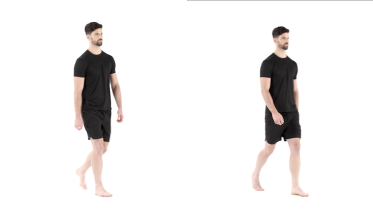
Walking with hand support means walking at an easy pace while one hand slides along a wall, a hallway rail or a kitchen counter, so you can steady yourself the moment you wobble. In the video she walks with her left hand raised to about shoulder height with the palm flat, facing sideways, as if it rests on a wall on her left (the wall itself is not shown). Physios often give it early on. It suits people who feel unsteady on their feet but do not need to lean on a cane or walker, and people getting their confidence back after an illness, an injury or a fall.
How to do the walking with hand support
- Pick a clear stretch of wall or hallway rail, with a chair waiting at the far end so you can sit and rest. Wear flat shoes that fit well and grip the floor, not socks, tights or bare feet.
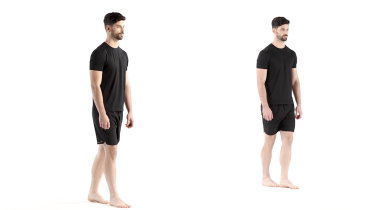
- Stand side on to the wall with your feet together, near enough that the hand on that side rests flat on it with the elbow slightly bent. Stand tall and look ahead, not down at your feet.
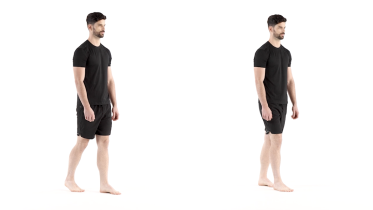
- Step one foot forward and let it take your weight, keeping your hand in light contact with the wall.
- Swing the back foot through and set it down in front, so each step passes the other foot as in a normal walk. Slide your hand along the wall as you go, rather than lifting it off and grabbing again.
- Keep a steady, comfortable pace. Use the wall only as much as you need, and press a little more firmly on it if you feel a wobble.
- At the end of the wall, turn around slowly toward the wall, so a hand can stay on it, and take a few extra small steps to turn in a half circle rather than turning on the spot. Then walk back with your other hand on the wall.
What you should feel
It should feel much like ordinary walking. The hand is only a reference point: your legs do the balancing, and the wall catches a wobble before it grows. After a few sessions many people find they are barely touching the wall.
Common mistakes
- Leaning your weight into the wall, so the hand takes over the balancing.
- Drifting away from the wall until you have to reach sideways for it.
- Watching your feet instead of where you are going.
- Short, shuffling steps with the feet dragging along the floor.
How often
A common starting point is 3 to 5 lengths of a hallway, or about 2 to 5 minutes of walking, 1 or 2 times a day, adding distance as your steps settle. Your physio will adjust this.
Stop and check with your physio if
- You feel dizzy, lightheaded, faint or sick, or the room seems to spin. Hold your support, sit down and get medical advice the same day before you practice again. If you faint, it does not settle within a few minutes of sitting still, your vision suddenly blurs or goes double, or you cannot stand or walk steadily, call emergency services.
- You trip, a knee or ankle gives way, or you need the wall to stop yourself falling. Stop and sit down on the chair.
- New or sharper pain in a hip, knee or ankle that makes you limp.
- Your calf or thigh becomes swollen, warm, tender, red or darker than usual, or has a throbbing or cramping pain that feels different from normal muscle ache. Stop and get medical advice the same day, as this can be a blood clot. If you are also short of breath or have chest pain, call emergency services.
- You have had a fall or an injury and now have severe hip pain, or you cannot walk or put weight on the leg. Call emergency services or go to an emergency department. This can be a sign of a broken hip (hip fracture).
From the clinic
A wall steadies you, but it does not take your weight the way a cane or walker does. This exercise suits people who are fairly steady and want something to touch, and it does not replace a walking aid your physio has given you. If you use a cane, crutches or a walker, keep using them until your physio says this is your next step. After a broken leg or leg surgery, stick to the amount of weight your surgeon or physio has said the leg can take.
A wall or a fixed rail is the safest thing to run your hand along. Furniture such as a table or a chair back can slide or tip if you press on it suddenly. Move any rugs, loose cables or other clutter away from the wall before you start, and check the floor is dry. If you have fallen within the last year, feel unsteady on your feet, or take a medicine that leaves you drowsy, practice while another adult is at home and let your physio know, as a falls check can pick up causes that are worth treating.
A sudden loss of balance is different. Call emergency services straight away for any sign of a stroke, even if it goes away: sudden dizziness with unsteadiness or falling over, a face that droops on one side, an arm you cannot lift or keep up, slurred or muddled speech, weakness or numbness on one side of your body or face, sudden blurred vision, double vision or loss of sight, or a sudden severe headache. If one side is already weak or numb from an earlier stroke, new or suddenly worse weakness or numbness is a sign, and every other sign in this list still counts.
This page explains the general technique, not a stroke rehab program. If one leg is weak after a stroke or because of a nerve condition, ask your physio which side the wall should be on and how far to walk. When you can walk the length of the hallway with only a fingertip on the wall, your physio may move you on to walking with longer steps or side stepping. If you find you need to lean on something to walk safely, walking with a cane explains how a cane is used.
Written and checked by the PocketPhysio editorial team. Last updated 2026-09-28.
This page is general education, not a diagnosis or a personal treatment plan. If you have pain, an injury or a health condition, see a physiotherapist or doctor before starting new exercises.